
The 12-Volt RV AC Unit, with its highly efficient DC power utilization, is becoming a key technology in a niche market seeking deep off-grid capabilities and energy self-sufficiency.
However, the successful application of this technology relies heavily on precise matching with the external environment and usage scenarios, making its system complexity fundamentally different from traditional AC air conditioning.
12 Volt Rv Ac Unit- Local Climate and Power System Limitations
Question: Under different climatic conditions, especially extreme high-temperature environments, how can the demanding power requirements of a 12V air conditioning system be significantly amplified, potentially exposing its design shortcomings?
Evidence: An article in the 4th issue of the 2025 “Special Issue on Thermal Management Technology for New Energy Commercial Vehicles” points out, based on measured data, that at ambient temperatures above 40℃, the continuous operating current of a 12V DC air conditioner to maintain the set temperature may increase by 25%-30% compared to normal temperatures, easily triggering the overcurrent protection of the battery management system (BMS) or causing cable overheating. The article specifically emphasizes that the battery installation space in small minibuses is already limited, making the power system bottleneck more prominent than the technical bottleneck of the air conditioner itself in this scenario. According to the latest findings from the 2025 Asian Electric Vehicle Battery Safety Forum, experts reached a consensus: high ambient temperatures simultaneously reduce battery capacity and charging/discharging efficiency, creating a “double squeeze” with the high load on air conditioning. Chen Min, a leading power system architect, analyzed at the conference: “In extreme high-temperature regions like Turpan, the limiting factor for 12V air conditioning is often not the compressor, but the battery’s continuous high-rate discharge capability and the temperature rise of the entire vehicle’s wiring harness. A 12V air conditioner that performs excellently in the laboratory may ‘break down’ in the field due to insufficient vehicle electrical infrastructure design.”
Conclusion: Therefore, assessing the applicability of a 12V Camper Air Conditioner in a specific region requires first evaluating the “climate redundancy” of the vehicle’s electrical system. In high-temperature regions, not only does the air conditioner itself need a high-temperature, high-heat-dissipation design, but it must also be equipped with a high-specification battery (supporting continuous high-rate discharge) and a low-loss, large-section wiring harness; otherwise, its reliability will be significantly compromised.
12 Volt Rv Ac Unit – Transportation Solutions and Energy Supply Modes
Question: How does the fundamental difference between a vehicle used for fixed-route shuttle transport and off-road adventures without fixed routes determine the energy supply strategy and system configuration priority of the 12V air conditioning system?
Evidence: According to the 2025 Transportation Industry “Transportation and Energy Integration” Seminar, the report clearly points out that for minibuses used for fixed routes such as municipal shuttles and scenic area buses with fixed stations, their power supply infrastructure is relatively complete. The high efficiency advantage of the 12V air conditioning system is more reflected in the energy saving during daytime operation, rather than absolute off-grid range. Conversely, according to the “China Adventure Travel Equipment Technology Development Blue Book” released in 2025, the core design of the 12V air conditioning system for off-road minibuses used for geological exploration, long-distance scientific expeditions, and other unreliable routes is “energy self-sufficiency,” which must form a closed loop with ultra-large capacity lithium batteries, high-power vehicle chargers, and solar panels covering the roof. The blue paper quotes a veteran expedition leader: “In uninhabited areas, every kilowatt-hour of electricity for the air conditioner comes from within itself. In our vehicles, the 12V air conditioner is directly connected to an independently expanded 24 kWh lithium battery system, powered by dual generators and a 1600W solar panel; this is the foundation for its continuous operation.”
Conclusion: Therefore, the choice of a 12V air conditioner must be linked to the transportation plan. For operational scenarios with fixed charging points, its value lies in reducing operational power consumption; for mobile scenarios without reliable charging, it must be designed as the core load of a large and independent “energy ecosystem,” otherwise it has no practical value.

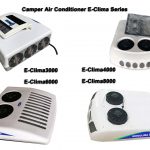
| Model | E-Clima2200 | E-Clima3000 | E-Clima4000 | E-Clima6000 | E-Clima8000 | E-Clima2600S |
| Voltage (V) |
DC12V/24V | DC12V/24V | DC12V/24V | DC12V/24V | DC12V/24V | DC12V/24V |
| Cooling Capacity (W/BTU) |
2200W//7500 | 3000W/10000BTU | 4000W/15000BTU | 6000W/20472BTU | 8000W/27300BTU | 2600W/78870BTU |
| Installation | Rooftop Mounted | Rooftop Mounted | Rooftop Mounted | Rooftop Mounted | Rooftop Mounted | Split Mounted |
| Evaporator Air Volume (m³/h) |
650 | 700 | 650 | 650 | 1500 | 450 |
| Condenser Air Volume (m³/h) |
1050 | 1400 | 1050 | 1700 | 3600 | 1400 |
| Refrigerant | R134a | R134a | R134a | R134a | R134a | R134a |
| Dimension (mm*mm*mm) |
700*580*263 | 885*710*290 | 700*580*263 | 1580*385*180/ 920*928*250 |
1260*1030*180 | 682*465*192 540*362*165 |
| Weight (KG) |
32 | 35 | 18/47 | 18/47 | 31 |
12 Volt Rv Ac Unit – Travel Habits and Intelligent Energy Management
Question: How do users’ travel and lifestyle habits affect their reliance on the intelligent management functions of the 12V air conditioner (such as scheduled start, battery cruise control, and power adaptation)?
Evidence: The 2025 “Intelligent RV User Behavior Research Report” shows that family road trip users generally experience two peak electricity consumption scenarios: “midday naps” and “long nights’ stays.” They have an urgent need for air conditioning systems that can achieve “constant temperature cruise based on remaining battery power.” The report states that intelligent 12V air conditioning systems, which can automatically adjust output power according to battery level to precisely extend operating time, have a 65% higher user satisfaction rate than ordinary models. For minibuses used for business receptions, whose usage patterns are more predictable, remote pre-cooling and pre-heating functions via mobile phone are more important. Energy management algorithm expert Zhang Tao pointed out in a related technical lecture: “The core of the ‘intelligence’ of 12V air conditioning should be ‘energy self-adaptation.’ For example, when the battery level is below 50%, the system can automatically switch to ‘energy-saving mode,’ providing gentle cooling rather than powerful refrigeration. This requires deep data communication between the air conditioning controller and the vehicle’s BMS, which is precisely the blind spot of many modification solutions.”
Conclusion: Therefore, the advancement of 12V air conditioning is not only reflected in hardware energy efficiency but also in the intelligence of its energy management software. For users who habitually live offline for extended periods, it is essential to choose a model with intelligent power management and deep integration with the vehicle’s energy system; otherwise, the core advantage of the 12V system—extended range—will not be realized.
12 Volt Rv Ac Unit – Customer Demographics and Value-Cost Sensitivity
Question: Who are the target customers for the high-investment 12V DC air conditioning system? How do their willingness to pay and value judgment criteria differ fundamentally from those of traditional air conditioning customers?
Evidence: According to the 2025 Commercial Vehicle Segment Market Investment Analysis Report, early adopters of 12V DC air conditioning primarily fall into two categories: first, users in specialized industries (such as border patrol and field engineering), whose purchasing decisions are driven by project needs and reliability, and are relatively insensitive to price; second, high-end private customization customers (such as seasoned adventure enthusiasts and scientific expedition teams), who are willing to pay a premium for the ultimate offline experience. The report quotes the founder of a retrofitting company: “Customers choosing 12V systems aren’t buying ‘air conditioning,’ but rather ‘the ability to operate off-grid overnight’ and ‘the cleanliness of system integration.’ They generally understand and accept paying for a complete energy solution.” In contrast, ordinary travel rental companies are highly sensitive to initial investment and prefer the mature, low-cost solution of “inverter + traditional AC air conditioning.”
Conclusion: 12V DC air conditioning is not a mass-market product, but a solution for a specific high-value, high-performance niche market. Its marketing focus should not be simply “energy saving,” but rather “systematic energy autonomy and reliability.” To truly realize its full value, integrated design and services, from air conditioning and batteries to solar energy, are needed for the target customers.
12 Volt Rv Ac Unit – Overall Conclusion
The application of a 12V rooftop air conditioner in a minibus/RV is a complex systems engineering challenge. Its applicability is tightly controlled by four dimensions: local climate sets the stress limit for the power system, traffic patterns define the basic logic of energy replenishment, travel habits call for intelligent energy management, and ultimately, customers seeking ultimate off-grid capabilities pay the price. It is by no means a simple “plug-and-play” upgrade, but a driving technology that propels a comprehensive revolution in the vehicle’s energy architecture. The key to successful deployment lies in abandoning a singular equipment mindset and adopting a holistic “energy system” perspective, conducting customized design, integration, and debugging to achieve true climate freedom and energy autonomy within the mobile space.
Related posts:
 Small Rv Ac
 Low Profile Rv Ac Unit
 Camper Air Conditioning Unit
 Camper Air Conditioner
 Camper Roof Ac Unit
 Camper Ac
 Air Conditioning Units for RV and Minibus Air Conditioner
 Air Conditioning for Motorhomes Manufacturing Process
 Air Conditioning Units for Campers Installation Process
 Similarities between RV Camper Air Conditioner and Minibus AC
 Ac For RV Camper Market Analysis Report
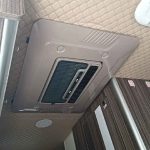 Small Air Conditioner for Camper
 12 Volt Air Conditioner For Rv
 Low Profile Rv Ac
 Motorhome Air Conditioning and Minibus Manufacturer Matching
 Ac For Camper and Mini Bus Ac Installation Steps
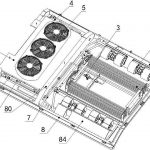 Bus Air Conditioner is used for buses and medium-sized commercial vehicles
 Ac Unit For RV Camper: Air Conditioning System for Minibuses and Motorhomes