
12V Bus Ac
The 12V Bus AC is a key system that directly affects the overall energy consumption, range safety and intelligent operation of the entire vehicle.
Its development is in line with policy and market trends. According to industry research, the market size of high-voltage components for new energy vehicles in China has exceeded 300 billion yuan by 2025, with an annual growth rate of 26.5%. The trend towards high-voltage and integration is clear.
In this context, the innovation of the low-voltage air conditioning system becomes the key to balancing the high-voltage power and the overall electricity demand of the entire vehicle.
Zhao Jianping, the Chief Sustainability Officer of BYD, pointed out that integrating the concept of sustainable development into the corporate strategy cannot be achieved without full-chain technological innovation, including thermal management.
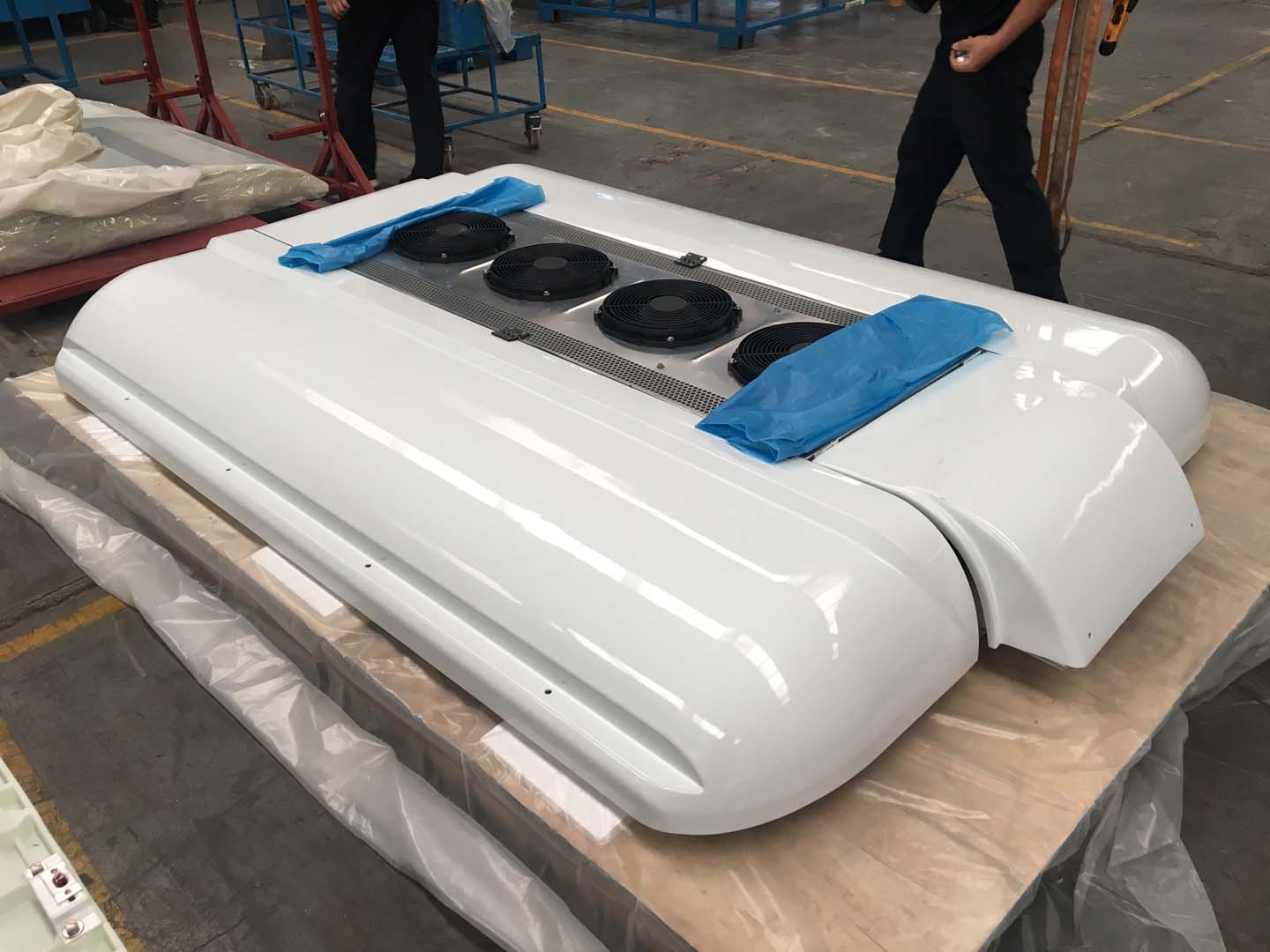
Efficiency and Intelligence Synergy under 12V Bus AC Low-Voltage Architecture
Reason: Pure electric buses are powered by high-voltage batteries (typically above 400V), but to ensure safety, the vehicle’s electrical systems (such as lights, control units, and air conditioning fans) must be equipped with an independent low-voltage system. The traditional solution is to keep the air conditioning running when the vehicle is parked, which requires frequent activation of the high-voltage battery, resulting in unnecessary energy consumption and battery degradation.
Result: The new generation 12V electric bus air conditioning system has its core composed of an efficient DC variable-frequency compressor and an intelligent control module. This system is directly powered by the vehicle’s 12V low-voltage network and is usually matched with a high-performance lithium iron phosphate battery as the energy storage unit. Compared to traditional lead-acid batteries, lithium batteries have higher energy density, longer cycle life, and better large-rate discharge capability, which can better meet the requirements of frequent starting and high loads. The system is deeply integrated with the vehicle’s BMS (Battery Management System) and thermal management domain controller through the CAN bus to achieve intelligent power regulation.
Result: This design achieves a safe and efficient decoupling of low-voltage electrical appliances and high-voltage power systems. When parking, the air conditioning can operate entirely relying on the low-voltage battery for a long time, avoiding the “static energy consumption” of the high-voltage system and directly contributing to the extension of the vehicle’s range. At the same time, intelligent management also extends the service life of the low-voltage battery itself.
12V Bus Ac – From Static Comfort to Dynamic Energy Efficiency Management
Reason: There are numerous non-movement energy-consuming scenarios in bus operations, such as pick-up and drop-off at terminals, mandatory driver breaks, and schedule intervals. There is a contradiction between the comfort guarantee and energy consumption control in these scenarios.
Result: The 12V independent air conditioning system precisely addresses the “static comfort” issue. Moreover, with the development of vehicle networking technology, its application is expanding towards “dynamic energy efficiency management”. For instance, by integrating with the dispatch system, the vehicle compartments can be pre-cooled remotely before departure; or the operation mode can be dynamically adjusted based on real-time electricity prices, battery SOC (charge status), and driving routes.
Result: This has established a “full-cycle intelligent temperature control ecosystem”. Drivers can enjoy a zero-emission and low-noise rest environment; passengers enjoy comfort upon boarding; and the operators have achieved refined management of energy consumption during non-driving periods, thereby improving service quality while reducing operating costs.
12V Bus Ac – A Strategic Integration of Safety, Economy and Environmental Protection
Reason: Public transportation operators are confronted with multiple challenges such as operational cost pressure, vehicle safety regulations, and increasingly strict environmental regulations (such as restrictions on the Global Warming Potential (GWP) value of refrigerants).
After: The advantages of the 12V electric bus air conditioning system constitute a complete system solution:
Safety in essence: When parking, the high-voltage system is completely powered off, eliminating the potential risks of high voltage and the carbon monoxide poisoning hazard associated with the idle air conditioning of fuel vehicles.
Life-cycle economic efficiency: The efficient variable-frequency technology reduces the energy consumption of the air conditioner itself. More importantly, its independent low-pressure operation mode protects the expensive high-pressure battery, reduces unnecessary charging and discharging cycles, and significantly lowers the battery degradation and replacement costs in the long run.
Green Compliance: The leading system is actively adopting environmentally friendly and natural refrigerants such as R290, and thanks to the “lead-free” trend of lithium batteries, it fully responds to the green upgrade requirements of the entire industry chain.
Result: This has shifted the value of the system from being a “cost center” to a “value investment”, helping the operator systematically reduce the total cost of ownership, meet ESG assessment requirements, and shape a green and high-tech public service brand image.
12V Bus Ac – The Convergence Point of Diverse Demands
Reason: In the electric bus industry chain, the core demands of different stakeholders vary.
After:
Public transportation operating enterprises: Core decision-makers, focusing on the entire lifecycle costs, attendance rates, and policy compliance. The energy-saving features of the 12V system directly reduce electricity consumption, and its high reliability ensures vehicle availability.
Driver: End-user, seeking a healthy and comfortable working environment. Independent and quiet parking air conditioning is an important professional benefit for them, which is related to physical and mental health and team stability, and thus affects driving safety.
Passengers and the Public: Ultimate Experience Takers and Supervisors. They demand a fully comfortable riding experience throughout the journey and increasingly value the green essence of public services. Stable air conditioning and environmental protection features have enhanced the public’s sense of认同 for green travel.
Result: A sophisticated 12V electric bus air conditioning system has successfully integrated the economic benefits of the operator, the humanistic care for the drivers, the experience demands of the passengers, and the environmental expectations of society into a whole. It is not only a technical component, but also a crucial link that drives electric buses to achieve a positive cycle of social value and commercial value.
12V Bus Ac is a typical product resulting from the cross-integration of new energy vehicle technology innovation and public transportation service upgrade. It conforms to the development trend of high-voltage, integration and intelligence in the automotive industry. Through its precise innovation on the low-voltage side, it ensures the overall efficiency and reliability of high-voltage electric buses, and is redefining the comfort and energy efficiency standards of future smart public transportation.
Related posts:
 12V Ac For Buses
 12V Bus Air Conditioner
 12V Rv Air Conditioning Units
 Motorhome Aircon 12V
 Camper Air Conditioner 12V
 12V Air Conditioner For Motorhome
 12V Rv Ac Unit
 12 Volt RV Air Conditioning Units represent an energy and technological revolution
 12 Volt Rv Air Conditioner
 12V Camper Air Conditioner used in medicalmobile
 12V Air Conditioner for Motorhome South Africa
 12 Volt Rv Ac Unit
 12 Volt Dc Rv Air Conditioner
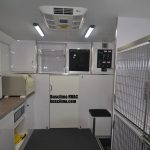 12V Air Conditioner for Motorhome Africa
 12V Camper Ac
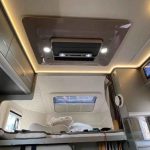 12V Rv Ac