
12V RV AC Unit temperature control solution, which directly utilizes the low-voltage DC power from the vehicle’s battery, offers value far beyond simply “eliminating inverter losses.” Its introduction fundamentally reshapes the logic and boundaries of RV energy management. Judging its merits requires moving beyond the single performance perspective of traditional air conditioners and conducting a systematic examination from four dimensions: parameters, scenarios, habits, and target audiences. This report follows a “phenomenon-analysis-conclusion” logical framework to deconstruct this complex system.
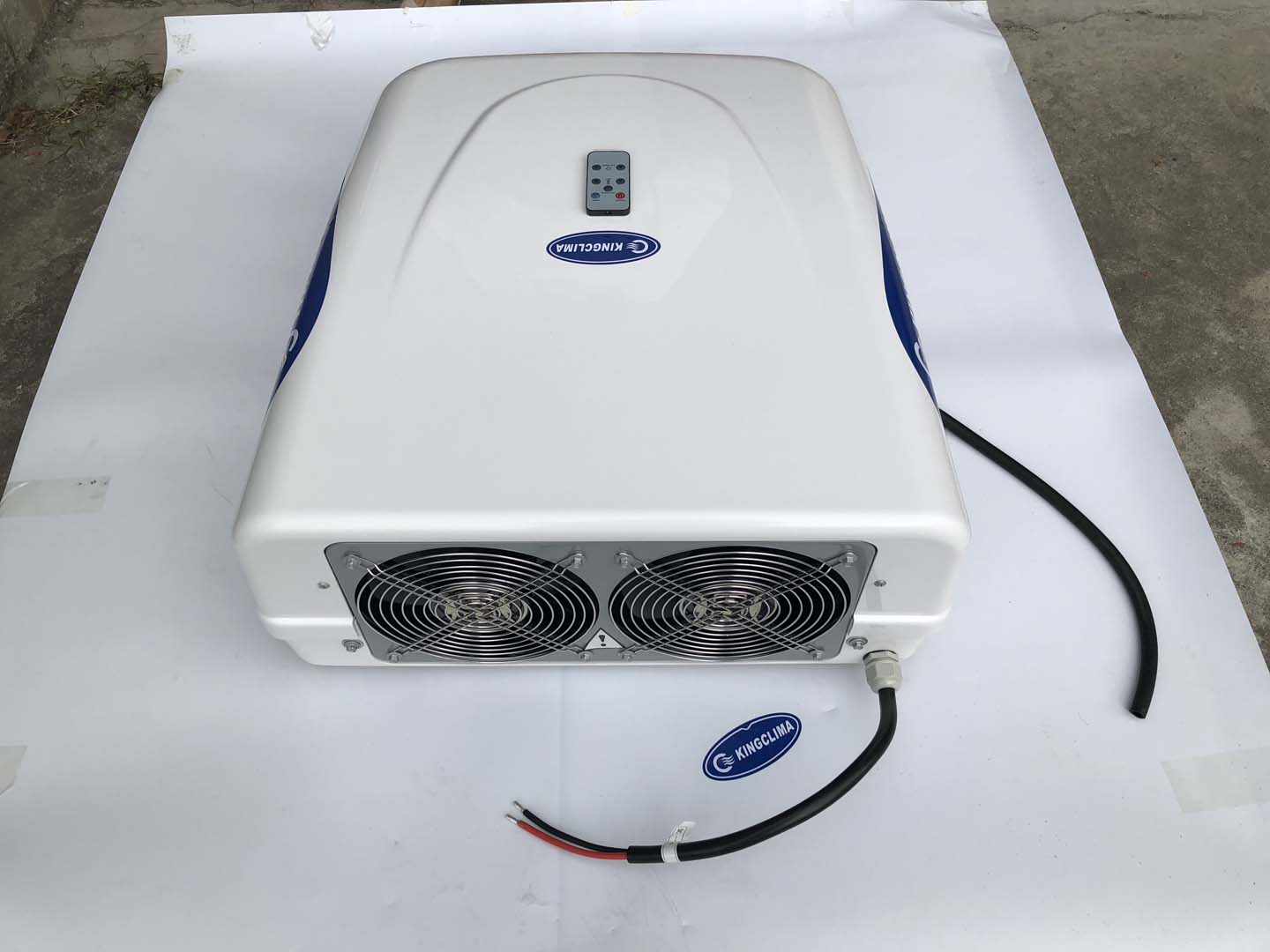
12V RV AC Unit Performance Parameters—The “Efficiency Density” Race Under High-Voltage Current
Compared to traditional AC air conditioners, 12V air conditioners often have a lower nominal cooling capacity (BTU value), but their proponents insist they are “more efficient and energy-saving,” creating a cognitive contradiction.
This contradiction stems from different evaluation standards. The core of the competition for Camper Air Conditioner is “system energy efficiency,” not “terminal output.” An article published in the third issue of the journal *Frontiers in Thermal Management Technology for New Energy Vehicles* in 2025, through bench testing, pointed out that a complete “12V DC inverter air conditioning system” (including compressor, ECU, and fan) has an overall energy efficiency 12%-18% higher than a system with “AC inverter air conditioning + inverter of the same cooling capacity” under typical operating conditions. The key is that the 12V system avoids the conversion losses (typically 10%-15%) of the inverter stage and the inverter’s own standby power consumption. However, according to an expert report at the 2025 China Power Supply Society Annual Conference, achieving this advantage requires that the 12V air conditioner use an ultra-high efficiency DC inverter compressor specially designed for low-voltage environments to handle continuous operating currents as high as 100-150 amps. Leading electrical architect Zhang Tao emphasized at the conference: “When evaluating a 12V air conditioner, the first thing to consider is its ‘Cool Performance Ratio (COP),’ and even more importantly, its ‘Full-Load Current.’ The former represents high performance, while the latter determines the feasibility of system implementation. A 12V air conditioner that claims to be highly efficient but has excessively high peak current will force expensive upgrades to the vehicle’s wiring harness and battery system, ultimately increasing the overall cost.”
Therefore, the key parameter for evaluating a 12V air conditioner is its “cooling capacity per unit current,” i.e., its “efficiency density.” The optimal product should provide sufficient cooling capacity while keeping the operating current within the economically and safely manageable range of the vehicle’s electrical system.
12V Rv Ac Unit Usage Scenarios—Energy Supply Path Determines Value
The same 12V air conditioner is considered a “miracle device” in the wilderness without mains power, but its advantages are not so obvious in a well-equipped campsite environment.
This phenomenon reveals that the value of a 12V air conditioner is highly dependent on the scenario attribute of “off-grid depth.” In scenarios where energy is entirely dependent on self-supplied photovoltaic and battery storage, every watt-hour of electricity is extremely precious. The reduced inverter losses of a 12V system directly translate into longer air conditioning operating time or a smaller energy storage system configuration. Data from the “China Deep Travel Energy White Paper” released in 2025 shows that for users continuously disconnected from the grid for more than 72 hours, the correlation between their energy anxiety index and the energy efficiency of their air conditioning system is as high as 0.7. Conversely, for users who frequently use campsite mains power or generators, where electricity is readily available, the energy-saving advantages of a 12V system are difficult to translate into significant economic or experiential benefits. Wang Zhe, the lead author of the white paper and a senior adventure leader, points out: “A 12V air conditioner is an optimized solution in ‘energy-scarce scenarios.’ It might be a ‘dragon-slaying technique’ in urban campsites, but in the uninhabited Qiangtang region, the savings of a few watts of inverter losses could mean an extra hour of comfortable sleep—a qualitative difference.”
Therefore, a 12V air conditioner is not a universal choice; its value is directly proportional to the “energy supply difficulty” of the applicable scenario. It is a dedicated solution designed for users seeking extreme off-grid freedom and solar-powered self-sufficiency.
12V RV AC Unit – Energy Synergy of “Intelligence” and “Self-Discipline”
Two users operate the same 12V air conditioner with similar battery capacity. One user can comfortably sleep through the night, while the other repeatedly experiences battery shutdowns due to protection mechanisms.
This difference often stems from the mismatch between usage habits and the device’s “energy intelligence.” The efficiency of a 12V air conditioner requires users to have a certain level of energy management awareness, or the air conditioner itself to possess powerful intelligent management functions. Users accustomed to “setting low temperatures and continuous high fan speeds” may quickly deplete the battery, even when using high-efficiency equipment. The 2025 “Intelligent RV User Behavior and Energy Consumption Analysis Report” found that users who fully utilize the advantages of a 12V system generally set dynamic target temperatures based on ambient temperature (e.g., 26°C during the day and 28°C at night) and make good use of sleep mode. The report further points out that the next generation of high-end 12V air conditioners is integrating AI-based predictive energy management, which can learn user habits and automatically plan the optimal operating curve based on weather forecasts. In an interview, energy management algorithm expert Li Jing stated, “For 12V systems, ‘intelligence’ is essential. It needs to act like a seasoned steward, not only working efficiently but also knowing how to ‘manage’ power when it’s limited. For example, when the battery level drops below 50%, it should automatically switch to a gentler temperature control strategy, maximizing battery life with minimal performance degradation.”
Therefore, the upper limit of 12V air conditioner efficiency is determined by both “hardware energy efficiency” and “management intelligence.” Users must either possess sophisticated energy management habits themselves or choose air conditioners with deep intelligent energy management functions to realize their theoretical advantages.
12V RV Ac Unit Customer Analysis
Faced with high overall upgrade costs, individual modification enthusiasts flock to it, while most RV rental companies shy away.
This reflects a difference in customers’ perception of “value.” Buyers of 12V air conditioners are essentially paying a premium for “energy autonomy” and “system integration cleanliness.” High-end individual users, especially tech-savvy enthusiasts, find enjoyment and achievement in the independent design and optimization of their entire system (high-performance lithium batteries, high-power solar panels, and 12V DC appliances). They value technological advancement and ultimate off-grid capability. A 2025 investment analysis of the commercial vehicle segment indicates that these customers’ decisions are heavily influenced by emotional factors and their belief in technology. Conversely, B2B customers such as leasing companies prioritize “Return on Investment (ROI)” and “Operational Ease.” The non-standardization, higher initial investment, and potential maintenance complexity of 12V systems contradict their pursuit of scalable, low-management-cost business models.
Therefore, 12V DC air conditioning is a typical “niche market” product, targeting individuals with an extreme pursuit of technology and freedom, specialized industry users, and high-end custom manufacturers. Its value proposition is to provide a highly integrated, efficient, and self-sustaining ultimate off-grid energy solution, rather than simply a cooling device.
12V RV Air Conditioner Overall Conclusion
The “high efficiency” of a 12V RV air conditioner is a multi-dimensional systemic concept: it is reflected in the high energy efficiency density (parameters) at the hardware level, and its full value can only be realized in deeply off-grid scenarios. It requires collaboration with the user’s refined energy management habits or the product’s advanced energy intelligence, ultimately realizing its value for a specific customer group pursuing ultimate energy autonomy. It is not a standalone appliance, but an “energy hub” that needs to be integrated and deeply integrated with the RV’s energy system (battery, solar power, power distribution). Choosing a 12V air conditioner is essentially choosing an RV lifestyle and system architecture that pursues complete energy self-sufficiency.
Related posts:
 12 Volt Rv Ac Unit
 Best Ac For Rv
 Small Ac For Camper
 Small Rv Ac
 Low Profile Rv Ac Unit
 Camper Air Conditioning Unit
 Camper Air Conditioner
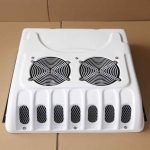 Air Conditioning Units for RV and Minibus Air Conditioner
 Camper Roof Ac Unit
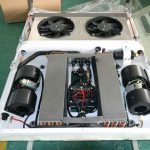 Air Conditioning Units for Campers Installation Process
 Similarities between RV Camper Air Conditioner and Minibus AC
 Air Conditioning for Motorhomes Manufacturing Process
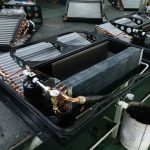 Camper Ac
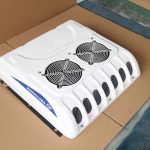 Ac For RV Camper Market Analysis Report
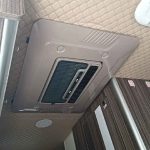 Small Air Conditioner for Camper
 12 Volt Air Conditioner For Rv
 Low Profile Rv Ac
 Motorhome Air Conditioning and Minibus Manufacturer Matching