
15000 Btu Air Conditioner Rv
15000 Btu Air Conditioner Rv represents top-tier cooling capacity, designed specifically to handle extreme heat loads and larger spaces.
With the increasing popularity of RV living and users’ growing demands for comfort in their “mobile homes,” high-powered air conditioning systems have become crucial for ensuring quality travel in large RVs or in hot climates. This report will provide a comprehensive analysis of 15000 BTU RV air conditioners from four dimensions: technical parameters, applicable scenarios, lifestyle transformation, and core customer groups, aiming to provide rigorous reference for your decision-making.
15000 Btu Air Conditioner Rv Technical Parameters – Powerhouse and Efficiency Balance
Phenomenon: The 15000 BTU RV air conditioner is the preferred choice for large RVs due to its powerful cooling capacity, but its astonishing power consumption is a primary concern. According to a 2025 industry technology analysis, a 15000 BTU RV air conditioner has an operating power of up to 1500 watts, and the instantaneous starting power (surge current) can reach around 3500 watts.
| Model | E-Clima2200 | E-Clima3000 | E-Clima4000 | E-Clima6000 | E-Clima8000 | E-Clima2600S |
| Voltage (V) |
DC12V/24V | DC12V/24V | DC12V/24V | DC12V/24V | DC12V/24V | DC12V/24V |
| Cooling Capacity (W/BTU) |
2200W//7500 | 3000W/10000BTU | 4000W/15000BTU | 6000W/20472BTU | 8000W/27300BTU | 2600W/78870BTU |
| Installation | Rooftop Mounted | Rooftop Mounted | Rooftop Mounted | Rooftop Mounted | Rooftop Mounted | Split Mounted |
| Evaporator Air Volume (m³/h) |
650 | 700 | 650 | 650 | 1500 | 450 |
| Condenser Air Volume (m³/h) |
1050 | 1400 | 1050 | 1700 | 3600 | 1400 |
| Refrigerant | R134a | R134a | R134a | R134a | R134a | R134a |
| Dimension (mm*mm*mm) |
700*580*263 | 885*710*290 | 700*580*263 | 1580*385*180/ 920*928*250 |
1260*1030*180 | 682*465*192 540*362*165 |
| Weight (KG) |
32 | 35 | 18/47 | 18/47 | 31 |
Analysis: These parameters mean that powering this Ac Unit For Rv Camper poses a serious challenge to the RV’s energy system. Dr. Pan Li, a battery expert, points out in his guide on portable air conditioner batteries that efficient battery-powered air conditioning requires optimizing the “balance between power consumption, cooling capacity, and operating time.” However, the 15000 BTU power level far exceeds the capacity of ordinary portable batteries.
Battery Requirements: To support the air conditioner for only 3 hours, theoretically, approximately 3.6 kilowatt-hours of electricity are needed. Based on a common 12V RV lithium battery system, this corresponds to a battery capacity of at least 300Ah, and requires the use of deep-cycle lithium iron phosphate (LiFePO4) batteries, as their cycle life is 4-6 times that of traditional lithium batteries, and they have better thermal stability.
System Matching: A high-quality pure sine wave inverter capable of handling surge power exceeding 3500 watts is essential. Adding a soft starter is crucial to protect the electrical system, as it can reduce the starting surge by more than 50%, allowing the use of smaller capacity batteries and inverters. Conclusion: Choosing a 15000 BTU air conditioner isn’t just about selecting the air conditioner itself, but about evaluating and upgrading the entire power ecosystem—a high-capacity lithium iron phosphate battery pack, a high-power inverter, and a soft starter are all indispensable.
15000 BTU Air Conditioner RV Usage Scenarios—Exclusive Solutions for Extreme Environments and Large Spaces
Phenomenon: Not all RVs or travel scenarios require such a high-powered air conditioner. It primarily appears in two typical situations: large Class A or Class C motorhomes with large glass areas; and long-distance travel to extremely hot regions such as deserts and tropical areas during the summer.
Analysis: According to technical experts at Redway Battery Company, running an RV air conditioner solely on battery power is a “daunting engineering challenge.” Therefore, the applicable scenarios for a 15000 BTU air conditioner are closely tied to the energy supply method:
Campground Parking Scenario: In campgrounds with shore power connections, the 15000 BTU air conditioner can operate continuously without any problems, providing fast and even cooling for the entire vehicle, ensuring ultimate comfort.

Off-Grid Camping Scenario: When there is no external power source, running this air conditioner relies on a high-capacity battery pack and/or a generator. This requires users to precisely plan their power usage time, such as only turning it on intermittently during the hottest hours of the night, and heavily relying on solar panels for daytime charging or a generator as the main power source.
Conclusion: The 15000 BTU air conditioner is designed for the most demanding cooling needs. It is best suited for users who are stationed for extended periods in hot areas with ample power supply, or those who are well-prepared with sufficient energy reserves and replenishment capabilities when off-grid.
15000 BTU Air Conditioner RV Lifestyle—A Shift from Energy Management to a Travel Philosophy
Phenomenon: After installing a 15000 BTU air conditioner, users’ RV life will no longer be “carefree,” but will revolve around precise planning based on an “energy budget.” It shifts from “unrestricted power usage” to “precise energy management.”
Analysis: This air conditioner will completely change users’ behavior patterns:
Energy management becomes a daily necessity: Users need to constantly monitor battery levels and calculate the relationship between air conditioner operating time and remaining battery power. As experts say, this requires “proper planning” to make battery operation “increasingly feasible.” Travel pace is dictated by the energy cycle: off-grid, daytime travel may revolve around “charging the batteries” (such as finding sunny locations to deploy solar panels or running a generator) to ensure sufficient “air conditioning budget” for the night.
Changes in consumption habits: The initial investment in the power system (batteries, inverter, solar panels) will far exceed the cost of the air conditioner itself. Users need to accept this high initial investment in exchange for comfort and freedom in extreme environments.
Conclusion: Using a 15000 BTU air conditioner signifies that the user’s RV life has entered an advanced stage of “heavy equipment and meticulous planning.” Increased comfort comes at the cost of reduced flexibility in electricity usage and increased system complexity.
15000 BTU Air Conditioner RV Customer Profile – Heavy-Duty Adventurers and All-Season Travelers
Phenomenon: The user profile for this level of air conditioner is very distinct; they are usually the “hardcore” group among RV enthusiasts.
Analysis: The core customer group can be divided into two categories:
Large RV owners: Especially those who have purchased new Class A, large Class C RVs, or fifth-wheel trailers. The vehicle manufacturer may have pre-installed or recommended this power air conditioner. They pursue the ultimate comfort experience that matches the vehicle size and price, covering the entire cabin.
All-terrain, all-season travelers: These users are not satisfied with traveling only during mild seasons. Their journeys may take them through the deserts of the American Southwest, Southeast Asia, or the Australian outback, requiring robust high-temperature resistance. They are usually technology enthusiasts, willing to research and invest in complex energy systems, considering solving the problem of “how to stay cool in the wilderness” as part of the travel challenge and enjoyment.
Conclusion: The target customers for 15000 BTU air conditioners are experienced RV users with large vehicle spaces, demanding travel environments, sufficient budgets, and strong technical skills or a willingness to learn. They are buying not just a piece of equipment, but an environmental support system that expands their travel boundaries.
To help you determine if a 15000 BTU Air Conditioner RV is a necessary choice for you, please consider the following questions
Vehicle type and space: Is your RV a large Class A or Class C RV with an interior space exceeding 8 meters? Or is it a vehicle with a large glass area? Main travel destinations and climate: Do your most frequent trips each year concentrate in extremely hot regions during the summer (temperatures consistently above 35°C)?
Current energy system status: Does your existing or planned RV battery system have a capacity of 600Ah (12V lithium battery) or more, and is it equipped with an inverter and soft starter of 3000W or higher?
Off-grid habits: When off-grid, do you typically expect the air conditioner to run continuously all night, or do you only need it as a tool for quick cooling for a short period (2-3 hours) during the midday?
If you have questions about how to configure a suitable battery pack and solar system for a 15000 BTU air conditioner, I can provide more specific calculations and configuration ideas.
Related posts:
 15000 Btu Camper Air Conditioner
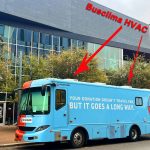 12V Camper Air Conditioner used in medicalmobile
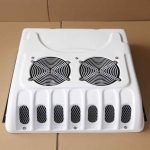 Air Conditioning Units for RV and Minibus Air Conditioner
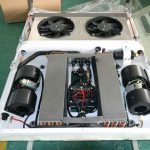 Air Conditioning Units for Campers Installation Process
 Similarities between RV Camper Air Conditioner and Minibus AC
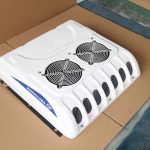 Ac For RV Camper Market Analysis Report
 Air Conditioning for Motorhomes Manufacturing Process
 Camper Air Conditioner
 Camper Ac
 12V Air Conditioner For Motorhome
 Motorhome Rooftop Air Conditioners
 Small Air Conditioner For Rv
 Camper Roof Air Conditioner
 12 Volt Rv Ac Unit
 12V Ac Unit For Rv
 Small Ac For Camper
 12V Rv Ac Unit
 Best Ac For Rv