
12V Camper Air Conditioner, integrated into mobile medical vehicles (such as mobile clinics, medical examination vehicles, and blood donation vehicles), represents a cutting-edge challenge balancing the requirements of a highly reliable medical environment with complex onboard energy management. Its evaluation standards far exceed those of ordinary RV applications, requiring a systematic analysis from four dimensions: parameter adaptation, scenario characteristics, customer attributes, and medical professional needs.
Performance Parameters – Safety and Efficiency Boundaries Under High Current
The high energy efficiency of the 12V Camper Air Conditioner attracts mobile medical vehicle conversion developers, but its continuous operating current of 100-150 amps often causes excessive voltage drop across the power grid, overheating of cables, and even unexpected equipment shutdowns, directly threatening the stable operation of medical equipment.
Mobile medical vehicles house sophisticated and sensitive testing instruments (such as biochemical analyzers and ultrasound machines), requiring extremely stable power supply voltage. Without precise design, the high current load of a 12V air conditioner can lead to drastic fluctuations in the vehicle’s power grid voltage.
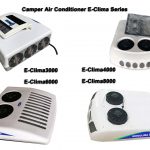
| Model | E-Clima2200 | E-Clima3000 | E-Clima4000 | E-Clima6000 | E-Clima8000 | E-Clima2600S |
| Voltage (V) |
DC12V/24V | DC12V/24V | DC12V/24V | DC12V/24V | DC12V/24V | DC12V/24V |
| Cooling Capacity (W/BTU) |
2200W//7500 | 3000W/10000BTU | 4000W/15000BTU | 6000W/20472BTU | 8000W/27300BTU | 2600W/78870BTU |
| Installation | Rooftop Mounted | Rooftop Mounted | Rooftop Mounted | Rooftop Mounted | Rooftop Mounted | Split Mounted |
| Evaporator Air Volume (m³/h) |
650 | 700 | 650 | 650 | 1500 | 450 |
| Condenser Air Volume (m³/h) |
1050 | 1400 | 1050 | 1700 | 3600 | 1400 |
| Refrigerant | R134a | R134a | R134a | R134a | R134a | R134a |
| Dimension (mm*mm*mm) |
700*580*263 | 885*710*290 | 700*580*263 | 1580*385*180/ 920*928*250 |
1260*1030*180 | 682*465*192 540*362*165 |
| Weight (KG) |
32 | 35 | 18/47 | 18/47 | 31 |
The 2025 White Paper on Safety Specifications for Electrical Systems of Special Vehicles clearly states that the maximum permissible voltage fluctuation range of the electrical grid in vehicles housing life support and critical diagnostic equipment should not exceed ±5% of the nominal voltage. The White Paper further cites a case where a mobile medical examination vehicle experienced a sudden voltage drop in the power grid upon startup of its 12V air conditioner, causing a blood analyzer to reset and disrupting the testing process. Shen, a leading expert in power systems, emphasized at a relevant review meeting: “When selecting a 12V air conditioner for a medical vehicle, the primary considerations are ‘electromagnetic compatibility’ and ‘voltage stability,’ not simply energy efficiency. The total current under the worst operating conditions must be calculated, and accordingly, an independent large-section power supply circuit, intelligent sequential power-on logic, and sufficient instantaneous battery discharge capacity (C-value) must be designed to minimize the interference of the air conditioner on medical equipment.”
Therefore, the core “parameter” for applying a 12V air conditioner in a medical vehicle is system robustness assessment. Precise simulation calculations of the vehicle’s electrical load are essential. Priority should be given to DC inverter models with “soft start” functionality and relatively stable operating current, and these should be equipped with independent power branches and protection systems to ensure absolute priority and purity of power supply for medical loads.
Usage Scenarios—Challenges of All-Weather Emergency and Multi-Mode Power Supply
Medical vehicles face complex mission scenarios. They need to pre-cool/preheat the cabin environment while in motion, operate independently for extended periods in remote areas with the engine off, and may require rapid replenishment of energy from the mains. This places stringent demands on the energy adaptability of the air conditioning system.
The operational modes of medical vehicles require their energy systems to possess multiple conversion and seamless integration capabilities. While in motion, the air conditioning primarily relies on the vehicle’s chassis generator and onboard battery power; when parked, it relies on a large-capacity energy storage battery and possible external mains power or generator. The 2025 National Emergency Medical Vehicle Equipment Technology Symposium reached a consensus, pointing out that the next-generation mobile medical platform should adopt a “hybrid energy architecture.” Its environmental control system (air conditioning) must be able to intelligently identify and adapt to different input sources (12V DC, 220V AC), and switch seamlessly and imperceptibly. Zhao Lei, chief engineer of the information-based medical vehicle project, explained at the symposium: “Our nucleic acid sampling vehicle operates efficiently with a 12V Camper Air Conditioner; upon arrival at the site, it automatically and seamlessly switches to external 220V AC mains power while simultaneously charging the vehicle’s battery, ensuring uninterrupted energy flow and stable environmental conditions. This is crucial for maintaining the storage temperature of sampled materials.”
Therefore, the 12V air conditioning system suitable for medical vehicles must be integrated into a more comprehensive “hybrid energy management framework.” The ideal solution is a combination of “12V DC air conditioning + bidirectional inverter/charging system,” enabling the vehicle to intelligently and seamlessly switch between DC battery power and external AC power, ensuring absolute continuity of environmental control during medical missions.
Customer Base – Institutional Procurement and Lifecycle Responsibility
The procurement decision-makers (such as health commissions, disease control centers, and military logistics departments) and end-users (medical personnel) have different focuses. Procurement parties focus on lifecycle costs and compliance, while users are more concerned with ease of operation and environmental comfort.
As institutional clients, our procurement follows strict government procurement processes. The core decisions are “technical specification compliance,” “product reliability,” and “total cost of ownership (TCO),” with contractual requirements regarding equipment supplier qualifications, after-sales service networks, and emergency response times.
The 2025 “Blue Book on Public Health Equipment Procurement and Management” analysis indicates that for mission-critical medical vehicles, the mean time between failures (MTBF) of their critical subsystems (including air conditioning) is typically more than three times the civilian standard, and suppliers are required to provide detailed reliability data reports. The blue paper quotes a provincial procurement center manager as saying, “The failure of the internal environmental control system of the mobile CT vehicle we purchase could damage CT equipment worth millions or distort data. Therefore, air conditioning is not an independent component, but part of the ‘medical environment protection system.’ What we need is a system solution and a long-term service agreement with clear legal responsibilities, not just the air conditioning hardware itself.”
Therefore, the marketing of 12V Camper Air Conditioners for mobile medical vehicle customers must shift from “product sales” to the output of “system solutions and service systems.” Suppliers need to have the complete capability to provide everything from electrical design, installation and commissioning, to 24/7 emergency response and regular preventative maintenance, and be able to demonstrate the reliability of their products under harsh operating conditions such as long-term vibration and frequent start-stop cycles with compliant documentation.
Special Requirements—Medical Regulations and Infection Control
The mobile medical vehicle cabin is not only a physical space, but also a medical facility subject to health regulations. The airflow organization, air filtration, and condensate drainage methods of ordinary air conditioners may not meet infection control principles.
Medical environments require measures to prevent cross-infectiosssssssssss must consider air cleanliness, airflow direction (e.g., preventing air from contaminated areas from flowing into clean areas), and microbial growth control.
According to the draft of the 2025 revised “Guidelines for the Construction and Infection Control of Mobile Medical Units,” it is recommended that medical vehicles used for invasive procedures or sample processing should have air conditioning systems equipped with high-efficiency filters (HEPA or equivalent standards) and should have guidelines for the ratio of return air to fresh air. Furthermore, condensate pans, as potential breeding grounds for bacteria, need to be designed for easy regular disinfection and cleaning. Professor Wu, an expert in hospital infection control, pointed out at a related demonstration meeting: “The air conditioning design of medical vehicles should be based on ‘cleanliness thinking.’ For example, in sampling vehicles, airflow should flow from the medical staff’s work area to the passenger sampling area, and finally be exhausted outside the vehicle, forming a directional airflow. The recirculation mode of ordinary air conditioners may need to be modified. At the same time, the condensate drainage pipeline must eliminate the risk of backflow contamination.”
Therefore, the 12V air conditioners used in medical vehicles, in addition to their basic cooling function, must undergo an additional evaluation of their suitability for medical scenarios. This includes: Does it support the convenient installation of higher-level air filtration modules? Is the air duct easily customizable to meet cleanliness requirements? Does the condensate drainage comply with aseptic treatment principles? When selecting suppliers, priority should be given to those with medical industry application cases and product designs that include medical-grade modification interfaces.
12V Camper Air Conditioner Overall Conclusion
Integrating a 12V rooftop air conditioner into a medical vehicle platform is an interdisciplinary challenge that combines high-reliability electrical engineering, hybrid energy management, institutional procurement logic, and medical infection control. The key to success lies in treating the air conditioner as a core energy execution component of a “safety-assured medical environment control system,” rather than an independent temperature control device. The decision-making path should be: First, clarify the specific medical purpose and infection control level (special needs) to define airflow and filtration standards; second, identify the core responsibilities and contractual requirements of the procurement and user organizations (customer groups); third, analyze the actual task scenarios and energy acquisition patterns (usage scenarios) to design a hybrid energy architecture; finally, within this framework, select a 12V air conditioning product with matching parameters (current stability, reliability) and medical compatibility potential, and conduct system-level integration, verification, and service contracting. The ultimate goal is to achieve “zero failure” environmental control, providing a solid physical foundation for mobile healthcare services.

Related posts:
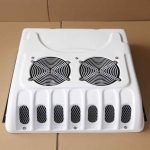 Air Conditioning Units for RV and Minibus Air Conditioner
 Similarities between RV Camper Air Conditioner and Minibus AC
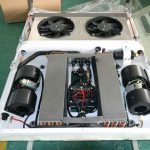 Air Conditioning Units for Campers Installation Process
 Air Conditioning for Motorhomes Manufacturing Process
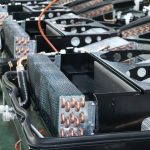 Camper Air Conditioner
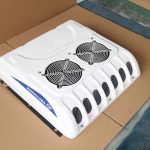 Ac For RV Camper Market Analysis Report
 Camper Ac
 12 Volt Rv Ac Unit
 12V Ac Unit For Rv
 12V Rv Ac Unit
 15000 Btu Camper Air Conditioner
 Small Air Conditioner For Rv
 Camper Roof Air Conditioner
 Small Rv Ac
 Small Ac For Camper
 Camper Air Conditioning Unit
 Best Ac For Rv
 Low Profile Rv Ac Unit