
Roof AC for Campers
Technical White Paper on Multi-Unit Roof AC for Campers and Buses Systems
Roof AC for Campers can solve the challenges of uniform temperature control and energy saving in large spaces and high passenger capacities. The distributed system solution using multiple roof-mounted air conditioners has become the mainstream technology in the industry.
At the International Bus Technology Alliance (IBTA) annual meeting held in the same year, participating experts unanimously agreed that modular, high-efficiency roof-mounted air conditioning units are one of the core components for improving the overall competitiveness of new-generation new energy and traditional power buses.
In the face of the dual challenges of global warming and low-carbon transformation in the transportation sector, energy consumption and comfort management of urban and intercity public transportation have become crucial.
According to data cited in the 2025 “China Transportation Sustainable Development Annual Report,” the air conditioning system accounts for 30%-40% of the energy consumption of large and medium-sized buses during high-load operation.

1. Roof AC for Campers – From Single Unit Dominance to Collaborative Group Control
Reasons: Limitations of Traditional Solutions and the Emergence of New Demands
Traditional large and medium-sized buses often use a single large Roof Ac For Campers or independent front and rear air conditioners. The former has a long air duct, which easily leads to significant temperature differences between the front and rear compartments; the latter suffers from low system redundancy, poor energy consumption coordination, and occupies chassis space. With the increasingly stringent requirements for space layout and energy efficiency in new energy buses, and the increased expectations of passengers for overall cabin comfort, a multi-unit roof-mounted air conditioning system based on standardized modules, flexible combinations, and intelligent collaborative operation has emerged.
Process: Technological Integration of Modularity, Integration, and Intelligence
The core design philosophy of the multi-unit roof-mounted air conditioning system is “distributed cooling, centralized control.” Its technological evolution is reflected in three aspects:
Structural Modularity: As revealed in patent document CN204806541U, the advanced design uses an integrated compact structure for each roof-mounted air conditioning unit, achieving standardized packaging through a mounting frame. Internally, independent internal circulation (evaporation) and external circulation (condensation) spaces are physically separated by an intermediate partition, achieving efficient heat exchange and avoiding airflow short circuits. The key lies in the fact that its installation framework is designed with standard connection interfaces (such as sliding grooves and angular fasteners), allowing multiple independent air conditioning units to be quickly combined into a physical “air conditioning group” on the roof, either in parallel or in series, like assembling building blocks.
Integrated Control: Multiple physically independent air conditioning units do not operate independently. They are connected to the same central control system via bus technology. This system, like an orchestra conductor, can dynamically adjust the operating status of different air conditioning units (start/stop, fan speed, cooling output) based on feedback from temperature sensors placed in multiple areas of the passenger compartment, achieving precise zone temperature control.
Optimized Energy Efficiency: Taking Invertek, a leading provider of temperature control solutions, as an example, its products for new energy buses have achieved full variable frequency technology. When using multiple units, the system can intelligently determine the number of units to start based on the total heat load and operate at the optimal energy efficiency point, avoiding the energy waste of “using a large engine for a small load.”
Result: A highly flexible and reliable temperature control system is formed.
The resulting system is not only physically flexible in configuring the number of units according to different vehicle lengths and seating layouts (e.g., a 12-meter bus usually uses 2-3 units), but also logically becomes an intelligent whole that can be uniformly scheduled and hierarchically adjusted. This solves the chronic problem of uneven temperature in large spaces, and significantly improves the reliability and economy of the system through redundant design (single unit failure does not affect the basic operation of other units) and collaborative energy saving.
2. Roof AC for Campers – Core Performance Parameters and Typical Application Scenario Analysis
Reason: Parameters are the scientific basis for matching scenario needs.
Selecting and configuring multiple roof-mounted air conditioning systems must be based on accurate load calculations and scenario analysis. Core parameters determine the system’s capabilities and application efficiency.
Process: Key Parameter Analysis and Scenario Mapping
The following table summarizes the core parameters considered for multiple roof-mounted air conditioning systems and their configuration logic in different application scenarios
| Parameter Category | Specific indicators and descriptions | The impact of scene requirements and application logic. |
|---|---|---|
| Single-unit performance and energy efficiency | Cooling capacity: Typically, a single unit covers a heat load of 20-30 kW (approximately 60,000-90,000 BTU/h). COP (Coefficient of Performance): High-end, fully inverter-driven models can achieve a COP of 3.0 or higher at high load. Noise: The sound pressure level of the indoor unit at full load is usually required to be ≤65 dB(A). |
Cooling capacity is fundamental. For example, city buses with frequent stops and high passenger turnover need to cope with the instantaneous high load caused by frequent door openings and closings, requiring the unit to have rapid cooling capabilities and high energy efficiency. Long-distance tour buses, on the other hand, prioritize quiet operation and uniform temperature distribution within the cabin during continuous operation, demanding higher standards for low-noise fan design and even airflow distribution. |
| System combination and layout | Number of units: Determined by a combination of vehicle length, glass area, and rated passenger capacity. Installation location: Evenly distributed along the roof longitudinal beams, usually avoiding areas with severe vibration and shock near the front and rear axles. Air supply method: Can use ducted air supply (concealed, requires duct design) or direct side air supply. |
School bus designs prioritize safety, and the HVAC system layout must ensure that it does not obstruct escape routes in emergency situations. Airport shuttle buses, due to their low floor and large, transparent windows, experience significant heat loads, often requiring a maximized number of HVAC units and optimized condenser airflow design. |
| Electrical and compatibility | Input voltage: Traditional fuel vehicles use 24VDC/generator sets; new energy vehicles mostly use high-voltage platforms (such as 550VDC). Communication protocol: Must be compatible with the vehicle’s CAN bus to enable energy consumption interaction with the battery management system (BMS). |
For new energy buses, this is of paramount importance. As a major consumer of electricity, the air conditioning system’s compressor and fan variable frequency drives must be perfectly matched with the vehicle’s high-voltage electrical architecture. The system must be able to receive instructions from the BMS (Battery Management System) to intelligently limit power or enter energy-saving mode when the battery level is low, thus ensuring the vehicle’s driving range. |
| Environmental reliability | Operating temperature range: Cooling mode typically requires operation at an ambient temperature of 55℃; heating mode (if equipped with a heat pump) must be able to start at -20℃. Protection rating: The enclosure must meet at least IPX4 splash-proof rating. |
Vehicles operating in cold regions require power units with strong heating capabilities and reliable low-temperature starting performance. Vehicles used in coastal or high-humidity areas have higher requirements for corrosion and mold resistance in their air conditioning systems, and the evaporators need to be equipped with high-efficiency antibacterial coatings and drainage designs. |
Result: Achieving the optimal configuration scheme for specific scenarios
Through the precise matching of the above parameters, multiple roof-mounted air conditioning systems can provide customized solutions for different operating scenarios. For example, at the 2025 public transportation equipment exhibition in Shenzhen, a manufacturer showcased a bus air conditioning solution specifically designed for “high-temperature and high-humidity” regions. This solution particularly emphasized the large surface area design of the condenser, the powerful dehumidification mode of the indoor unit, and the military-grade anti-corrosion treatment of key components.
3. Roof AC for Campers – Systemic Advantages and Value Creation
Reason: Value beyond a single device, providing a holistic solution
The value of multiple roof-mounted air conditioners is not simply the sum of individual units, but rather the synergistic effect of “1+1>2” achieved through system integration.
Process: Building multi-dimensional advantages
Its systemic advantages are reflected in four aspects:
Space utilization and aesthetic optimization: All units are centrally located on the roof, completely freeing up valuable chassis space, which is crucial for new energy buses that require large-capacity batteries. The unified mounting frame ensures a smooth and streamlined roof line, enhancing the overall industrial design aesthetics of the vehicle.
Significant improvement in comfort: Distributed airflow fundamentally eliminates hot and cold spots. Front-row passengers no longer have to endure excessively strong cold air, and rear-row passengers can also enjoy timely cooling. Through multi-zone sensing and intelligent control, the system can dynamically maintain uniform temperature throughout the cabin, with a temperature difference controllable within ±1.5℃, which is difficult to achieve with a single air conditioner.
Dual guarantee of energy efficiency and reliability: Wang Qiming, a senior bus thermal management engineer, wrote in the third issue of “Commercial Vehicle Technology” in 2025: “The multi-unit system, through master-slave logic and load-following algorithms, can improve its comprehensive seasonal energy efficiency ratio (SEER) by more than 25% compared to traditional fixed-frequency single-unit systems.” At the same time, when one unit fails, the system can automatically adjust the operating strategy of the remaining units to maintain basic cooling capacity, ensuring that the vehicle can continue to operate until it reaches a repair station, greatly improving the uptime.
Better total cost of ownership: Although the initial investment may be slightly higher, its energy-saving effect directly reduces the operator’s electricity or fuel costs. The modular design makes maintenance and component replacement easier, and the standardized units also reduce the complexity of spare parts inventory. In its 2023 Corporate Social Responsibility report, Invicta disclosed that its high-efficiency temperature control products create energy-saving value for customers throughout their lifecycle, far exceeding the initial purchase cost.
Result: Becoming a key element in enhancing the competitiveness of bus products
In summary, the multi-unit roof-mounted air conditioning system, through technological integration, upgrades traditional functional components into an intelligent and efficient “comfort management platform.” It is not only equipment that meets basic heating and cooling needs, but also a key value creation point for bus manufacturers to build a high-end brand image, for operators to reduce total cost of ownership (TCO), and for passengers to obtain a high-quality travel experience.
4. Roof AC for Campers – Target Customer Groups and Decision Considerations
Reason: Clearly defining the value proposition and precisely matching customers’ core concerns
Different bus user groups have significantly different core demands for procurement and operation. The promotion of multi-unit roof-mounted air conditioning systems requires precisely targeting the customer groups whose value can be best perceived and recognized.
Process: Customer profiling and value proposition analysis
Bus companies: As the largest purchasing group, their core demands are high reliability, low failure rate, extreme energy efficiency, and low maintenance costs. They are concerned about ensuring system operation in extreme weather conditions and the electricity cost savings directly reflected in energy consumption data. When making decisions, they place particular emphasis on energy efficiency certification, MTBF (Mean Time Between Failures) data, and localized rapid service capabilities.
Tourism and group transportation companies: These customers prioritize passenger experience and brand image. They require air conditioning systems that operate extremely quietly, provide uniform and comfortable temperatures, and have an aesthetically pleasing appearance. For high-end tourist charter services, the ability to achieve independent temperature control in the front and rear compartments, or even “draft-free” gentle airflow, is often a bonus feature for vehicle configuration.
Bus manufacturers (OEMs): Manufacturers are technology integrators. Their needs lie in platform universality, integration with overall vehicle design, lightweight design, and supply chain stability. Modular, standardized multi-unit systems can shorten the development cycle of their different vehicle platforms and reduce procurement and management costs. For example, mainstream domestic manufacturers have already adopted multi-unit collaborative roof-mounted air conditioning systems as standard or core optional configurations for their mid-to-high-end models. Overseas High-End Markets and Special-Purpose Customers: For example, municipal vehicles and airport special vehicles in developed countries have mandatory or strong preferences for environmentally friendly refrigerants (such as R-290), extreme energy efficiency, and intelligent connectivity functions (remote pre-cooling and pre-heating, fault warning). Multi-unit systems, due to their high configurability and ease of integrating advanced controls, are better able to meet these customized, high-standard requirements.
Result: Solution-Driven Procurement Decisions
For these customers, multi-unit roof-mounted air conditioning systems are no longer a passive “configuration option,” but an active “solution” that provides value. Sales communication should shift from “equipment parameters” to “what problems we can solve for you and what value we can create,” for example, demonstrating power saving calculation models to bus companies and showing survey data on improved customer satisfaction to tourism companies.
5. Roof AC for Campers – Future Trends and Summary
Looking ahead, with the deep integration of the Internet of Things, artificial intelligence, and vehicle electrification, multi-unit roof-mounted air conditioning systems for buses will evolve towards integrated “cloud-edge-end” intelligent thermal management. The system will not only respond to in-cabin needs but also combine cloud-based weather forecasts, real-time traffic conditions, and battery thermal management requirements to perform globally optimal energy efficiency pre-adjustment. For example, before the vehicle arrives at a charging station, the system can pre-adjust the cabin temperature, thus allocating more charging power to the battery and shortening charging time.
Conclusion: The adoption of multi-unit roof-mounted air conditioning in buses is an inevitable technological choice for the modern passenger vehicle industry to address the challenges of space, energy consumption, and comfort. Through modular, distributed, and intelligent design, it has achieved a leap from a single cooling device to a comprehensive environmental management system. Its value is deeply embedded in the entire chain of bus design, manufacturing, operation, and experience, becoming an indispensable core system in defining the next generation of high-quality passenger vehicles.
Related posts:
 15000 BTU Camper AC Multiple units
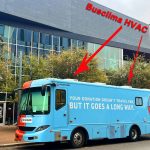 12V Camper Air Conditioner used in medicalmobile
 12 Volt Camper Ac
 15000 Btu Air Conditioner Rv
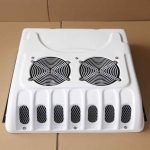 Air Conditioning Units for RV and Minibus Air Conditioner
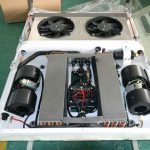 Air Conditioning Units for Campers Installation Process
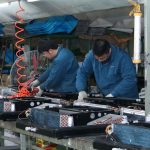 Air Conditioning for Motorhomes Manufacturing Process
 Similarities between RV Camper Air Conditioner and Minibus AC
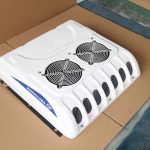 Ac For RV Camper Market Analysis Report
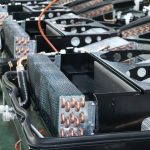 Camper Air Conditioner
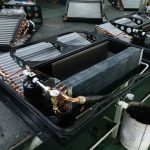 Camper Ac
 15000 Btu Camper Air Conditioner
 Motorhome Rooftop Air Conditioners
 12V Air Conditioner For Motorhome
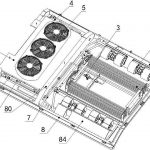 Bus Air Conditioner is used for buses and medium-sized commercial vehicles
 12V Camper Ac
 12 Volt Rv Ac Unit
 Camper Roof Air Conditioner