
Air Conditioning Units For Motorhomes
Air Conditioning Units For Motorhomes: Modular Solutions for Large Space Temperature Control
On a hot desert highway, the temperature inside a large motorhome remains constant at 24℃, while the motorhome’s engine remains silent—this is thanks to a smart temperature control system silently working in the background, composed of multiple 12V DC inverter compressors.
As large recreational vehicles (bus-type motorhomes) evolve into “mobile smart spaces,” their air conditioning systems are undergoing a silent revolution. Faced with the vast space and complex layout far exceeding that of ordinary vehicles, a single air conditioning unit is no longer sufficient.
The industry is addressing this fundamental contradiction by deploying multiple independent cooling units, combined with advanced low-voltage DC inverter technology.

01 Technological Breakthrough: Why Must Bus-Type Motorhomes Use Multiple Air Conditioning Units?
The centralized design of traditional household or small RV air conditioners encounters fundamental physical limitations when applied to the special scenario of bus-type motorhomes.
Bus-type motorhomes have huge interior spaces, usually divided into multiple functional areas such as the driving area, living area, bedroom, and bathroom, and have numerous glass windows, resulting in extremely high and unevenly distributed heat load.
This is due to the first law of thermodynamics: to quickly cool and maintain a uniform and comfortable temperature in a 40-square-meter enclosed space that may accumulate over 45,000 BTU of heat on a summer afternoon requires enormous cooling power and scientific airflow organization.
Traditional single rooftop air conditioners, even with sufficient power, will result in huge temperature differences between the front and rear due to the long air supply distance, poor cooling effect in the far areas, concentrated operating noise, and low energy efficiency.
After practical testing and exploration of various solutions, the industry has gradually reached a consensus on distributed solutions. This involves installing multiple independent cooling units (usually with a cooling capacity of 7000-13500 BTU each) on the roof or side walls of the vehicle, targeting different functional areas. These units can be independently switched on and off and have independent temperature control, achieving “zone control.”
This modular design concept was fully showcased at the 10th Guangzhou International Auto Parts and Aftermarket Exhibition (AAG) held in August 2025. Leading industry brands showcased their latest solutions, confirming that this technological approach has become crucial for meeting the demands of the high-end RV market.
The result is a complete overhaul of the temperature control logic in motorhomes. It has shifted from a “single unit control” to a “multi-unit collaboration and zone management” system. This not only solves the problem of insufficient cooling at the ends of the vehicle but also provides redundant backup for added safety – if one cooling unit fails, the others can still maintain basic comfort, which is crucial for long-distance travel in remote areas.
02 Core Parameters: Decoding the Technical Selection of Multiple Air Conditioning Units for Motorhomes
Choosing a suitable multi-unit cooling system is not simply a matter of adding units, but rather a system engineering process based on precise calculations and matching. The following is the matrix of core parameters that determine system efficiency and reliability:
Understanding these parameters clarifies the configuration logic: For a 12-meter-long large motorhome, a high-power unit (e.g., 13500 BTU) might be installed in the front living area, and a standard power unit (e.g., 7000 BTU) in the middle kitchen and rear bedroom. All units use a compatible 12V DC inverter system and are centrally managed by an intelligent main controller, achieving independent temperature control in the front, middle, and rear areas.
03 Application Scenarios: How Multiple Air Conditioning Units for Motorhomes Precisely Match Diverse Needs
The usage scenarios of motorhomes are far from singular, and the value of a multi-unit cooling system lies in its deep adaptability to different lifestyles and work modes.
| Model | E-Clima2200 | E-Clima3000 | E-Clima4000 | E-Clima6000 | E-Clima8000 | E-Clima2600S |
| Voltage (V) |
DC12V/24V | DC12V/24V | DC12V/24V | DC12V/24V | DC12V/24V | DC12V/24V |
| Cooling Capacity (W/BTU) |
2200W//7500 | 3000W/10000BTU | 4000W/15000BTU | 6000W/20472BTU | 8000W/27300BTU | 2600W/78870BTU |
| Installation | Rooftop Mounted | Rooftop Mounted | Rooftop Mounted | Rooftop Mounted | Rooftop Mounted | Split Mounted |
| Evaporator Air Volume (m³/h) |
650 | 700 | 650 | 650 | 1500 | 450 |
| Condenser Air Volume (m³/h) |
1050 | 1400 | 1050 | 1700 | 3600 | 1400 |
| Refrigerant | R134a | R134a | R134a | R134a | R134a | R134a |
| Dimension (mm*mm*mm) |
700*580*263 | 885*710*290 | 700*580*263 | 1580*385*180/ 920*928*250 |
1260*1030*180 | 682*465*192 540*362*165 |
| Weight (KG) |
32 | 35 | 18/47 | 18/47 | 31 |
For families pursuing the ultimate experience during long-distance travel, the core value of the system lies in comfort and quietness. While parents watch movies in the living room, they can set the temperature in that area to 24℃, while children napping in the bedroom can have their area set to 26℃ with night mode enabled. The independent operation of multiple units avoids mutual interference from different schedules, and the low noise and stable temperature control provided by inverter technology ensure the sleep quality of the whole family.
For users who use motorhomes as mobile business lounges or high-end reception vehicles, rapid response and uniform comfort are crucial. Before guests board, all cooling units can be remotely activated simultaneously via a mobile app to quickly lower the interior temperature to a comfortable range. Distributed airflow ensures there are no hot or cold spots in the vehicle, providing a consistent ambient temperature for both front-seat conversations and rear-seat relaxation, enhancing the business image and customer experience.
For special-purpose vehicles operating in extreme environments (such as high-altitude scientific research vehicles and field engineering command vehicles), system reliability and environmental adaptability are critical. The multi-unit design provides inherent redundancy; even if one unit fails due to extreme weather, other units can still maintain basic temperature control in critical areas (such as equipment rooms and command consoles). At the same time, the compressor, specifically designed for vehicle use, features high vibration resistance and wide temperature range operation, meeting the demands of harsh working conditions.
As industry experts have pointed out in their analysis of electric vehicle air conditioning trends, independently electrically driven air conditioning systems are not affected by engine speed and can more accurately and efficiently meet the needs of different operating conditions. This advantage is amplified in the multi-unit cooling systems of large buses and motorhomes, making it the optimal solution for complex scenarios.
04 System Advantages: Air Conditioning Units For Motorhomes – Integrated Value Beyond Single Devices
The use of multiple cooling units offers value far beyond the simple sum of multiple independent Camper Ac Unit. Through systematic design and intelligent integration, it achieves a composite advantage of “1+1>2”.
First, a revolutionary improvement in energy efficiency. This is achieved through DC inverter technology and intelligent load distribution. The core of each cooling unit—such as the Boyang JVSB150Z12 compressor—uses DC inverter drive, with a COP (Coefficient of Performance) as high as 2.9. This means that consuming 1 watt of electricity can produce nearly 3 watts of cooling.
The intelligent control system can precisely adjust the speed of each compressor according to the actual temperature and set point in each area, always operating at the most economical power, avoiding the “start-stop-power consumption” cycle of traditional fixed-frequency air conditioners. It is estimated that the overall energy efficiency can be improved by more than 25% compared to traditional solutions.
Second, dual guarantees of safety and reliability. The multi-unit architecture provides distributed risk. In a single-system design, compressor failure means the entire vehicle’s air conditioning is paralyzed. In a multi-unit system, a single module failure only affects a local area, allowing the vehicle to maintain basic comfort or move to other areas, buying time for repairs. From an electrical safety perspective, because each compressor has a moderate power rating (e.g., 725W), its starting and running current (e.g., 60A) is relatively controllable, reducing the risk of line overload and overheating due to excessive current at a single point. The power distribution design is also safer and more flexible.
Third, unparalleled comfort experience. This is reflected in three aspects: speed, quietness, and uniformity. Multiple units starting simultaneously means cooling is much faster than a single unit; the variable-frequency compressors and distributed layout minimize operating noise, resulting in a quieter cabin; and each zone can have its temperature set independently, meeting personalized needs and completely eliminating temperature stratification and unevenness within the space.
05 Target Audience: Who are the Air Conditioning Units for Motorhomes designed for, and what is their value?
This technologically advanced and costly system precisely serves a niche customer base with extremely high demands for quality mobile living.
High-end long-distance traveling families and adventurers are the core users. They typically undertake global trips or in-depth expeditions lasting months or even years, with their vehicle serving as a mobile home. They are willing to invest in the core value of “enjoying stable and comfortable conditions like home in any climate.” The system’s long-term reliability, off-grid endurance, and quiet operation directly determine their travel happiness.
Specialized industries and corporate users are another important group. This includes high-end outdoor tourism operators, film and television production crews, mobile medical examination vehicles, and field engineering units in the oil and gas and geological sectors. For them, the motorhome is a mobile office and support base. A stable and controllable interior environment is a fundamental productivity tool for ensuring work efficiency, proper equipment operation, and even personnel health. The system’s reliability and zone control capabilities meet the differentiated temperature control needs of different areas for work, living, and equipment storage.
The luxury business reception and custom modification market values the taste and technological sophistication it demonstrates.
For luxury motorhomes used for corporate reception, mobile showrooms, or private clubs, the interior and configuration themselves are symbols of strength. A multi-zone, independently controlled, silent-running air conditioning system that can be easily managed via touchscreen or mobile phone is the finishing touch that enhances the luxury and technological feel of the vehicle, meeting customers’ pursuit of exceptional experience and image presentation. The Integration of Intelligence and Energy Management in Air Conditioning Units for Motorhomes
With advancements in the Internet of Things and energy management technologies, the multi-unit cooling systems in motorhomes will be further integrated into the vehicle’s intelligent ecosystem. In the future, the system will be able to pre-cool the vehicle based on GPS positioning and weather forecasts before entering high-temperature areas; through deep integration with the battery management system (BMS), it will automatically adjust the operating strategy when the battery level is low, prioritizing range; and even utilize solar energy to supplement power, evolving towards a truly “energy self-sufficient comfortable cabin.”
From centralized to distributed, from fixed-frequency to variable-frequency, from mechanical to intelligent, the air conditioning system in motorhomes is undergoing a profound paradigm shift. The multi-unit independent cooling system is not just a temperature control system, but a core platform that guarantees the quality of mobile living and expands the boundaries of travel and accommodation. It calmly declares: no matter how large the vehicle is, and no matter how hot the outside temperature is, the interior will always be a pleasant spring.
Related posts:
 12V Camper Air Conditioner used in medicalmobile
 12 Volt RV Air Conditioning Units represent an energy and technological revolution
 Camper Aircon Unit – Modular Design Leads to a New Comfortable Travel
 Technical White Paper on Multi-Unit Roof AC for Campers and Buses
 15000 BTU Camper AC Multiple units
 12 Volt Camper Ac
 15000 Btu Air Conditioner Rv
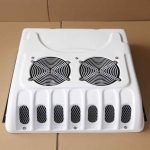 Air Conditioning Units for RV and Minibus Air Conditioner
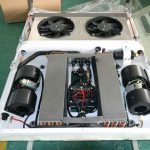 Air Conditioning Units for Campers Installation Process
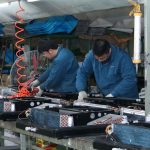 Air Conditioning for Motorhomes Manufacturing Process
 15000 Btu Camper Air Conditioner
 Similarities between RV Camper Air Conditioner and Minibus AC
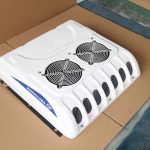 Ac For RV Camper Market Analysis Report
 Camper Air Conditioner
 Camper Ac
 Bus Air Conditioner is used for buses and medium-sized commercial vehicles
 Acc Bus Air Conditioning
 12 Volt Rv Ac Unit