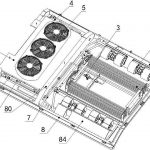
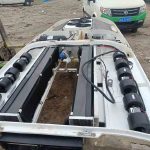
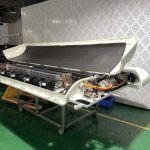
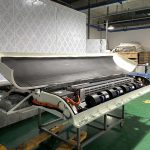
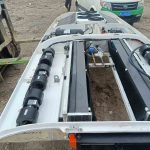
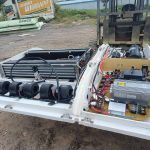
Air Conditioner For Bus directly affects passenger comfort and vehicle safety. However, a malfunction in the air conditioning system not only reduces the riding experience but may also cause safety hazards due to high temperatures or equipment overload.
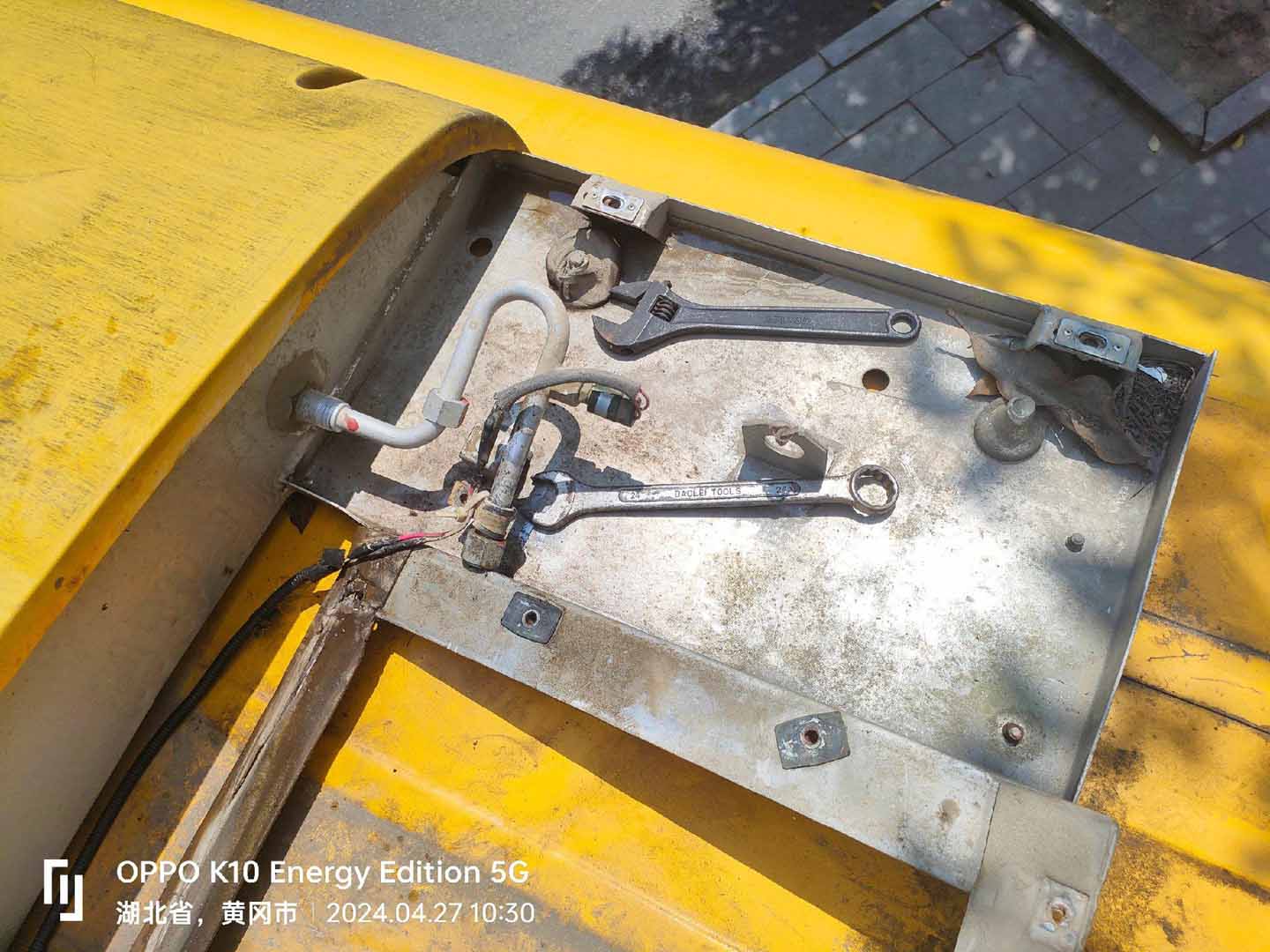
Main Components of Air Conditioner For Bus:
Compressor: Four-stroke piston design. Primarily compresses low-pressure, low-temperature gas into high-pressure, high-temperature gas.
Condenser: Cools and dissipates heat, primarily converting high-pressure, high-temperature gas into high-pressure, medium-temperature liquid.
Receiver/Drier: Stores, filters, and provides a continuous flow.
Expansion Valve: Atomizes liquid. Atomizes high-pressure, medium-temperature liquid into low-temperature gas through fine orifices.
Evaporator: Absorbs heat. Low-temperature, low-pressure gas atomized by the expansion valve enters the evaporator to absorb heat.
Air Conditioning Fan: Blows air. Air passes through the air conditioning filter, converting natural wind and the cooled evaporator into cold air, which is then blown out of the air conditioning vents.
Liquid Collector: Collects liquid and protects the compressor. To prevent the compressor from drawing in liquid and damaging the compressor piston rod (liquid is incompressible) during operation.
Refrigerant: Refrigerant (134a)
High-pressure line: The line between the compressor and the expansion valve. Indicated by “H” (commonly known as air conditioning high-pressure).
Low-pressure line: The line between the evaporator and the compressor. Indicated by “L” (commonly known as air conditioning low-pressure).
Note: Some models do not have a receiver-drier or a liquid collector; usually only one is equipped. High-end models are equipped with both.
Air Conditioner for Bus Classification
1. By drive method: Independent (a dedicated engine drives the compressor, mostly used in large and medium-sized buses) and Non-independent (Bus Air Con compressor is driven by the car engine, mostly used in small buses and cars).
2. By air conditioning performance: Single-function type (refrigeration, heating, and ventilation systems are installed and operated separately, mostly used in large buses and trucks) and Integrated heating and cooling type (refrigeration, heating, and ventilation share a blower and air duct, controlled on the same control panel; cars often use mixed temperature control). 3. According to the control method, it can be divided into: manual (controlling temperature, fan speed, and airflow direction by using function keys on the control panel) and electro-pneumatic regulation (using a vacuum control mechanism, automatically controlling temperature and airflow within a preset temperature range when the air conditioning function key is selected).
4. According to the control method, it can be divided into: automatic (using a calculation and comparison circuit, controlling the regulating mechanism through sensor signals and preset signals to automatically adjust temperature and airflow) and microcomputer-controlled fully automatic regulation (using a microcomputer as the control center to achieve comprehensive and multi-functional optimal control and regulation of the in-vehicle air environment).
Working Principle of Air Conditioner For Bus:
The automotive air conditioning refrigeration system consists of a compressor, condenser, receiver-drier, expansion valve, evaporator, and blower. These components are connected by copper pipes and high-pressure rubber hoses to form a closed system. When the refrigeration system is working, the refrigerant circulates within this closed system in different states. Therefore, the working principle of automotive air conditioning mainly consists of the following four processes:
1. Compression process: The compressor draws in low-temperature, low-pressure refrigerant gas from the evaporator outlet and compresses it into high-temperature, high-pressure gas, which is then discharged from the compressor.
2. Heat dissipation process: The high-temperature, high-pressure superheated refrigerant gas enters the condenser. Due to the decrease in pressure and temperature, the refrigerant gas condenses into a liquid, releasing a large amount of heat.
3. Throttling process: The high-temperature, high-pressure refrigerant liquid passes through the expansion device, increasing its volume and causing a rapid drop in pressure and temperature. It is then discharged from the expansion device as a mist (fine droplets).
4. Heat absorption process: The mist-like refrigerant liquid enters the evaporator. Because the boiling point of the refrigerant is much lower than the temperature inside the evaporator, the refrigerant liquid evaporates into a gas. During evaporation, it absorbs a large amount of heat from the surrounding environment, and then the low-temperature, low-pressure refrigerant vapor enters the compressor. This process repeats continuously, thereby lowering the air temperature around the evaporator.