
Motorhome Aircon 12V, with its seamless integration into the vehicle’s native low-voltage electrical architecture, superior energy efficiency, and exceptional quietness, is rapidly evolving from a cutting-edge technology into an iconic feature of high-end motorhomes.
Against the backdrop of a profound evolution in motorhome travel culture, from “exploring distant places” to “creating a high-quality mobile lifestyle,” vehicle energy self-sufficiency and all-weather comfort have become core demands.
Traditional vehicle air conditioning and 220V parking air conditioning systems relying on inverters face bottlenecks such as high energy consumption, dependence on external power sources, and high noise levels in off-grid scenarios.
Core Technical Parameters and Energy Efficiency Evolution – Motorhome Aircon 12V
Reason: The large space of motorhomes and limited battery storage capacity constitute a fundamental contradiction.
Unlike smaller RVs, motorhomes have a huge interior volume and high heat load, requiring demanding cooling capacity and continuous operation from the 12v camper AC.
At the same time, the RV’s electricity is entirely dependent on the onboard battery, making every kilowatt-hour extremely precious.
In traditional solutions, whether using the vehicle’s air conditioning at idle (high fuel consumption, carbon buildup) or driving a household air conditioner through an inverter (conversion losses of 15%-30%), it is a great waste of energy, severely limiting off-grid survival time.
Process: A precise energy efficiency revolution led by DC inverter technology.
The core breakthrough of modern 12V DC air conditioners lies in the adoption of full DC inverter technology. Its technical parameter evolution is reflected in three aspects:
Direct and efficient power path
The system is directly driven by the RV’s 12V battery, eliminating the inverter stage and fundamentally avoiding energy conversion losses, achieving higher overall energy efficiency.
Intelligent regulation and low starting current
The inverter compressor can steplessly adjust the operating power according to the interior temperature and actual heat load, avoiding the energy consumption impact caused by frequent starts and stops.
Industry-leading brands such as KME offer products with instantaneous starting currents below 3A, which is extremely battery-friendly. A detailed case study of a modified system shows that a carefully tuned 12V DC inverter air conditioning system can achieve a total system energy efficiency ratio (EER) of 3.4-4.0 when the cooling capacity exceeds 1000W (approximately 3400 BTU/h). This means that for every watt of electricity consumed, it can provide 3.4-4 watts of cooling, far exceeding the energy efficiency of traditional fixed-frequency products.
Lightweight and Low-Noise Design
To accommodate the weight sensitivity of RVs, the casing uses lightweight solutions such as high-molecular composite materials.
At the same time, the split-system design places the compressor and condenser fan, which generate the main noise, outside the vehicle (on the roof, under the chassis, or at the rear), ensuring extremely low indoor noise.

Result: The 12V DC air conditioner has evolved from a high-energy-consuming device into a “smart energy-saving terminal” that can communicate with the vehicle’s energy management system (BMS).
Through precise control of current, power, and speed, it provides sufficient cooling while minimizing energy consumption, directly extending the time RVs can sustainably travel using their own batteries and solar panels, achieving a balance between comfort and self-sufficiency.
Diverse Usage Scenarios and System Adaptability – Motorhome Aircon 12V
Reason: The complexity of RV living scenarios and users’ expectations for seamless functionality.
RV users’ activity ranges from urban campsites to wilderness plateaus, and usage scenarios include long-distance driving, campsite parking, and wild camping.
Users expect the air conditioning system to seamlessly cover all scenarios without affecting vehicle passability, aesthetics, or other functions.
Process: Modular design and installation flexibility to meet diverse needs.
The 12V DC air conditioning system meets different scenarios through a rich product range:
All-Scenario Temperature Control
Excellent 12V DC air conditioners can be used not only when parked but also continuously during vehicle operation, completely replacing or supplementing the original vehicle’s driving air conditioning, achieving uninterrupted “driving-parking” cooling.
Flexible Installation Adaptability
To meet the layout and height restrictions of different vehicle models, the product line is extremely diverse. For example, KME offers various outdoor unit configurations, including top-mounted (K12TS), rear-mounted (K12BS), and underbody-mounted (K48UX, also available in a 12V model).
The top-mounted unit saves interior space; the rear-mounted unit is suitable for vehicle owners sensitive to vehicle height; and the underbody-mounted unit is completely hidden, resulting in low wind resistance and a low center of gravity.
The indoor unit can also be selected with top air outlet, bottom air outlet, or ducted type, perfectly integrating into customized interiors.
Addressing Extreme Environments
Some underbody-mounted outdoor units, specifically designed for complex road conditions, feature a metal casing and are equipped with dual fans for enhanced heat dissipation, ensuring stable operation in harsh road conditions and high-temperature environments.
Result: Modular and Flexible Adaptation
The 12V DC air conditioning system provides customized thermal management solutions for various types of motorhomes (whether B-type business RVs or C-type luxury RVs).
It ensures that users can enjoy a continuous, stable, and quiet comfortable environment in various scenarios such as urban areas, rural areas, mountains, and coastal areas, truly achieving “freedom of movement, worry-free cooling and heating.”
Comparative Product Advantage Analysis – Motorhome Aircon 12V
Reason: The market offers various air conditioning solutions, and users need to make the best trade-off between reliability, economy, and comfort.
In addition to the 12V DC solution, the market also offers original vehicle air conditioning, 220V AC parking air conditioning (requiring an inverter), and generator-driven air conditioning.
Each solution has its limitations, such as inconvenience of use, high noise levels, low efficiency, or reliance on external infrastructure.
Process: Comprehensive performance leadership.
Compared with other solutions, the 12V DC inverter air conditioner demonstrates comprehensive advantages:
| Comparison dimensions | 12V | 220V |
|---|---|---|
| System compatibility | Extremely efficient, it utilizes the vehicle’s 12V battery/circuit directly, making it plug-and-play. | The voltage is low, and the DC power must be converted to AC power through a high-power inverter, which results in conversion losses. |
| Installation complexity | Low cost, minimal circuit modifications, and easy installation. | It’s complex, requiring the installation of heavy-duty inverters and modifications to the wiring, demanding a high level of expertise. |
| Energy efficiency | High efficiency, no inverter losses, and high efficiency of the DC inverter compressor. | The efficiency is relatively low, there are energy losses during the inversion process, and the overall efficiency is greatly affected by the quality of the inverter. |
| Cooling power and speed | Medium size, relatively low cooling capacity, and potentially slower cooling speed. | Powerful, with a large cooling capacity, it can quickly lower the temperature in large spaces. |
| Energy storage system | It relies on high-capacity low-voltage batteries (such as 12V/24V lithium batteries), resulting in simple battery management. | Because it relies on inverters and large-capacity batteries, it requires high instantaneous discharge capability from the batteries. |
| Optimal use cases | Off-grid, long-lasting battery life, and zoned temperature control – perfect for sophisticated camping or business hospitality. | Suitable for campsites with easy access to city power and where fast cooling is required, for parking or short-term use. |
Result: The 12V DC air conditioner establishes a comprehensive advantage in energy efficiency, economy, quietness, and freedom of use.
This makes it not only the preferred choice for experienced RV enthusiasts for high-end aftermarket modifications but also increasingly favored by original equipment manufacturers. For example, at the 2025 Shanghai International RV Show, China National Heavy Duty Truck Group (CNHTC) showcased a high-end camper van that listed a “12V DC air conditioner” as one of the core features for ensuring comfortable off-grid travel;
SAIC Maxus’s original RVLIFE Fun Edition motorhome also features a wall-mounted 12V DC inverter air conditioner, emphasizing its energy efficiency and quiet operation. This marks the technology’s transition from the aftermarket modification sector to mainstream original equipment.
Target Customer Profile – Motorhome Aircon 12V
Reason: The motorhome user base is becoming increasingly segmented, with different groups having vastly different perceptions of value and priorities for their vehicles.
Not all motorhome users need or are willing to invest in a 12V DC air conditioning system.
The value of this system needs to be deeply aligned with the core travel patterns and lifestyle philosophies of specific user groups.
Target Audience: Serving the “energy-independent” group that pursues ultimate experiences and autonomy.
The typical user profile for this system is clear:
Deep Off-Grid Travelers and Long-Distance Nomads
These users (such as retired couples and long-distance adventurers) have long travel cycles, often to remote areas, mountains, or border regions lacking water and electricity. Their pursuit of energy self-sufficiency is a necessity.
The advanced camper van launched by CNHTC is specifically equipped with a 12V DC air conditioner, large-capacity batteries, and solar panels for these users who have higher demands for energy self-sufficiency and long-distance travel.
For them, air conditioning is a “lifeline” that ensures they can sleep soundly and maintain their quality of life even in extreme environments.
High-End Users Seeking Quiet and Luxurious Experiences
Whether for high-end family travel or business receptions, these customers have extremely high demands for the comfort and privacy of the vehicle’s interior environment.
The ultra-low indoor noise level provided by the split-system 12V DC air conditioner creates a quiet space comparable to a luxury hotel, which is unmatched by other solutions.
Technically-Oriented Enthusiasts and Modification Aficionados
They enjoy the sense of control and optimization brought by technology.
By designing and modifying their systems, such as selecting high-efficiency DC inverter compressors and optimizing system piping and control logic, they can create personalized systems with energy efficiency far exceeding ordinary commercially available products. The 12V DC platform provides them with ample room for innovation. Result: Users who choose a 12V DC air conditioning system are essentially paying a premium for “energy independence” and “uncompromising comfort.” They are purchasing not just a cooling device, but a critical subsystem that significantly expands their travel possibilities, enhances their quality of life, and reflects their lifestyle.
Motorhome Aircon 12V Conclusion and Outlook
In summary, the rise of 12V DC inverter air conditioning systems for motorhomes is the inevitable result of the convergence of technological upgrades in the RV industry and the evolution of user needs.
Through the high-efficiency direct-drive DC path, precise control of inverter technology, and flexible modular design, it successfully resolves the conflict between spatial comfort in large motorhomes and limited energy resources.
Based on the industry trends conveyed at the 2025 Shanghai International RV Show and the inclusion of this technology as a high-end factory option by mainstream RV manufacturers, 12V DC air conditioning has established itself as a technological benchmark in high-end travel scenarios.
With the continuous decline in battery technology costs and the continuous improvement in solar power generation efficiency, the initial investment threshold for this system will further decrease, and its popularity will gradually spread from today’s pioneering users and high-end models to a broader mainstream RV market.
In the future, more integrated 12V DC heat pump air conditioning systems, with closer intelligent linkage to the vehicle’s overall energy management system, will not only provide cooling but also efficient heating, thus offering users a perfect climate solution for all seasons and all regions, continuing to lead RV travel towards a more independent, comfortable, and sustainable direction.
Related posts:
 12 Volt Dc Rv Air Conditioner
 12 Volt Rv Air Conditioner
 Motorhome Roof Air Conditioner
 Motorhome Ac Unit
 Best Rv Ac
 Small Rv Air Conditioner
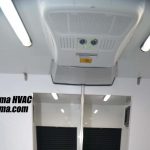 Best Rv Ac Unit
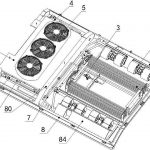 Bus Air Conditioner is used for buses and medium-sized commercial vehicles
 12 Volt RV Air Conditioning Units represent an energy and technological revolution
 Air Conditioning Units for Motorhomes: A Distributed Temperature Control System
 Camper Air Conditioner 12V
 Modular Temperature Control Solution for Motorhomes
 12V Air Conditioner For Motorhome
 4 sets of Rooftop AC Units for Campers for a 15m bus
 Camper Aircon Unit – Modular Design Leads to a New Comfortable Travel
 Technical White Paper on Multi-Unit Roof AC for Campers and Buses
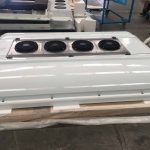 Acc Bus Air Conditioning
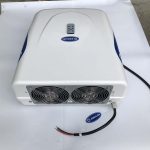 12V Rv Ac Unit