
Bus Air Conditioner for Coach has transcended basic temperature control, becoming a core system for measuring vehicle quality, ensuring operational profitability, and enhancing passenger experience. According to a global market research report, the luxury bus segment holds a significant share of the overall ac for bus system market, with its growth driven directly by the pursuit of ultimate comfort by tour operators and high-end rental companies. This report will analyze the modern luxury bus air conditioning system from four dimensions: technical parameters, typical scenarios, product advantages, and target audience.
| Model | Wind250 | Wind320 | Wind360 | Wind400 | |
| Cooling Capacity | 85500BTU / 25KW / 21500Kcal/h | 110000BTU / 32KW / 27500Kcal/h | 123000BTU / 36KW / 31000Kcal/h | 136500BTU / 40KW / 34400Kcal/h | |
| Heating Capacity | Optional | Optional | Optional | Optional | |
| Fresh Air | 1000 m3/h | 1000 m3/h | 1500 m3/h | 1750 m3/h | |
| Refrigerant | R134a | R134a/7.5KG | R134a/7.5KG | R134a/8.5KG | |
| Compressor | Model | VALEO TM31 | Bock FK40/560K | Bock FK40/560K | Bock 655K |
| Displacement | 313 cc | 554cc | 554cc | 655cc | |
| Weight | 15.5 Kg with clutch | 33KG | 33KG | 32KG | |
| Oil Type | ZXL 100PAG | FUCHS Reniso Triton Se55 | FUCHS Reniso Triton Se55 | FUCHS Reniso Triton Se55 | |
| Evaporator | Type | Hydrophilic aluminum foil with internal ridge copper tube | Hydrophilic aluminum foil with internal ridge copper tube | Hydrophilic aluminum foil with internal ridge copper tube | Hydrophilic aluminum foil with internal ridge copper tube |
| Air Flow | 4,000 m3/h | 4,400 m3/h | 6,000 m3/h | 7,000 m3/h | |
| Blower Type | 4-speed centrifugal type | 4-speed centrifugal type | 7-speed centrifugal type | 7-speed centrifugal type | |
| No. of Blower | 4 pcs | 4 pcs | 6 pcs | 8 pcs | |
| Current | 32A | 36A | 48A | 48A | |
| Condenser | Type | Micro-channel heat exchanger | Micro-channel heat exchanger | Micro-channel heat exchanger | Micro-channel heat exchanger |
| Air Flow | 5,700 m3/h | 5,700 m3/h | 7600 m3/h | 9500 m3/h | |
| Fan Type | Axial type | Axial type | Axial type | Axial type | |
| No. of Fan | 3 pcs | 3 pcs | 4 pcs | 5 pcs | |
| Current | 24A | 27A | 32A | 40A | |
| Total Current | < 65A | < 75A | < 85A | < 95A | |
| Weight | 138KG | 155KG | 206KG | 245KG | |
| Dimension (L*W*H) mm | 2481*1820*220 | 2640*1820*226 | 3010*1902*225 | 3285*1902*225 | |
| Application | 7-8 Meter City Bus & Coach | 9-10 Meter City Bus & Coach | 10-11 Meter City Bus & | 11-13 Meter City Bus & Coach | |
Bus Air Conditioner for Coach: From “Sufficiently Cool” to “Continuously Stable and Healthy”
Reasons: Traditional bus air conditioning aims to meet basic cooling needs, but in the application scenarios of luxury buses, it faces more stringent challenges: on the one hand, it needs to cope with the extreme high temperatures and humidity in Southeast Asia and the Middle East to ensure that cooling efficiency does not decline; on the other hand, in the post-pandemic era, passengers have placed unprecedented demands on the air health and safety of enclosed spaces.
Process: Therefore, leading manufacturers have specifically strengthened and innovated their air conditioning systems. In addressing severe weather conditions, representative solutions include increasing cooling capacity by 30% and employing a dual-compressor backup design to ensure continuous system operation even if a single compressor fails, significantly enhancing reliability on remote long-distance routes. Regarding health and safety, technological advancements are even more significant. For example, Setra optimized the airflow organization of its S531DT luxury bus, adopting a “top intake, bottom exhaust” principle to facilitate the rapid downward expulsion of potential pollutants. Simultaneously, it integrates a high-efficiency HEPA filter (ActivFilter) similar to an N95 mask, effectively filtering viruses and particulate matter, and accelerating air circulation and replacement within the vehicle through increased power.
Result: Through these high-tech parameter settings, the luxury bus air conditioning system has achieved a leap from a “temperature control device” to a “comprehensive climate and air quality management center.” It not only ensures constant and comfortable cabin temperature in any environment but also proactively constructs a respiratory health barrier, significantly enhancing the product’s added value and market competitiveness.
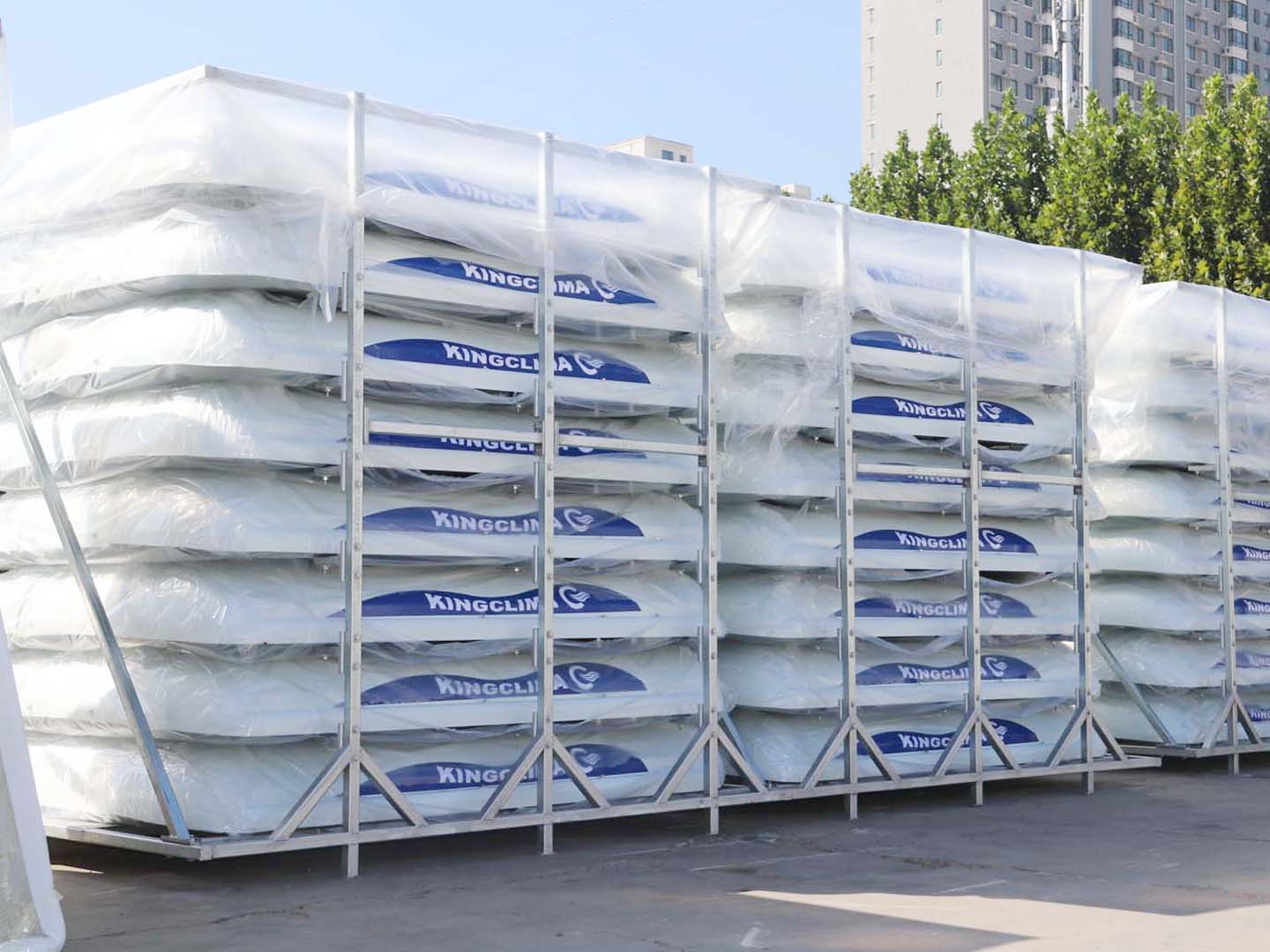
Bus Air Conditioner for Coach represents the intersection of long-distance travel, high-end hospitality, and healthy travel.
Reasons: Luxury bus services are characterized by long journeys, high-quality passengers, and stringent standards. Global market analysis indicates that long-distance travel is the largest application area for bus air conditioning systems, accounting for approximately 38% of revenue. During these journeys, which may last for hours or even days, the stability, comfort, and quietness of the air conditioning system are fundamental to ensuring a core passenger experience.
Process: Specifically, its main application scenarios are highly focused. First, there are cross-border and long-distance tourist routes, where vehicles frequently travel between regions with vastly different climates, requiring the air conditioning system to possess strong environmental adaptability and continuous operating capacity. Second, there are high-end business hospitality and conference vehicles. For example, high-end rental companies like Guangzhou Longfeng Travel list “air conditioning design” as one of the core criteria for selecting vehicles when undertaking major events and government VIP receptions, requiring not only excellent performance but also quiet operation and gentle airflow to match the high-standard business atmosphere. Finally, in the post-pandemic era, group travelers with specific requirements for healthy travel have become a key scenario. Buses equipped with healthy air conditioning systems can greatly alleviate passengers’ concerns about cross-infection in enclosed spaces.
Result: Deep adaptation to these specific scenarios makes high-end air conditioning systems an essential “weapon” for luxury buses to expand and maintain their high-end market share. It directly meets operators’ multiple demands for vehicle uptime, customer satisfaction, and brand reputation.
Bus air conditioner for Coach offers high reliability and optimized total lifecycle costs.
Reason: General-purpose products cannot cope with the complex and ever-changing global market demands. When purchasing, operators not only focus on purchase costs but also value the total cost of ownership resulting from the system’s long-term reliability, energy consumption, and ease of maintenance.
Process: Therefore, top-tier luxury bus air conditioning solutions exhibit three core advantages. The first is deep customization. For example, Shenlong Commercial Vehicles has developed anti-corrosion technology specifically for the high-salt-fog and humid heat market in Southeast Asia and extended the maintenance cycle of air conditioning filters to 30,000 kilometers. This customization tailored to regional characteristics directly reduces customers’ long-term maintenance costs. Secondly, the system boasts high reliability. The aforementioned dual compressor backup and efficient remote monitoring and early warning system are designed to minimize downtime and ensure stable operational revenue. Thirdly, it leverages integrated technological innovation, combining HEPA filtration, negative ion generation, and intelligent zoned temperature control to provide a comfort experience exceeding passenger expectations, thereby enabling operators to obtain higher fares or charter fees.
Related posts:
 Bus Air Conditioner is used for buses and medium-sized commercial vehicles
 Acc Bus Air Conditioning
 12 Volt RV Air Conditioning Units represent an energy and technological revolution
 4 sets of Rooftop AC Units for Campers for a 15m bus
 Air Conditioning Units for Motorhomes: A Distributed Temperature Control System
 Camper Aircon Unit – Modular Design Leads to a New Comfortable Travel
 Introduction to Ac For Bus
 12V Rv Air Conditioning Units
 Technical White Paper on Multi-Unit Roof AC for Campers and Buses
 IC Bus Air Conditioning: A Comprehensive Evolution of Integration, Intelligence, and Sustainability
 Camper Rooftop Air Conditioning Units
 Bus Air Conditioning Unit
 Bus Con Supplier reminds all bus owners to clean BUS AC
 Motorhome Aircon 12V
 Camper Air Conditioner 12V
 Motorhome Roof Air Conditioner
 12 Volt Dc Rv Air Conditioner
 Electric Bus Ac System – Comprehensive Technological Revolution Towards a “Dual-Carbon” Goal