DC Bus Air Conditioning
DC Bus Air Conditioning has transcended traditional comfort features, becoming a core system influencing the range, operating costs, and passenger experience of electric buses.
According to the minutes of the 2024 seminar on the “Energy Consumption Evaluation Standard for New Energy Buses” released by the China Academy of Transportation Sciences, air conditioning energy consumption accounts for approximately 60%-70% of the total auxiliary energy consumption of the vehicle. Improving its energy efficiency is crucial for reducing the total operating cost of public transportation.
Application Scenarios of DC Bus Air Conditioning Produced by busclima: Harsh Environments and Intelligent Dispatch
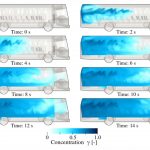
Extreme Climate Response: The system must operate reliably in ambient temperatures ranging from -35℃ to 50℃. In Pakistan, the Middle East, and other regions, it is essential to ensure that the cabin temperature can be reduced from 60℃ to a comfortable range of 26-28℃ within 15-20 minutes at temperatures as high as 55℃.
Range and Energy Management: As a “power hog,” the level of intelligence in air conditioning directly affects the range. Advanced systems can automatically adjust power based on battery SOC (State of Charge), or pre-adjust temperature before the vehicle enters the station, utilizing off-peak electricity pricing to achieve peak-shifting and valley-filling charging.
Full Lifecycle Maintenance: Based on IoT (Internet of Things) remote monitoring and fault early warning functions, the system can monitor the compressor and fan status in real time, enabling preventative maintenance and significantly improving uptime.
Advantages of busclima’s DC Bus Air Conditioning Products: Energy Saving, Integration, and User Experience Innovation
Significant Economic Benefits: According to a 2024 industry report by China Bus Network, air conditioning systems using high-efficiency DC inverter technology can save an average of 4,000-6,000 kWh of electricity per year for a 12-meter electric bus, equivalent to extending daily operating mileage by 30-50 kilometers.
Deep Integration and Safety: As part of the vehicle’s thermal management, some advanced systems can be linked with the battery cooling circuit to cool the battery pack while simultaneously providing cooling, improving battery life and safety. As the technical director of a well-known air conditioning manufacturer pointed out at the 2024 Beijing International Bus Exhibition, “The air conditioning system of future electric buses will be the ‘central hub for vehicle thermal management,’ rather than an independent component.”
Enhancing the passenger and driver experience: Multi-zone temperature control, PM2.5 filtration, and sterilization functions have become high-end features. Uniform overhead airflow avoids direct airflow, while the low-noise design (operating noise below 65 decibels) improves the acoustic environment inside the vehicle.