
12V 24v Bus Air Con
The 12V 24V Bus Air Conditioning configuration is not an arbitrary technical parameter, but rather a system engineering concept deeply rooted in vehicle electrical architecture design, energy consumption requirements, and market segmentation.
Based on the trend analysis of the new commercial vehicle thermal management regulations in 2025, the industry is shifting from a single performance-oriented approach to a comprehensive consideration of “energy efficiency ratio” and “system compatibility.”
Voltage selection directly affects compressor efficiency, battery compatibility, and overall vehicle energy consumption.
| Model | E-Clima2200 | E-Clima3000 | E-Clima4000 | E-Clima6000 | E-Clima8000 | E-Clima2600S |
| Voltage (V) |
DC12V/24V | DC12V/24V | DC12V/24V | DC12V/24V | DC12V/24V | DC12V/24V |
| Cooling Capacity (W/BTU) |
2200W//7500 | 3000W/10000BTU | 4000W/15000BTU | 6000W/20472BTU | 8000W/27300BTU | 2600W/78870BTU |
| Installation | Rooftop Mounted | Rooftop Mounted | Rooftop Mounted | Rooftop Mounted | Rooftop Mounted | Split Mounted |
| Evaporator Air Volume (m³/h) |
650 | 700 | 650 | 650 | 1500 | 450 |
| Condenser Air Volume (m³/h) |
1050 | 1400 | 1050 | 1700 | 3600 | 1400 |
| Refrigerant | R134a | R134a | R134a | R134a | R134a | R134a |
| Dimension (mm*mm*mm) |
700*580*263 | 885*710*290 | 700*580*263 | 1580*385*180/ 920*928*250 |
1260*1030*180 | 682*465*192 540*362*165 |
| Weight (KG) |
32 | 35 | 18/47 | 18/47 | 31 |
Voltage System Selection Logic – 12V 24v Bus Air Con
Traditional fuel-powered buses have air conditioning compressors driven by the engine via a belt, while electric buses or buses requiring independent operation while parked rely on onboard batteries for power.
Air conditioning is a high-power load with a huge operating current.
According to the basic physics formula Power (P) = Voltage (U) × Current (I),
when outputting the same cooling power (e.g., 2-3 kW), using a higher voltage (24V) can significantly reduce the operating current.
The reduction in current brings a series of engineering advantages: Smaller wire cross-sectional areas are required, reducing wiring harness weight and cost; the current load on electrical connectors, relays, fuses, and other components is reduced, improving system stability and reliability.
Therefore, 24V systems are inherently more suitable for commercial vehicles such as medium and large buses and trucks with high requirements for air conditioning power and continuous operation time.
Conversely, 12V systems are commonly used in small commercial vehicles, light buses, and vehicles modified from passenger car platforms. Their electrical system design is compatible with traditional passenger cars, and upgrade costs are lower.
The choice of voltage is essentially part of the overall vehicle electrical platform design.
It determines the basic power supply architecture of the air conditioning system and directly affects the selection of matching batteries (e.g., 24V systems often require two 12V batteries in series or a dedicated 24V lithium battery pack), ultimately forming the market default rule of “12V for light vehicles, 24V for heavy vehicles” to achieve overall optimization of safety, economy, and efficiency.
Core Parameters and Technological Evolution – 12V 24v Bus Air Con
Early parking air conditioners mostly operated at a fixed speed, resulting in large temperature differences between start-stop cycles, high energy consumption, and pulsed stress on the battery.
With decreasing lithium battery costs and increasing environmental requirements, the market needs more energy-efficient, gentler, and environmentally friendly solutions.
The core of this technological evolution is “DC inverter technology.”
It adjusts the speed in real time according to the vehicle’s heat load. Its advantages are:
1) Energy saving: Low-frequency soft start and continuous low-speed operation significantly extend battery life compared to fixed-frequency units;
2) Comfort: Achieves precise temperature control within ±0.5℃, eliminating sudden temperature fluctuations;
3) Quiet operation: The compressor does not require frequent start-stop cycles, resulting in lower operating noise.
Simultaneously, to comply with global regulations aimed at reducing greenhouse gas emissions (such as the US Environmental Protection Agency’s proposal to phase out high GWP refrigerants), new environmentally friendly refrigerants such as R290 (propane) have been integrated into the next generation of compressor products.
The application of variable frequency technology and high-performance compressors has transformed the 12V/24V bus air conditioning system beyond a simple “cooling tool,” evolving it into an intelligent, efficient, and environmentally friendly onboard environmental management system.
It not only meets basic cooling needs but also significantly reduces the vehicle’s overall energy consumption through efficient operation, which is strategically significant for extending the driving range of electric buses.
Typical Usage Scenarios and Product Value – 12V 24v Bus Air Con
Bus operation scenarios are complex, involving not only driving but also numerous “static conditions” such as parking and waiting (e.g., at bus stations, long-distance passenger transfer points) and mandatory driver rest.
Traditional solutions require idling with the air conditioning running, leading to fuel consumption, emissions, and engine wear. In electric buses, this significantly depletes the drive battery, causing “range anxiety.”
The 12V/24V independent parking air conditioning system, by connecting to an independent auxiliary battery (especially lithium iron phosphate batteries, which are becoming the mainstream choice due to their long cycle life and high safety), perfectly solves this pain point.
It allows the vehicle to independently provide continuous cooling for the passenger compartment for several hours (approximately 7-8 hours with a 24V 200Ah battery) even when the main drive system is completely shut off, ensuring immediate comfort for passengers upon boarding and the health and safety of the driver during rest.
The widespread adoption of this technology extends the comfort of buses from “while on the move” to “all-day use.” For operators, it avoids fines and fuel consumption associated with illegal idling and reduces engine maintenance costs; for electric buses, it protects the expensive battery pack and is a key component for improving operational economy and reliability.
Related posts:
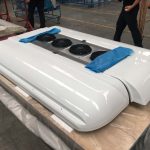 12V Bus Ac Unit
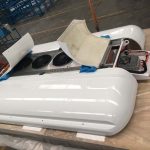 12V Ac For Buses
 12V Bus Air Conditioner Price
12V Bus Ac
12V Bus Air Conditioner Price
12V Bus Ac
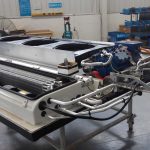 12V Carrier Bus Air Conditioner
 12V Bus Air Conditioner
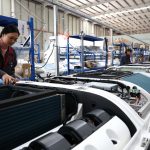 12V Coaches Hvac
 Camper Air Conditioner 12V
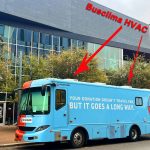 12V Camper Air Conditioner used in medicalmobile
 12V Rv Air Conditioning Units
 12 Volt Rv Ac Unit
 12V Air Conditioner For Motorhome
 Motorhome Aircon 12V
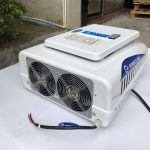 12V Ac Unit For Rv
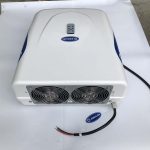 12V Rv Ac Unit
 12 Volt Camper Ac
 12v klima uređaj za Hrvatsku
 12 Volt Rv Air Conditioner