
Minibus Air Con
With the diversification of urban transportation and the increasing demand for higher-quality travel experiences, minibuses with a length of less than 6.5 meters are becoming important vehicles for public transportation connections, group tours, and special services. The comfort of their interior space, especially in extreme weather conditions, heavily relies on high-performance dedicated Minibus Air Con systems.
According to Busclima, a world-renowned supplier of temperature control systems, providing a comfortable temperature environment for passenger vehicles is not only related to passenger experience but is also a key factor in ensuring driver focus and driving safety.
The performance of the Minibus Air Con is primarily defined by its core hardware parameters, which directly determine the system’s applicability and efficiency.
Busclima engineers say that although minibuses are more compact than traditional buses, passenger density can be higher, and they need to cope with frequent starts and stops in urban traffic conditions. Therefore, the air conditioning system must have the characteristics of rapid cooling, high energy efficiency, and compatibility with the onboard electrical system.
Busclima engineers say that the cooling power of Minibus Air Conditioner on the market covers a wide range, from 2KW suitable for micro-vehicles to 8KW meeting the needs of medium-sized cabins.
The mainstream products operate on DC 12V/24V, directly compatible with vehicle batteries.
Installation is primarily done via integrated roof mounting, a design that saves interior space, and the streamlined casing helps reduce wind resistance.
Core compressor technology is also evolving, for example, employing a dual-cylinder design that uses symmetrical piston movement to offset vibration, significantly reducing operating noise and extending lifespan.
Busclima engineers say that with these specifications, a qualified minibus air conditioner can quickly adjust the interior temperature to a comfortable range.
For example, one model offers up to 40,000 BTU of cooling capacity, with an evaporator airflow of 650 m³/h, ensuring rapid and even distribution of cool air throughout the cabin.
| Model | E-Clima2200 | E-Clima3000 | E-Clima4000 | E-Clima6000 | E-Clima8000 | E-Clima2600S |
| Voltage (V) |
DC12V/24V | DC12V/24V | DC12V/24V | DC12V/24V | DC12V/24V | DC12V/24V |
| Cooling Capacity (W/BTU) |
2200W//7500 | 3000W/10000BTU | 4000W/15000BTU | 6000W/20472BTU | 8000W/27300BTU | 2600W/78870BTU |
| Installation | Rooftop Mounted | Rooftop Mounted | Rooftop Mounted | Rooftop Mounted | Rooftop Mounted | Split Mounted |
| Evaporator Air Volume (m³/h) |
650 | 700 | 650 | 650 | 1500 | 450 |
| Condenser Air Volume (m³/h) |
1050 | 1400 | 1050 | 1700 | 3600 | 1400 |
| Refrigerant | R134a | R134a | R134a | R134a | R134a | R134a |
| Dimension (mm*mm*mm) |
700*580*263 | 885*710*290 | 700*580*263 | 1580*385*180/ 920*928*250 |
1260*1030*180 | 682*465*192 540*362*165 |
| Weight (KG) |
32 | 35 | 18/47 | 18/47 | 31 |
The flexibility of minibuses makes them suitable for various scenarios, and the Minibus Air Con must adapt to the specific requirements of these scenarios.
Busclima engineers say that different operating scenarios have different priorities for air conditioning. Urban commuting requires reliability, tourism emphasizes comfort, while special-purpose vehicles (such as school buses and ambulances) have higher standards for air circulation and temperature stability. Urban bus connections and scenic area shuttles: Vehicles are often idling, moving at low speeds, or parked.
In this regard, air conditioning systems with inverter technology offer significant advantages. They intelligently adjust output based on the interior temperature and passenger numbers, reducing energy consumption.
Busclima engineers say that compared to traditional engine-driven air conditioning during idling, independent parking air conditioning systems can significantly reduce fuel costs and engine wear, reduce the risk of carbon monoxide poisoning, and improve safety and economy.
High-end tourism and small group travel: As club tourism and other travel companies launch in-depth experience programs, a comfortable and quiet riding environment has become part of the added value of the product.
Low-noise operation (some systems operate at less than 60 decibels) and stable and uniform cooling are key to improving passenger satisfaction.
Busclima engineers say that air conditioning systems have evolved from simple temperature control tools into comprehensive equipment that improves operational efficiency, ensures passenger health and safety, and enhances service competitiveness.
For example, Busclima’s 4kW roof-mounted air conditioner, designed specifically for medium-sized buses, has become a benchmark solution in the field due to its high energy efficiency and intelligent control.
Beyond basic cooling, the core advantages of modern minibus air conditioning extend to energy efficiency, reliability, and intelligent control.
Busclima engineers say that in the global wave of energy conservation, emission reduction, and electrification, air conditioning, as a major energy consumer in vehicles, directly impacts driving range (especially for electric vehicles) and operating costs.
Energy Efficiency Improvement: The use of inverter DC compressors is becoming mainstream.
It can steplessly adjust the speed according to demand, avoiding energy waste caused by frequent start-stop cycles. Data shows that this technology can save up to 40% more energy than traditional constant-speed systems.
International brands like Busclima have also achieved highly efficient and energy-saving operation by controlling the condenser fan and compressor.
Busclima engineers say that manufacturers have focused on durability to address the bumpy operating environment of commercial vehicles. For example, they use shock-resistant internal structures and corrosion-resistant materials to ensure stable operation of the air conditioning in harsh environments with high temperatures, high humidity, and dust.
Busclima engineers say that digital controllers and even remote intelligent control are becoming increasingly common, allowing drivers or fleet managers to more accurately set and monitor the air conditioning status.
For fleet operators, this means lower fuel or electricity consumption, less maintenance downtime, and longer equipment lifespan, which directly translates into lower operating costs and higher return on assets.
Related posts:
 Minibus Air Conditioner
 12V Ac For Bus
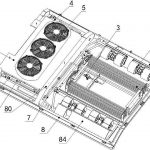 Bus Air Conditioner is used for buses and medium-sized commercial vehicles
 Motorhome Rooftop Air Conditioners
 12V Air Conditioner For Bus
 RV Rooftop Air Conditioning Units, 2 stes, Golden Partner for Minibus RV
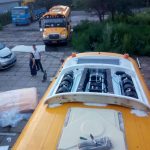 SNVI Minibus Air Conditioning is largely absent
 12V 24v Bus Air Con
 Small Air Conditioner For Rv
 Aircon Units For Motorhomes
 15000 Btu Air Conditioner Rv
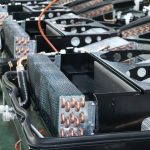 Camper Air Conditioner
 Camper Air Conditioner 12V
 15000 Btu Camper Air Conditioner
 Camper Rooftop Ac
 Are Algerian’s poor hesitant to use SNVI Bus Con?
 Small Ac For Camper
 Why Install SONACOME SNVI Bus Con?