Bus air conditioner fan motor design is a core element determining the airflow, efficiency, noise, and reliability of a Bus air conditioner. It’s not simply a combination of “motor + fan blades,” but a comprehensive systems engineering project encompassing electromagnetic design, control drive, structural aerodynamics, and environmental adaptability.
Bus Air Conditioner Fan Motor Design – Motor Selection and Topology Dimensions: The Leap from Brushed to Brushless
The primary dimension of modern bus air conditioning fan motor design is the selection of the motor itself and its topology design. Traditional brushed motors, due to noise from brush friction, carbon dust pollution, and the need for regular maintenance, have been gradually phased out. Current mainstream designs utilize brushless DC motors (BLDC), whose brushless structure extends maintenance cycles and significantly improves lifespan. In terms of topology, a multi-pole rotating field design is typically used, with permanent magnets surface-mounted on the rotor, and a three-phase stator winding. For designs prioritizing ultimate reliability, a sensorless control scheme can be employed, using a back-EMF sampling circuit to detect rotor position, eliminating the need for Hall effect sensors, further simplifying the structure and improving environmental adaptability.
Bus Air Conditioner Fan Motor Design – Electromagnetic Design Dimension: Precise Calculation of Magnetic Circuit and Parameters
Electromagnetic design is the “gene” of motor performance. The design must follow a process of “defining specifications—electrical/magnetic circuit design—iterative optimization” until the target conditions are met. Core parameters include rated voltage (traditional 24V or new energy high voltage), rated speed (e.g., 2500rpm), rated current (e.g., 10A), and output power (e.g., 180W). The design process requires the application of basic equations: output power versus torque Pout = ωmT; back electromotive force E = kEωm; voltage balance equation Vs = E + RI. Simultaneously, magnetic circuit calculations are necessary to determine the working characteristics of the permanent magnet and the stator slot fit. The electromagnetic field distribution is homogenized by adjusting the lamination material and thickness.
Bus Air Conditioner Fan Motor Design – Control and Drive Dimension: Intelligent Speed Regulation and Protection
The level of intelligence in a fan motor depends on the design of the control and drive unit. Modern designs integrate a microprocessor, drive circuit, three-phase bridge power circuit, back electromotive force sampling circuit, and protection circuit into one unit. The control method commonly employs PWM (Pulse Width Modulation) to achieve stepless speed regulation: when the outside temperature is not high, the fan speed is automatically reduced, saving energy and reducing noise. For the drive strategy, a 3-phase square wave drive is a common solution, using a “six-step commutation” to achieve 120° conduction, ensuring smooth motor operation. Simultaneously, the control program needs to integrate comprehensive protection logic, including overcurrent, overvoltage, undervoltage, and stall protection.
Bus Air Conditioner Fan Motor Design – Structural and Aerodynamic Dimensions, Fluid Dynamics Optimization
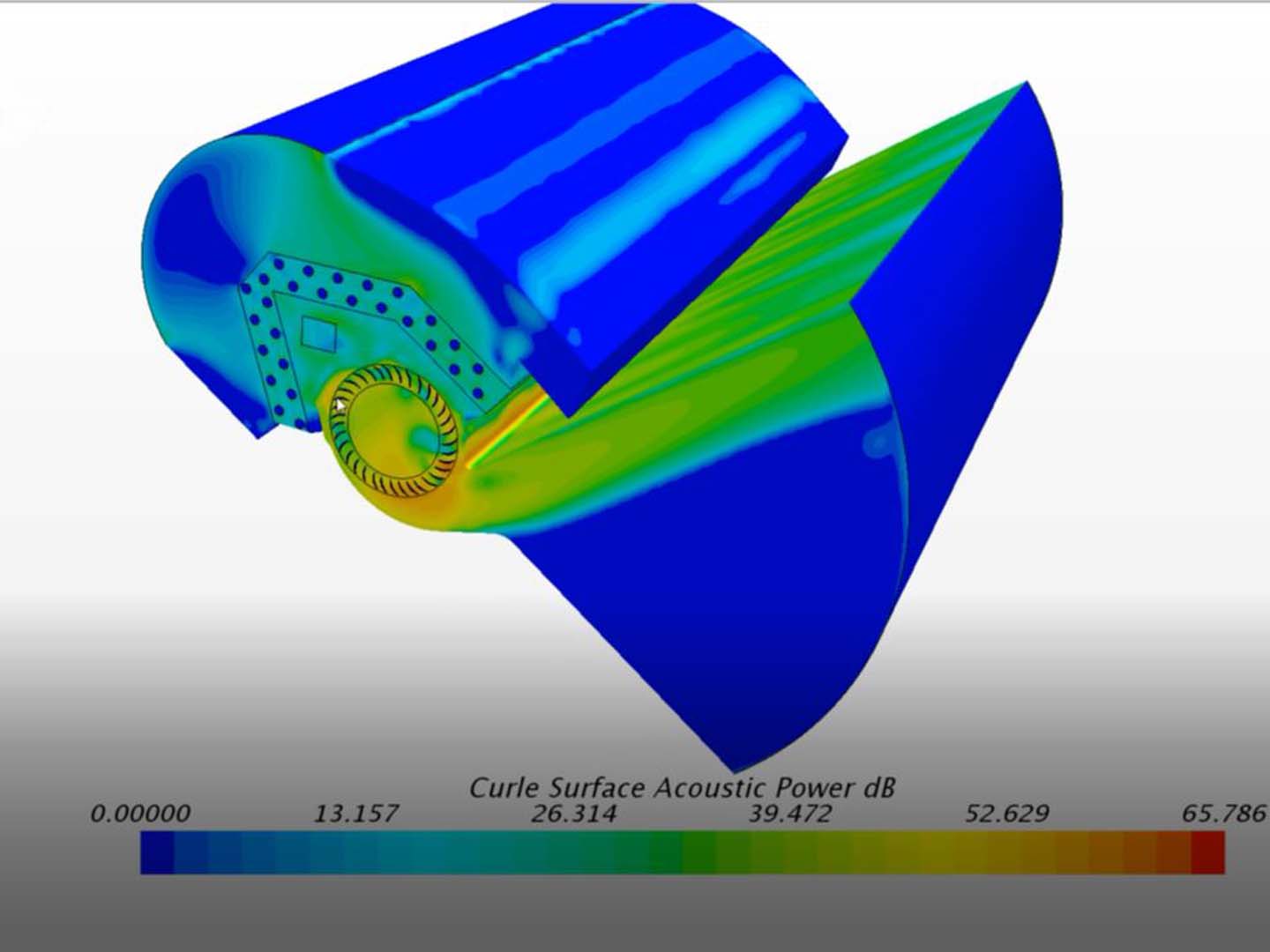
The motor must be aerodynamically integrated with the fan blades and housing. Blade design is crucial: by connecting the outer ends of the fan blades into a single structure using connecting rings, strength is increased and airflow is concentrated. To meet low-noise requirements, a variable cross-section blade design is required: six design sections are used from the blade root to the blade tip, reducing the installation angle from approximately 34° to 24° to suppress eddy current shedding and reduce aerodynamic noise. The ratio of the hub diameter to the inner diameter of the windshield ring needs to be optimized between 0.32 and 0.38. For electric buses, fan blades made of plastic offer significant advantages in weight reduction and corrosion resistance.
Bus Air Conditioner Fan Motor Design – Safety and Environmental Adaptability Dimensions, Harsh Onboard Operating Conditions
Bus fan motors are subjected to vibration, temperature changes, and rain and snow corrosion over long periods, making environmental protection design indispensable. First, the motor and controller must meet IP protection requirements to prevent water and dust intrusion. Second, to address electromagnetic interference from the entire vehicle, the design must include EMC filtering circuits and shielding measures. Furthermore, for new energy high-voltage platforms, the motor must meet high-voltage electrical safety standards to ensure insulation performance.
Bus Air Conditioner Fan Motor Design – Regulatory and Verification Dimensions: Standard Compliance
The final design must comply with Chinese national and industry standards. Based on T/ZZB 2451-2021 “Intelligent Brushless DC Motor for Vehicle Air Conditioning Fans,” the design must meet basic and technical requirements and be verified through specified test methods. Verification items include: noise testing (typically required to be ≤43dB), durability testing, high and low temperature start-up testing, and EMC testing.