
Shuttle bus air conditioning is crucial for travel comfort and passenger health. It consists of multiple components, including a compressor and condenser, each performing a different function.
Its operating principle is based on a cooling or heating cycle and can be classified according to its drive method and function.
(I) Classification by Drive Method
Independent Shuttle Bus Air Conditioning
This type of air conditioning system has its own independent power source, usually a dedicated engine or electric motor.
The advantage of an independent air conditioning system is its strong cooling capacity, unaffected by the operating status of the main engine of the tour bus.
Even when the main engine stops working (such as during rest stops), the air conditioning system can still operate normally, continuously providing a comfortable temperature inside the passenger compartment.
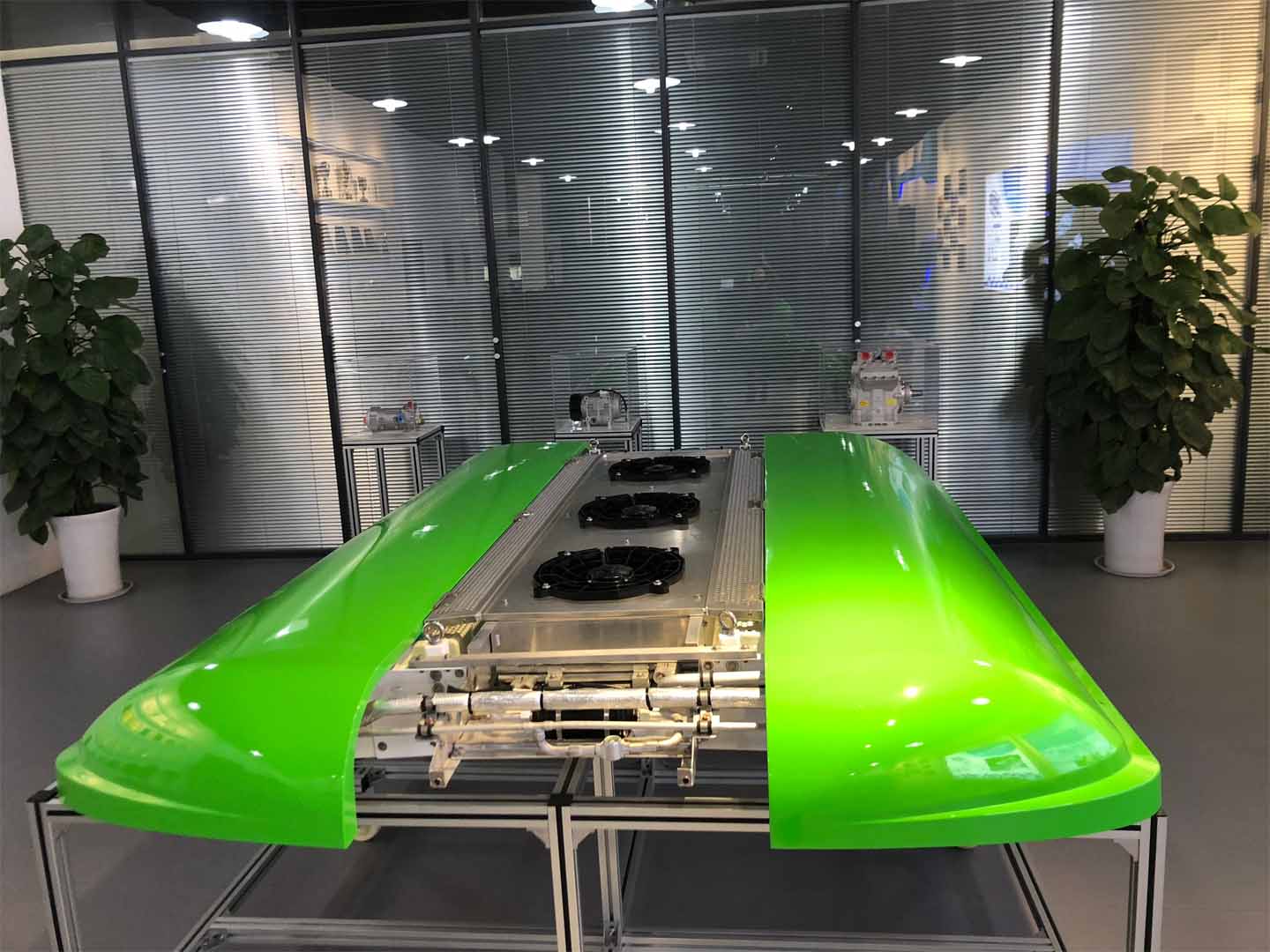
Non-Independent Shuttle Bus Air Conditioning
The power for a non-independent air conditioning system comes from the main engine of the tour bus.
Power is obtained from the main engine through transmission devices such as pulleys to drive the compressor and other components of the air conditioning system.
The advantages of this type of air conditioning system are its simple structure, lower cost, and easy installation.
However, its cooling capacity is affected by the main engine speed. When the main engine is at low speed or idling, the cooling effect may decrease.
Furthermore, once the main engine stops working, the air conditioning system will not operate.
(II) Classification by Function
Cooling-Only Shuttle Bus Air Conditioning
This type of air conditioning system only provides cooling and is suitable for hot climates or tour buses that only operate in summer.
Its structure is relatively simple, and its cost is relatively low.
Heating and Cooling Shuttle Bus Air Conditioning
In addition to cooling, it also provides heating.
It can provide warm air inside the passenger compartment during cold winters or when the temperature is low.
The structure of the heating and cooling air conditioning system is more complex because it requires additional heating-related components, such as heaters, but it can meet the needs of different seasons, improving the applicability of tour buses.
In addition, daily inspections and regular maintenance of the Shuttle Bus Air Conditioning are indispensable, including checking the control panel, airflow, and temperature before departure, and regularly cleaning components such as the condenser and evaporator.
