
100 V8 Bus Air Conditioner significantly enhances its competitiveness and is highly likely to drive sales growth. This is not just adding a feature, but a significant “product value upgrade.”
Whether it’s large-scale government bus procurement, long-distance bus orders from tourism companies, or fleet upgrades for intercity passenger transport companies, a highly efficient, zone-controlled air conditioning system is a mandatory requirement in tender documents. Without it, the SNVI 100 V8 bus wouldn’t even qualify for the shortlist.
Operational Economic Benefits
In long-distance passenger transport, air-conditioned vehicles can charge higher fares and attract more passengers seeking comfort. Vehicles without air conditioning struggle to survive in the lowest-end market.
Providing a cool and comfortable working environment for long-distance drivers is key to retaining excellent drivers, which directly impacts driving safety and operational stability.
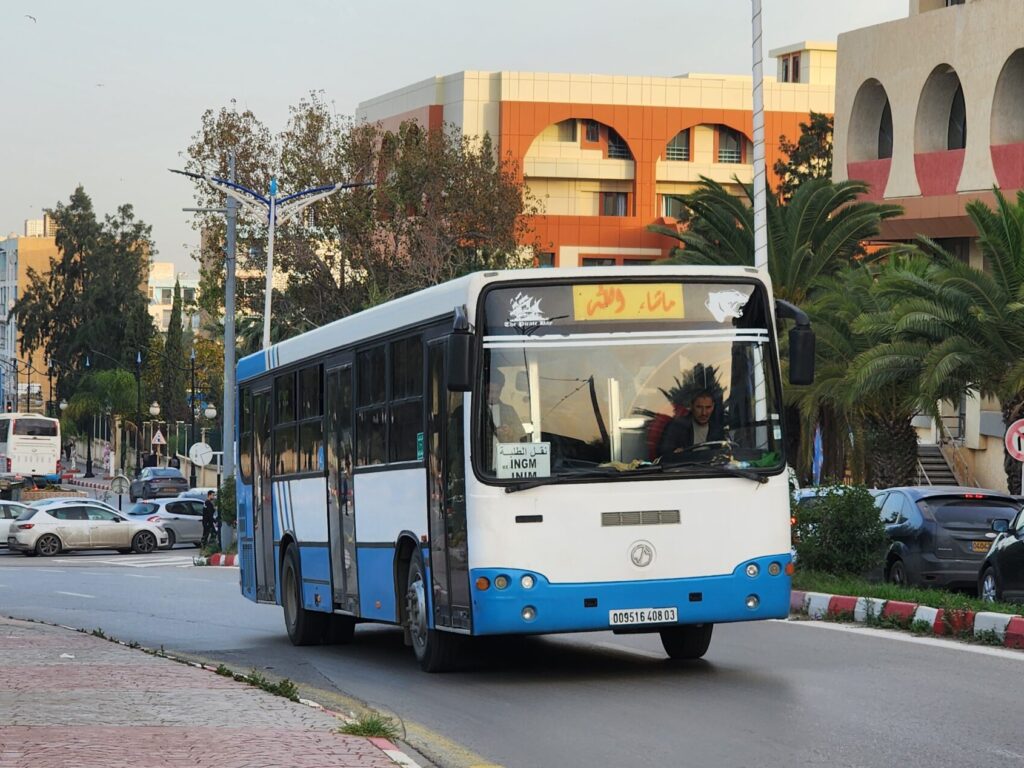
The 100 V8 has sold well in countries such as Algeria (its home market), Tunisia, Morocco, Mali, Niger, and Senegal. This is thanks to Algeria’s close political, economic, and linguistic/cultural ties with these regions.
If an Algerian bus is equipped with a 100 V8 Bus Air Conditioner (SNVI 100 V8), installing or selecting air conditioning on this bus doesn’t require considering many critical aspects or focusing on fluid dynamics and engineering integration.
Busclima engineers select the appropriate cooling capacity for the SNVI 100 L6, typically within the 32-36 kW range. Both 100 L6 Bus Air Conditioner and 100 V8 Bus Air Conditioner
busclima@kingclima.com
| Model | Current (A) |
Cooling Capacity (KW/BTU) |
Installation | Evaporator Air Volume (m³/h) |
Condenser Air Volume (m³/h) |
Refrigerant | Dimension (mm*mm*mm) |
Weight (KG) |
Application of Bus |
| Airsuper250 | 32 | 25/85000 | Rooftop | 4000 | 5700 | R134a | 3038*1820*189 | 170 | 6-8M |
| Airsuper320 | 36 | 32/108000 | Rooftop | 4000 | 5700 | R134a | 3335*1820*187 | 170 | 8-10M |
| Airsuper360 | 48 | 36/122000 | Rooftop | 6000 | 7600 | R134a | 3804*1902*205 | 215 | 9-11M |
| Airsuper400 | 48 | 42/143000 | Rooftop | 7000 | 9500 | R134a | 4435*1902*210 | 263 | 11-13M |
The 100 V8 Bus Air Conditioner should be installed in a well-ventilated area on the roof. It’s usually located in the front-middle section of the roof, but should avoid a position directly above the driver (to prevent noise interference).
When the vehicle is traveling at high speeds, the airflow velocity over the roof is very high. A good installation location and airflow design can utilize dynamic pressure-assisted cooling, reducing fan energy consumption and noise. Conversely, poor design will create drag.
The cool air from the air conditioning unit needs to be delivered to all parts of the passenger compartment through ducts installed on both sides of the roof.
The duct design must ensure uniform airflow distribution. Otherwise, the airflow will be stronger near the air vents and weaker further away, resulting in uneven heating and cooling in the passenger compartment.
Busclima engineers warn that installing an air conditioner by drilling a hole in the roof will weaken the vehicle’s structure. Reinforcing beams must be added to distribute stress and vibration.
The connection between the mounting base and the roof must be sealed with high-quality sealant for both water and air tightness to prevent leaks and noise.
Installing a high-performance air conditioner is a strategic move to transform from an “economic utility vehicle” to a “modern passenger transport solution.” It may not directly double sales, but it’s the “ticket” to open the door to the mainstream market and compete with industry giants. Without it, the SNVI 100 V8 bus will forever be confined to a low-end, marginalized market corner.
Related posts:
 Why Install the 100 L6 Bus Air Conditioner?
 SONACOME SNVI Bus Air Conditioner
 SNVI Bus Air Conditioner New Supplier
 SONACOME Bus Air Conditioner
 China Higer Bus Air Conditioner
 Bus Air Conditioner is used for buses and medium-sized commercial vehicles
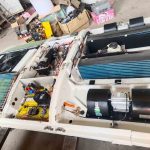 Introduction to Ac For Bus
 Bus Con Supplier reminds all bus owners to clean BUS AC
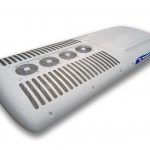 Where to purchase Algeria Bus Con?
 Bus Air Conditioning Supplier explains why Bus AC has poor cooling performance
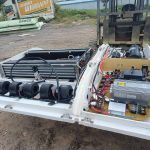 Bus Aircon Issues and Solutions
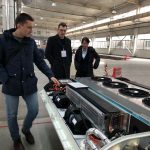 Thermo King Bus Ac Unit
 Bus Aircon Manufacturer
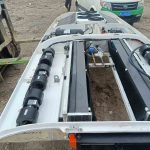 Bus Air Conditioning Maintenance
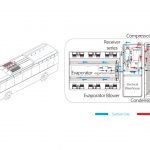 MTC MAN Bus Aircon Fluid Dynamics Analysis
 Shuttle Bus Air Conditioner suppliers and manufacturers in China
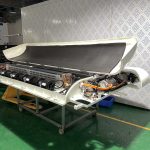 How Coaches HVAC Works & How to use Coaches HVAC
 Popularization History of Air Conditioners for Bus Manufacturer