
Camper Air Con manufacturers in Southeast Asia are becoming a major production and supply base for motorhomes (especially minibuses and midibuses).
Advantages of Southeast Asian-made air conditioners: Designed for the hot, humid, and dusty tropical climates, heat dissipation and corrosion resistance are key. While ensuring basic reliability, cost control is better, resulting in highly competitive prices. Products are often compatible with local power conditions (unstable voltage, reliance on generators, etc.).
If you are a motorhome conversion shop/integrator: Consider HASSPRO in Thailand and Denso in Malaysia, as they offer mature Camper Air Con solutions with proven reliability. Customized products with more competitive prices can also be obtained through Chinese OEM factories. For more information on Camper Air Con manufacturers in Southeast Asia, visit www.busclima.com or contact busclima@kingclima.com for further technical support.
If you are an end-user: When purchasing a motorhome locally in Southeast Asia, pay attention to the air conditioning brand. HASSPRO and Denso are guarantees of quality. If you are adding the air conditioner yourself, choosing a brand with a well-established local service network is even more important.
Note the “heat pump” function: For the Southeast Asian market, the Camper Air Con’s powerful dehumidification and efficient cooling are key; heating (heat pump) functionality is less important than in temperate regions.
In summary: The Southeast Asian RV air conditioning manufacturing industry, centered in Thailand and Malaysia, has developed into a distinctive industry that combines climate adaptability, reliability, and cost-effectiveness. When purchasing, it is essential to thoroughly understand the brand and its factory’s actual R&D capabilities, testing standards, and supply chain level to find the product best suited to your needs.
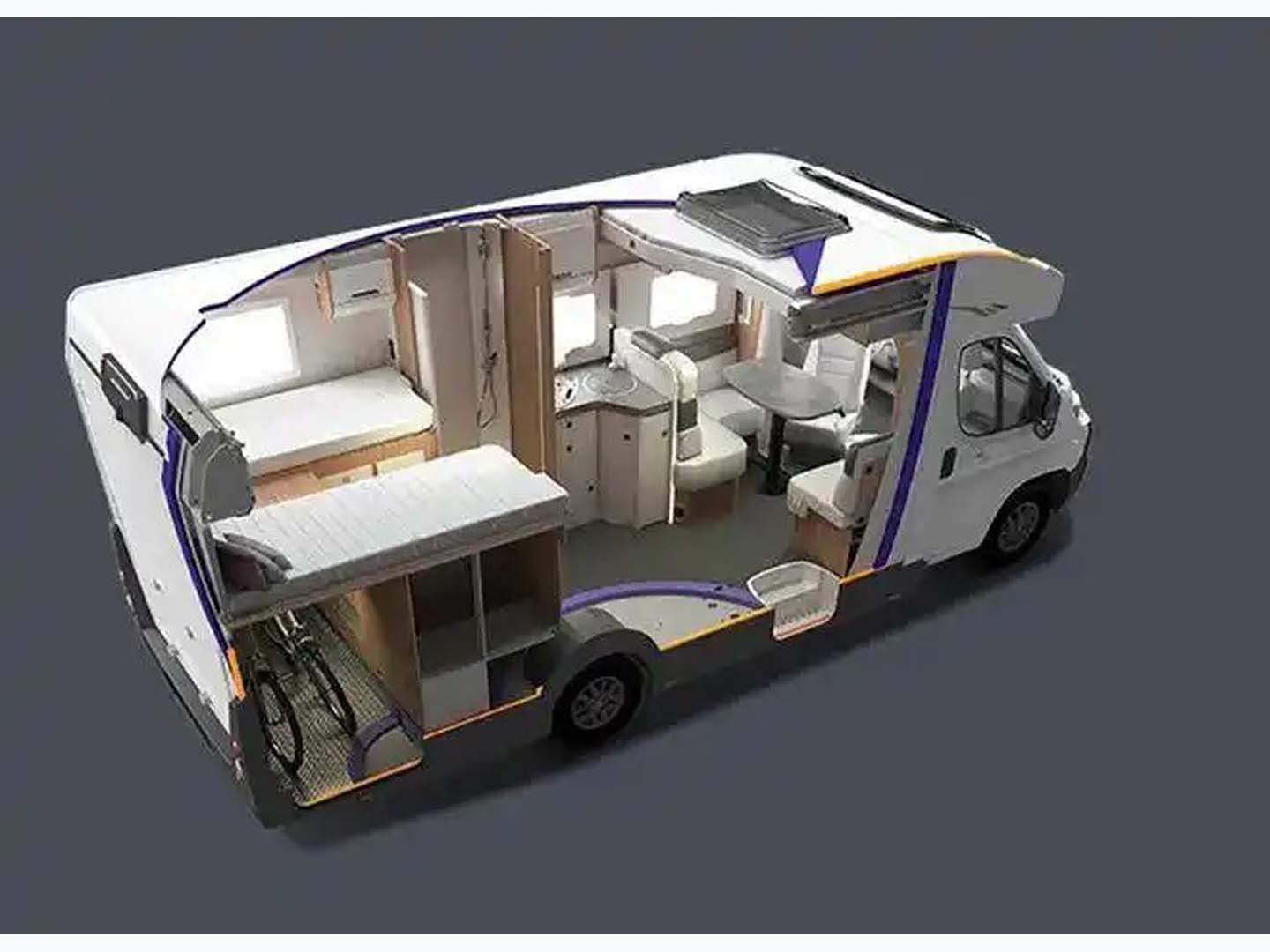
Southeast Asia is a hotbed for converting minibuses and mid-sized buses into campervans, thanks to its unique tropical climate, tourism culture, automotive industry base, and flexible regulatory environment. The conversion style here differs significantly from that of Europe and America, emphasizing practicality, ventilation, heat resistance, and high cost-effectiveness.
The Southeast Asian market is almost entirely dominated by Japanese used and new cars due to their high reliability, inexpensive parts, and suitable size.
Minibus Models (5-6 meters long, suitable for 2-4 people)
Toyota Hiace / Honda Stepwgn / Nissan Caravan
1. Status: The “King” of the conversion world. The Toyota Hiace, in particular, is the most popular conversion chassis due to its spacious interior (boxy body), exceptional reliability, and large aftermarket.
2. Conversion Direction: Mostly converted into campervans. Original seats can be converted into beds, or completely removed for professional customization, with the addition of a pop-up roof to increase standing space.
Mitsubishi Delica / Toyota Hiace Commuter
Features: Four-wheel drive versions are especially popular in the mountainous regions of Thailand and the Philippines. Possessing some off-road capability, suitable for exploring remote beaches and mountains.
Minibus Models (6-8 meters long, suitable for 4-6 people or small commercial use)
Toyota Coaster / Nissan Civilian
1. Status: The absolute mainstay of mid-sized bus conversions. Spacious interiors and flat roofs make them ideal for extensive RV conversions, creating fully functional “mini-homes.”
2. Conversion Directions: Can be equipped with independent bathrooms, small kitchens, fixed beds, and multiple rest areas. Commonly found in professional conversion shops in Thailand and Malaysia.
Hino / Isuzu Mid-sized Buses
Features: High torque diesel engines, robust and durable, often used for conversion into multi-functional RVs that combine light freight and living.
Unlike Europe and America, which emphasize winter insulation, Southeast Asian conversions focus on “heat resistance, moisture resistance, and ventilation.”
Open Layout and Maximized Ventilation
Side Windows and Sunroofs: Extensive use of sliding windows and butterfly windows, with added mosquito nets. Multiple exhaust fans or even panoramic sunroofs are installed on the roof, utilizing the principle of rising hot air to create a “chimney effect” for active ventilation.
Indoor/Outdoor Integration: The sliding side doors open fully, combining with the added side tent to extend the living space into the shaded area outside the vehicle.
The Special Status of the Camper Air Con: Dual-System Standard: The original vehicle air conditioning system handles cooling while driving, while a powerful parking air conditioning system (often a Thai brand like HASSPRO or Denso with a roof-mounted inverter) is the lifeline when parked.
Electricity Challenges: Air conditioning consumes a significant amount of power, therefore, the electrical system configuration is often high-end. Common solutions include: large-capacity lithium batteries + high-power on-road charging + full-roof solar panels. Many vehicles also carry a portable generator as a backup.
Lightweight and Moisture-Resistant Materials: Heavy solid wood furniture is used less frequently, with more aluminum alloy frames and lightweight panels. Interior materials often use moisture-resistant, easy-to-clean synthetic materials or waterproof fabrics.
Flooring often uses waterproof and wear-resistant vinyl flooring instead of wood flooring.
Flexible and Practical Furniture Design: Multifunctional furniture is the mainstream: booth seating converts into beds, height-adjustable tables, folding kitchen shelves, etc.
Toilets are mostly “wet” or portable to save space. Many minibuses are converted or even use campsite facilities, foregoing onboard toilets.
Enhanced outdoor living equipment: External kitchens (pull-out stoves), external showers, large-capacity fresh water tanks, and side tents are almost standard features.
Related posts:
 Bus Air Conditioner is used for buses and medium-sized commercial vehicles
 Fixing RV Ac is compatible with Southeast Asian minibus chassis
 Motorhome Air Conditioning and Minibus Manufacturer Matching
 Introduction to Ac For Bus
 Air Conditioner In Camper
 Bus Con Supplier reminds all bus owners to clean BUS AC
 Motorhome Aircon Matches Southeast Asian Bus Manufacturers
 Rv Ac
Rv Ac
 Rv Ac Unit Repair
 Fixing Rv Air Conditioner
 How Coaches HVAC Works & How to use Coaches HVAC