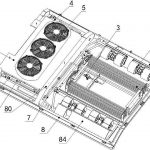
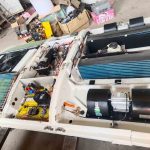
Aircon For Motorhomes is a highly integrated, compact unit optimized specifically for minibuses or vans.
The outdoor unit (including compressor and condenser) is integrated into a streamlined, low-drag white engineering plastic housing, protruding approximately 20-30 cm from the roof, resembling a flattened flying saucer or capsule. The installation location is typically on the roof slightly forward of the center of the vehicle to ensure even cooling coverage.
The indoor unit (evaporator and centrifugal fan) is completely concealed within a roof-mounted cabinet or dedicated ceiling structure; only the air outlets, return air vents, and control panel are visible. There are typically 1-3 air outlets, located above the side walls or at the bottom of the cabinet, and are flat, strip-shaped or round, adjustable vents. The return air vent is located low (e.g., under the seats or in the aisle) and features a removable dust filter.
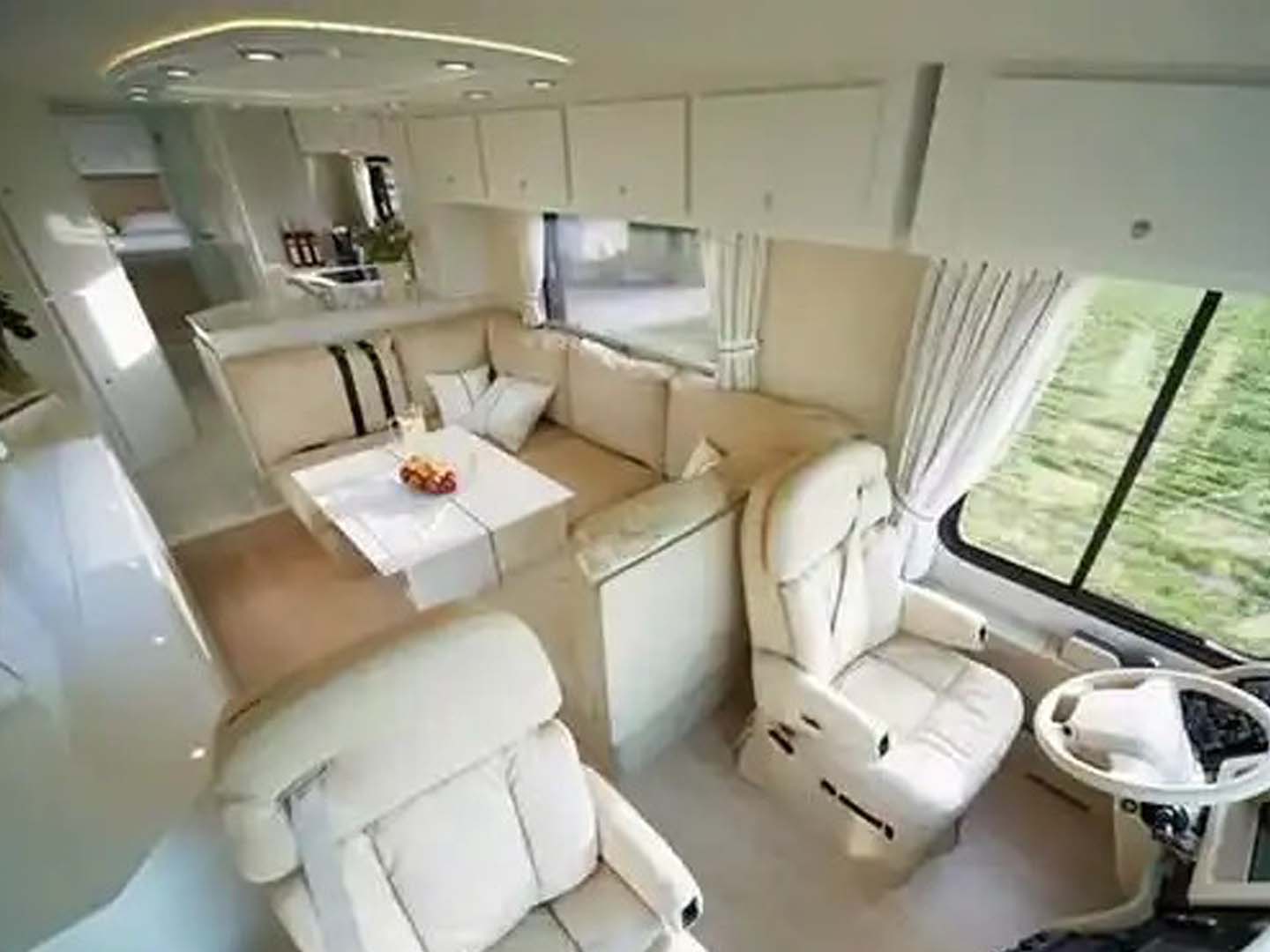
Aircon For Motorhomes Core Technical Features:
1. DC Inverter Technology: This is the absolute mainstream technology in modern RV air conditioning. It can automatically adjust the compressor speed according to the set temperature, achieving:
2. Super energy saving, saving 30%-50% more energy than fixed-frequency air conditioners, which is crucial for RVs that rely on batteries.
3. Extremely low noise when running at low speeds, not affecting sleep at night.
4. More stable temperature control, without sudden temperature fluctuations.
5. 12V/24V DC direct drive: draws power directly from the RV’s battery, eliminating the need for an inverter to convert to 220V AC, reducing energy conversion losses.
6. Compact and lightweight design: all components are optimized for the vehicle’s weight and space constraints.
Aircon For Motorhomes – Operating Method and Layout
This system is specifically designed for the narrow space of minibuses, and its operating method differs significantly from traditional household air conditioners:
Front and Rear Zoned Airflow (Key Design)
1. Cool air is blown out from the concealed evaporator (B1) by a centrifugal fan, and guided through insulated air ducts to the air outlets (B2) in the front living area and rear sleeping area.
2. The air vents are typically adjusted to blow horizontally towards the side walls or unoccupied passageways, allowing the cool air to naturally diffuse and sink, avoiding direct airflow that could cause discomfort.
Forced Circulation: The return air vent (B3) is positioned low (e.g., below the seating area), actively drawing the heated indoor air back to the evaporator (B1) for recooling, creating effective circulation and preventing thermal stratification (cold head, hot feet).
For minibuses and motorhomes, this system isn’t about luxury, but about achieving survival-level comfort within limited space and energy. Its design perfectly embodies the principle of function serving form and technology serving needs.