
how to charge a car ac unit? Replacing the air conditioning unit in a car or minibus is a comprehensive technical task involving vehicle comfort, safety, and economic benefits. This article will delve into the specific operations of replacing the air conditioning unit, systematically explaining its core benefits, standardized installation procedures, current market options, and finally providing a comprehensive and clear framework for decision-making and understanding.
The air conditioning unit typically refers to the core component assembly of the air conditioning system. The most common replacement scenarios are the evaporator unit located in the passenger compartment or the condenser unit located in the engine compartment. The direct benefits of replacement are firstly restoring and significantly improving cooling efficiency. New evaporators and condensers have clean, unclogging fins and efficient internal piping, ensuring sufficient heat exchange between the refrigerant and air, thereby quickly lowering the interior temperature. Secondly, replacement eliminates odors caused by dirt and corrosion inside the old unit, improving interior air quality. For older vehicles, this also effectively solves the problem of slow refrigerant loss due to minor evaporator leaks, avoiding frequent topping up. In the long run, the new unit has lower operating resistance, which helps reduce the compressor load and may have a small but positive impact on fuel economy, as well as improve the reliability and stability of the entire air conditioning system.
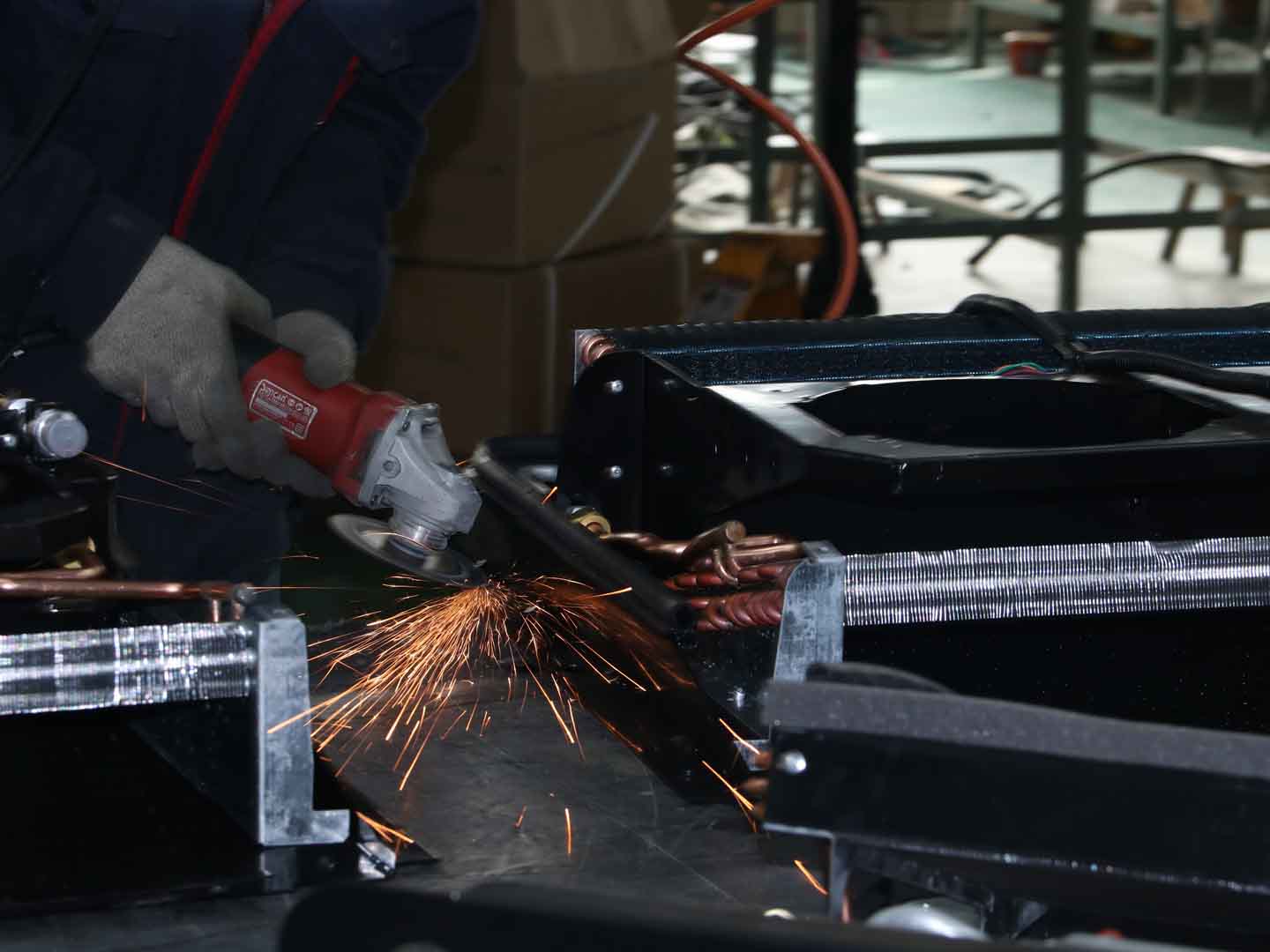
How to charge a car AC unit? A professional installation procedure is fundamental to ensuring the effectiveness of the replacement and the lifespan of the system. It begins with accurate diagnosis to confirm that the fault lies with the air conditioning unit itself. Then, all refrigerant in the system must be safely recovered using professional recovery equipment. Disassembly requires particular patience and meticulousness, especially of the evaporator unit, which is usually deeply embedded inside the dashboard. Disassembly involves multiple interior parts, and every screw and connector must be properly labeled and stored. Before installing the new unit, all connected dryer bottles and expansion valves must be replaced simultaneously, and connected pipes must be thoroughly cleaned. All connections must use new, refrigerant-compatible seals and be tightened to the specified torque using a torque wrench. After installation, the entire system must undergo a rigorous vacuuming process to remove air and moisture, followed by a long-term pressure test to ensure an absolute seal. Then, refrigerant and the appropriate amount of refrigeration oil are precisely added according to the type and weight specified by the vehicle manufacturer. Finally, comprehensive performance testing is essential, including vent temperature measurement, high and low pressure checks, and verification of all functional modes.
The aftermarket offers diverse options for replacing car air conditioning units or Camper Ac. These can be broadly categorized into three types: genuine original equipment manufacturer (OEM) parts, international brand equivalent parts, and cost-effective domestic brand parts. OEM parts offer the highest level of compatibility and reliability, but are also the most expensive. International brands such as Denso, Valeo, and Mahle offer equivalent parts that are often of comparable quality to OEM parts, at more competitive prices, making them the mainstream choice for most professional repair shops. High-quality domestic brands offer excellent value for money, meeting basic needs for those with limited budgets. Market trends show that electric compressors and thermal management integrated units suitable for new energy vehicles are also rapidly developing. When choosing, consumers should comprehensively consider the vehicle’s remaining value, usage intensity, their budget, and expectations for cooling performance, and prioritize service providers offering reliable warranties.
In summary, replacing the air conditioning unit in a car or minibus is an investment that directly and significantly improves the driving experience and vehicle value. It’s far more than a simple matter of disassembling and reassembling old parts; it’s a complex, interconnected, and rigorously standardized system engineering project. Its success depends heavily on the correct selection of components, standardized and professional installation techniques, and meticulous post-installation testing. For individual car owners, attempting to replace internal units like the evaporator themselves is extremely difficult and risky. For fleet managers, choosing a reputable, well-equipped, and experienced repair shop is crucial for ensuring operational efficiency, controlling long-term costs, and avoiding redundant investment. Ultimately, a successful replacement should deliver a cool, fresh, and stable air conditioning experience, ensuring the system’s reliable operation for years to come—this is the core criterion for evaluating the value of this work.
Related posts:
 Bus Air Conditioner is used for buses and medium-sized commercial vehicles
 how to recharge ac in car
 Introduction to Ac For Bus
 How Coaches HVAC Works & How to use Coaches HVAC
 how to charge air conditioner in car
 Air Conditioner In Camper
 Motorhome Air Conditioning and Minibus Manufacturer Matching
 Rv Ac Unit Repair
 Bus Ac System Manufacturer
 Bus Con Supplier reminds all bus owners to clean BUS AC
 Bus Air Conditioner Supplier
 Bus Air Conditioning Supplier explains why Bus AC has poor cooling performance