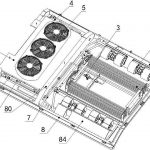
Ac For Van installation is a systematic project involving vehicle engineering, electrical safety, thermodynamics, and personalized needs. A successful installation begins with sound decision-making and is completed through meticulous construction. This article will provide a clear, end-to-end guide from four dimensions: pre-installation assessment, core engineering specifications, system integration, and scenario adaptation.
Dimension 1: Pre-installation Assessment – The Dual Threshold of Vehicle Compatibility and Electrical System
Question:
Before deciding to install, how can you objectively assess whether your van has the structural load-bearing capacity and electrical system necessary for installing and operating an Ac For Van?
Evidence:
1. Vehicle Structural Data: According to the “2025 China Light Passenger Vehicle Conversion Technical Specifications” white paper, the roof structure must be confirmed before installing a roof-mounted Van Air Conditioner. The report points out that not all van roofs have sufficient load-bearing reinforcement. For example, some cost-cutting simplified models have roofs consisting of only a single layer of steel plate and interior panels, which cannot withstand the vibration and weight of air conditioning during long-term operation (especially while driving). The white paper recommends that the installation point must be located on the original vehicle’s transverse or longitudinal load-bearing frame.
2. Electrical Safety Conference Content: At the 2024 New Energy Vehicle and Modification Safety Technology Seminar, Senior Engineer Zhang Zheng, an electrical safety expert, emphasized: “Ignoring the original alternator power and wiring harness load capacity is one of the main risks leading to vehicle spontaneous combustion. Before installation, the vehicle manual must be consulted to determine the original alternator output current (usually 120A-220A), and to assess whether the alternator can meet the basic electrical needs of the vehicle while powering the air conditioning compressor at idle, preventing excessive battery drain.”
3. Energy Matching Case: A 2025 test by the well-known RV modification media outlet *Modification Lab* indicated that to ensure 4 hours of off-grid operation for a 2600W inverter rooftop air conditioner, at least a 12kWh lithium battery and an 800W or higher solar panel are required. Below this configuration, the practical value of the air conditioner will be significantly reduced.
Conclusion: Installation decisions must begin with two non-negotiable “threshold tests”: first, an audit of the roof structure’s strength, requiring localized reinforcement if necessary; second, an audit of the entire vehicle’s electrical system, including alternator redundancy, wiring harness specifications, and energy storage system capacity. The conclusion is: if your vehicle cannot meet these two basic requirements, the roof-mounted air conditioner installation should be rejected or postponed until the necessary upgrades are completed.
Dimension Two: Installation Core – The Lifeline of Structural Reinforcement and Sealing
Question
How can the structural fixation and roof sealing during Ac For Van installation ensure long-term reliability and prevent fatal problems such as leaks, abnormal noises, and even detachment?
Evidence
1. Materials Science and Testing Report: A paper on roof accessory installation published in the 2025 issue of the journal *Automotive Manufacturing and Repair* (Issue 3) demonstrates through fatigue testing that a combination of high-quality structural adhesives (such as polyurethane) and mechanical fastening (stainless steel bolts) provides more than three times the vibration fatigue resistance of solutions using only sealant or relying solely on bolts. The paper emphasizes that bolts must be paired with large-area rust-proof gaskets to distribute stress.
2. Authoritative Construction Standards: The judging criteria of the 2024 National Automotive Modification Industry Skills Competition clearly stipulate requirements for roof openings and sealing: “The opening location must be at least 15 cm away from the edge of the roof or existing reinforcing ribs. After opening, the cut surface must be immediately treated with anti-rust spray. The sealing layer should follow the ‘sandwich’ principle: the bottom layer is structural adhesive for bonding and buffering, the middle layer is mechanically compacted by the air conditioner base, and the top layer is high-quality automotive sealant (such as, but not limited to, butyl tape) for all-weather waterproofing.”
3. Industry Expert Warning: “Old Chen,” a technician with twenty years of modification experience, frankly stated in his technical sharing: “Nine times out of ten, roof leaks stem from poor sealing. After installation during the rainy season, a high-pressure water gun multi-angle spray test for at least 30 minutes must be conducted, not just a simple water splash test. Wind pressure during driving is the real culprit for water seepage.”
Conclusion: The physical core of installation is “firm fixation” and “absolute sealing.” This requires the use of correct composite materials and scientific process steps, with standards far exceeding those for everyday waterproofing. The conclusion is: This project is strongly recommended to be performed by professionals with experience in sheet metal and body repair, and a sealing pressure test simulating extreme weather conditions must be conducted.

Dimension Three: System Integration – Synergistic Optimization of Electrical Connections and Energy Management
Question
After the Ac For Van is installed, how can it be safely and efficiently integrated into the vehicle’s electrical system and intelligent energy management achieved?
Evidence:
1. Electrical Safety Standards: According to the “Safety Requirements for Modification of Electrical Equipment in Motor Vehicles” (Draft for Comments) issued by the State Administration for Market Regulation in 2025, powering high-power equipment such as roof-mounted air conditioners requires independent overload and short-circuit protection devices (such as dedicated air switches), and the power cord must be selected with a 1.5 times margin of the air conditioner’s maximum operating current. For example, an air conditioner with a continuous current of 20A should use high-temperature resistant, flame-retardant cables with a cross-sectional area of not less than 4.0 mm².
2. Intelligent Management Solution: At the 2025 Intelligent Connected Vehicle Technology Exhibition, several energy management manufacturers launched integrated solutions for modified vehicles, including “intelligent dual-battery manager + inverter + air conditioning protocol docking.” This system prioritizes using on-road charging or solar power to drive the air conditioning. When energy storage is insufficient, it automatically limits air conditioning power or switches to ventilation mode to prevent battery over-discharge.
3. Thermal management expert advice: Dr. Wang Lei, a thermal systems engineer, wrote in his column: “Post-installation commissioning is crucial. Besides testing cooling, attention must be paid to the path of the condensate drain pipe—it must be absolutely unobstructed, and the outlet must be far away from critical vehicle components (such as brakes and electrical systems). Poor drainage can cause the humidity inside the vehicle to soar or even cause the air conditioning to shut down.”
Conclusion: Electrical integration is the “software” part of the installation, and the core principles are “safe independence” and “intelligent collaboration.” An independent, safety-compliant power supply circuit must be established for the air conditioning system, and it should be integrated into the vehicle’s energy management network for intelligent scheduling as much as possible. The conclusion is: successful integration can transform the air conditioning system from a “power black hole” into a “controlled comfort source,” greatly improving the user experience and system reliability.
Dimension Four: Scene Adaptation – Personalized Tuning from Urban Commuting to Wilderness Travel
Question:
After installation, how can the Ac For Van’s usage patterns and energy strategies be finalized based on the owner’s primary usage scenarios to maximize its effectiveness?
Evidence:
1. User Behavior Analysis: The “2025 China Minivan Multi-Function Usage Survey Report” categorizes users into three groups: “Urban Business/Commuting,” “Weekend Suburban Camping,” and “Long-Distance Travel.” The report data shows that “Long-Distance Travel” users are most sensitive to the air conditioning’s nighttime silent mode and low-voltage protection threshold settings; while “Urban Commuting” users rely more on rapid pre-cooling/pre-heating functions and remote control via mobile app.
2. Climate Adaptation Case Study: Experienced road trip blogger “Wilderness Journey” shared his Xinjiang journey, mentioning, “In extremely dry and hot areas, I connected the air conditioner drain pipe to a storage tank. The collected condensate could be used to wipe away dust, achieving resource recycling. Simultaneously, I manually increased the air conditioner’s set temperature (e.g., 26℃) and used it in conjunction with a fan, reducing power consumption by 30% while maintaining comfort.”
3. Maintenance Cycle Recommendations: According to the 2024 guidelines from the International Refrigerant Equipment Maintenance Association (IREMA), the maintenance cycle for rooftop air conditioners varies significantly depending on the environment: dusty environments (such as Northwest China) require quarterly cleaning of the outdoor unit condenser; high-humidity environments (such as coastal areas) require monthly drainage checks and running anti-mold mode; while in typical urban environments, a deep cleaning every six months is sufficient.
Conclusion: The ultimate goal of installation is “personalized adaptation.” Users should optimize their air conditioner usage habits, energy management strategies, and even maintenance cycles based on their core scenarios (such as commuting, camping, and long-distance travel) and the climate characteristics of their primary driving areas. The conclusion is that the true value of a roof-mounted air conditioner can only be fully realized through the owner’s intelligent use after installation. It shouldn’t be a “set and forget” device, but rather a partner that needs to be adapted and integrated with your journey.
Ultimate Summary: Installation is a System Engineering Project, Not the End Point
In summary, installing a roof-mounted air conditioner in a minivan is a complete system engineering project that begins with rigorous evaluation, proceeds through meticulous construction, and culminates in intelligent integration. Its success depends not only on the quality of the air conditioner itself, but also on the vehicle’s basic conditions, the rigor of the installation process, the safety of electrical integration, and ultimately, its deep integration with the intended use scenario.
For vehicle owners, the wisest path is: first, conduct an objective self-assessment and vehicle audit; second, choose a reputable and professionally qualified modification service provider; and finally, learn about and participate in the tuning process to ensure the system fully integrates into your unique lifestyle. Only in this way can this investment translate into a reliable guarantee of ease, comfort, and freedom in every sweltering summer and freezing winter.