
Ac For Buses Hinopak will inevitably adhere to three core design logics: addressing extreme climates, improving energy efficiency, and ensuring system reliability. Its technological path is likely to align with mainstream industry trends, moving towards more intelligent variable frequency control and deeper integration with the vehicle’s energy management system.
Pakistan’s extreme climate (summer temperatures often reach 55°C) and power shortages dictate that its bus air conditioning systems must meet two crucial requirements: extremely high cooling capacity and ultra-high energy efficiency/adaptability.
Ac For Buses Hinopak Cooling Capacity and Energy Efficiency
For new energy vehicles (such as hybrid or pure electric buses) from mainstream manufacturers like Hinopak, their air conditioning systems generally employ DC inverter technology. This technology precisely controls compressor power, ensuring sufficient cooling capacity while achieving up to 50% energy savings compared to traditional fixed-frequency air conditioning, effectively mitigating the impact on vehicle range. For example, Chinese new energy buses are already widely equipped with heating and cooling air conditioning in the region.
System Reliability and Protection: To cope with high temperatures, dusty conditions, and bumpy road surfaces, the air conditioning system must possess high reliability. Industry-leading solutions employ high-protection-level electric drive systems (IP68+IP6K9K, some integrated with or coordinated with air conditioning) and reinforced with anti-corrosion, dustproof, and shock-resistant designs to ensure stable operation in harsh environments.
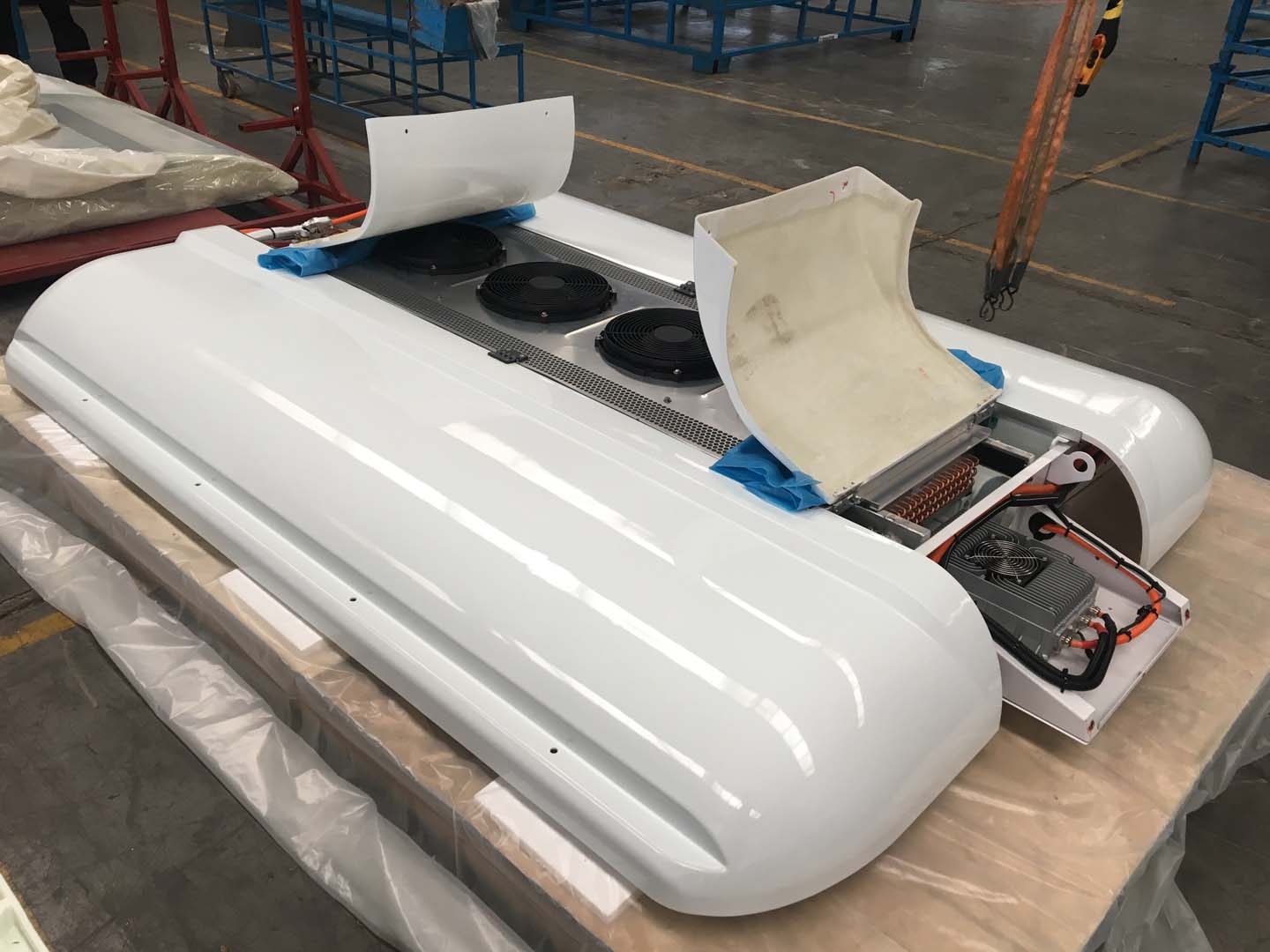
Ac For Buses Hinopak has become standard equipment for various bus services in Pakistan, with clearly defined application scenarios.
Urban Rapid Transit Systems: Vehicles (including Chinese brands like King Long and Higer) in projects such as Lahore and Peshawar are equipped with high-efficiency air conditioning as standard. This is key to enhancing the attractiveness of public transportation and coping with summer heat.
Intercity Passenger Transport and Ride-Hailing Buses: Long-distance routes connecting major cities and emerging ride-hailing services like Airlift all highlight “high-quality air-conditioned buses” as a core selling point to attract passengers who prioritize comfort.
Basic Public Transport and Commuter Services: Even on ordinary bus routes, air conditioning is transitioning from a high-end feature to an essential component for enhancing service competitiveness, especially in summer.
Ac For Buses Hinopak, integrated into local brand buses like Hinopak, directly addresses local challenges:
Enhancing Passenger Experience and Operational Efficiency: A cool cabin environment is key to attracting passengers to abandon private transportation and choose public transport during the summer. Professor Nevi Arshad of Lahore University of Management Sciences points out that new energy transportation (including its efficient air conditioning systems) presents a new opportunity to improve urban transportation efficiency.
Reducing Total Lifecycle Operating Costs: While the initial cost of efficient inverter air conditioning may be higher for operators, in the long run, its significantly reduced energy consumption (whether fuel or electricity) translates into substantial operating cost savings.
Enhancing Vehicle Market Competitiveness: For manufacturers like Hinopak, providing reliable, comfortable, and energy-efficient air conditioning solutions is crucial for maintaining the competitiveness of their vehicles against Chinese brands such as Yutong and King Long.
Ac For Buses Hinopak’s Decision-Making Chain and Purchasing Parties are Clear:
Direct Customers: Bus operators and passenger transport companies: They are most concerned with the reliability, cooling effect, and total cost of ownership of the air conditioning. Large public transport companies (such as those operating BRT) will directly specify air conditioning performance requirements to bus manufacturers through bidding.
Key Influencers: Governments and Policymakers: Under the strategy of promoting public transport electrification and improving urban air quality, government project bidding will directly specify or favor new energy vehicle models equipped with efficient and environmentally friendly air conditioning systems.
End Users: Passengers: Passenger comfort demands and preferences ultimately influence the procurement decisions of operators and manufacturers through market feedback.
Related posts:
 Ac For Buses Pakistan
 Acc Bus Air Conditioning
 Van Aircon Unit
 Bus Roof Ac Unit – A Look at Bus Comfort in China
 IC Bus Air Conditioning: A Comprehensive Evolution of Integration, Intelligence, and Sustainability
 Bus Cond System Comprehensive Analysis Report
 Technical White Paper on Multi-Unit Roof AC for Campers and Buses