
Ac For Buses Superliner
Ac For Buses Superliner is the core technology unit for the Superliner Bus public transport revolution, realizing energy strategies, passenger experience, and urban environmental goals.
According to an in-depth report in the February 2025 issue of Dawn’s Aurora magazine, the large-scale introduction of Chinese-made electric and hybrid buses in Pakistan’s Sindh and Punjab provinces all come standard with advanced air conditioning systems as a key to improving service quality.

The value of Ac For Buses Superliner is particularly evident in harsh operating environments.
Extreme Climate: Facing high temperatures and humidity in summer, the air conditioning system must quickly cool down and maintain the humidity inside the cabin within a comfortable range of 40%-60%, preventing mold growth and air pollution.
Complex Road Conditions: Buses travel on some roads with poor conditions, placing higher demands on the shock resistance and durability of the air conditioning system.
Continuous Operation: As urban arteries, buses operate for long hours daily, requiring DC bus air conditioning system to ensure low failure rates and high reliability to support daily operations such as the Rawalpindi electric bus service from 6 am to 10 pm.
The advantages of Ac For Buses Superliner are multifaceted:
Energy Saving and Cost Reduction: Highly efficient air conditioning directly extends the bus’s range and reduces operating electricity costs, making electric buses more economically competitive.
Enhanced Experience: In addition to basic cooling, excellent air quality management and low-noise operation significantly improve the riding experience, which is key to attracting passengers from outdated private transportation to public buses.
Policy Alignment: Sindh Transport Minister Sharjeel Inam Memon has clearly stated that the provincial government’s goal is to transition the entire transportation system to pure electric power to save fuel and create a cleaner environment. Highly efficient air conditioning systems are a crucial technological support for achieving this green vision.
| Model | E-Clima2200 | E-Clima3000 | E-Clima4000 | E-Clima6000 | E-Clima8000 | E-Clima2600S |
| Voltage (V) |
DC12V/24V | DC12V/24V | DC12V/24V | DC12V/24V | DC12V/24V | DC12V/24V |
| Cooling Capacity (W/BTU) |
2200W//7500 | 3000W/10000BTU | 4000W/15000BTU | 6000W/20472BTU | 8000W/27300BTU | 2600W/78870BTU |
| Installation | Rooftop Mounted | Rooftop Mounted | Rooftop Mounted | Rooftop Mounted | Rooftop Mounted | Split Mounted |
| Evaporator Air Volume (m³/h) |
650 | 700 | 650 | 650 | 1500 | 450 |
| Condenser Air Volume (m³/h) |
1050 | 1400 | 1050 | 1700 | 3600 | 1400 |
| Refrigerant | R134a | R134a | R134a | R134a | R134a | R134a |
| Dimension (mm*mm*mm) |
700*580*263 | 885*710*290 | 700*580*263 | 1580*385*180/ 920*928*250 |
1260*1030*180 | 682*465*192 540*362*165 |
| Weight (KG) |
32 | 35 | 18/47 | 18/47 | 31 |
The Significance of Ac For Buses Superliner for Green Mobility
Government and Policymakers: For provincial and municipal governments advocating for green mobility (such as Punjab Chief Minister Marian Nawaz promoting electric buses to control smog), buses equipped with advanced air conditioning serve as a “mobile calling card” showcasing their environmental commitment and public benefits.
Public transport operators: Operators value the air conditioning system for reducing total lifecycle energy costs and maintenance frequency, which directly impacts the profitability and sustainability of the fleet.
The general public and passengers: Passengers are the direct beneficiaries. Whether it’s a regular commuter paying 20 rupees or women, students, and the elderly who ride for free, everyone enjoys an equal, comfortable, and dignified environment during their journey. This helps cultivate the public’s habit of using public transport, as evidenced by the positive feedback received by officials in Sindh province.
In short, the air conditioning on Pakistan Superliner buses is a complex system that integrates cutting-edge engineering technology, adapts to local needs, and carries the mission of green transformation. It transcends the traditional concept of temperature control, becoming one of the key indicators of the success of modern public transport projects in Pakistan.
Related posts:
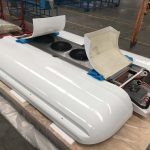 Ac For Buses Hinopak
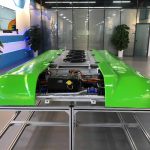 Ac For Buses Pakistan
 Ac For Buses Kazay
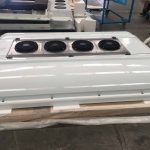 Acc Bus Air Conditioning
 Bus Cond System Comprehensive Analysis Report
 Best Rv Ac Unit
 Motorhome Rooftop Air Conditioners
 RV Rooftop Air Conditioning Units, 2 stes, Golden Partner for Minibus RV
 Low Profile Rv Ac Unit
 Modular Temperature Control Solution for Motorhomes
 15000 Btu Camper Air Conditioner
 Camper Air Conditioner 12V
 Aircon Units For Motorhomes
 Roof Top Camper Air Conditioner
 Camper Rooftop Ac
 Small Rv Ac
 12 Volt Rv Ac Unit
 12v klima uređaj za Hrvatsku