
Air Conditioning Units for Motorhomes: A Distributed Temperature Control System
Air conditioning units for motorhomes, forming a distributed temperature control system, have become an indispensable “climate heart” for high-end motorhomes thanks to their superior engineering integration, intelligent energy management, and redundant reliability.
With the popularization of global nomadic lifestyles and the upgrading of high-end business reception needs, Type A motorhomes built on large bus chassis are evolving from simple means of transportation into “mobile intelligent spaces” that integrate living, working, and leisure.
In this evolution, the comfort of the interior environment has become a key factor in defining product value. Facing vast spaces over 12 meters long with complex internal structures (usually including separate living rooms, bedrooms, kitchens, and bathrooms), traditional single-unit vehicle air conditioners or simple parking equipment are completely unable to meet the demand for uniform, stable, and quiet temperature control.
According to an industry report released by QYResearch, the global motorhome rooftop air conditioning market is continuously growing, and technological innovation and system integration capabilities are the core competitive barriers for leading companies.
This indicates that systematic and intelligent rooftop air conditioning solutions are the inevitable product of responding to the market’s demand for high-end and comfortable products.
Core Parameters and System Configuration – Air Conditioning Units for Motorhomes
Reason: The Fundamental Contradiction of Physical Space and Thermodynamics
The temperature control challenge of motorhomes is three-dimensional. Their internal space is extremely deep, and the heat load distribution is highly uneven: the living area with large panoramic windows heats up rapidly under sunlight, while the relatively enclosed rear bedroom has high thermal inertia and poor air circulation. A single cooling source, regardless of its power, cannot overcome the temperature rise and power attenuation of air during long-distance transmission, inevitably leading to serious horizontal and vertical temperature stratification. At the same time, as a “mobile home,” motorhomes need to cope with the challenges of all climates, from extreme cold to extreme heat, which places military-grade requirements on the cooling/heating capacity, extreme temperature start-up, and continuous operation reliability of the air conditioning system.
Solution: Modular Combination and Parametric Design
The configuration of rooftop air conditioning units is not a simple stacking of equipment, but a system engineering based on precise heat load calculations. The core is to decompose the required total cooling/heating capacity, which is then completed by multiple independently controllable rooftop units working together.
Mainstream configuration solutions are typically optimized based on vehicle length and layout:
| Configuration Scheme | Typical applicable vehicle models | Key Parameters and Specifications | System control logic |
|---|---|---|---|
| Dual-unit balanced layout | 10-12m Bus | One unit at the front and one at the rear, each with a cooling capacity of 13,500-15,000 BTU/h, utilizing full DC inverter technology, and operating at a noise level below 55 decibels. | It allows for independent temperature control in the front and rear zones, or can operate collaboratively to quickly balance the temperature throughout the entire vehicle. |
| Three-unit progressive layout | 12-14m Bus | There is one unit each in the front, middle, and rear sections, with the middle unit focusing on high-load public areas. The total cooling capacity can reach over 40,000 BTU/h. | The current refined division of the driving area, living area, and sleeping area allows for greater opportunities to optimize energy consumption. |
| Four-unit redundant layout | over 14 m Bus | This creates a fully covered temperature control network, allowing for a moderate reduction in the power of individual units, thus improving system redundancy and reducing noise levels. | A failure in any single unit does not affect the basic operation of the system, ensuring maximum reliability and supporting the most complex multi-scenario modes. |
Result: Building an Adaptive, High-Precision Environmental Control Network
Through parametric design and configuration, the rooftop air conditioning unit is upgraded from a functional component to an intelligent environmental management system. It fundamentally eliminates cold and hot spots in the space, controlling the temperature difference between the front and rear of the vehicle to within ±1.5℃, and provides valuable system-level redundancy, minimizing the risk of single-point failure and providing ultimate reliability for long-distance travel.
Use Cases and Energy Strategy – Air Conditioning Units for Motorhomes
Reason: The Dynamic Complexity of Travel Scenarios and “Energy Anxiety”
Users of motorhomes may be experiencing the humid sea breeze of Hainan one week and the biting cold of the Qinghai-Tibet Plateau the next. This mobility across different geographical locations and climates requires the temperature control system to have an extremely wide operating window (e.g., -15℃ to 50℃). More importantly, users seeking the ultimate wilderness experience desire to be independent of campsite electricity, enabling off-grid parking for days or even weeks. In this scenario, air conditioning becomes the largest energy-consuming unit, and its energy efficiency directly determines the boundaries of “freedom.”
Process: Deep Collaboration of Scenario-Based Energy and Temperature Control
Extreme Climate Adaptation: In ultra-high temperature environments such as deserts and Gobi regions, some units in the air conditioning system should use T3 tropical climate-rated compressors to ensure continuous output of rated cooling capacity even at 53℃. In extremely cold regions, the system needs to integrate a high-efficiency DC inverter heat pump to extract heat from the extremely cold air, significantly reducing reliance on fuel-based heating.
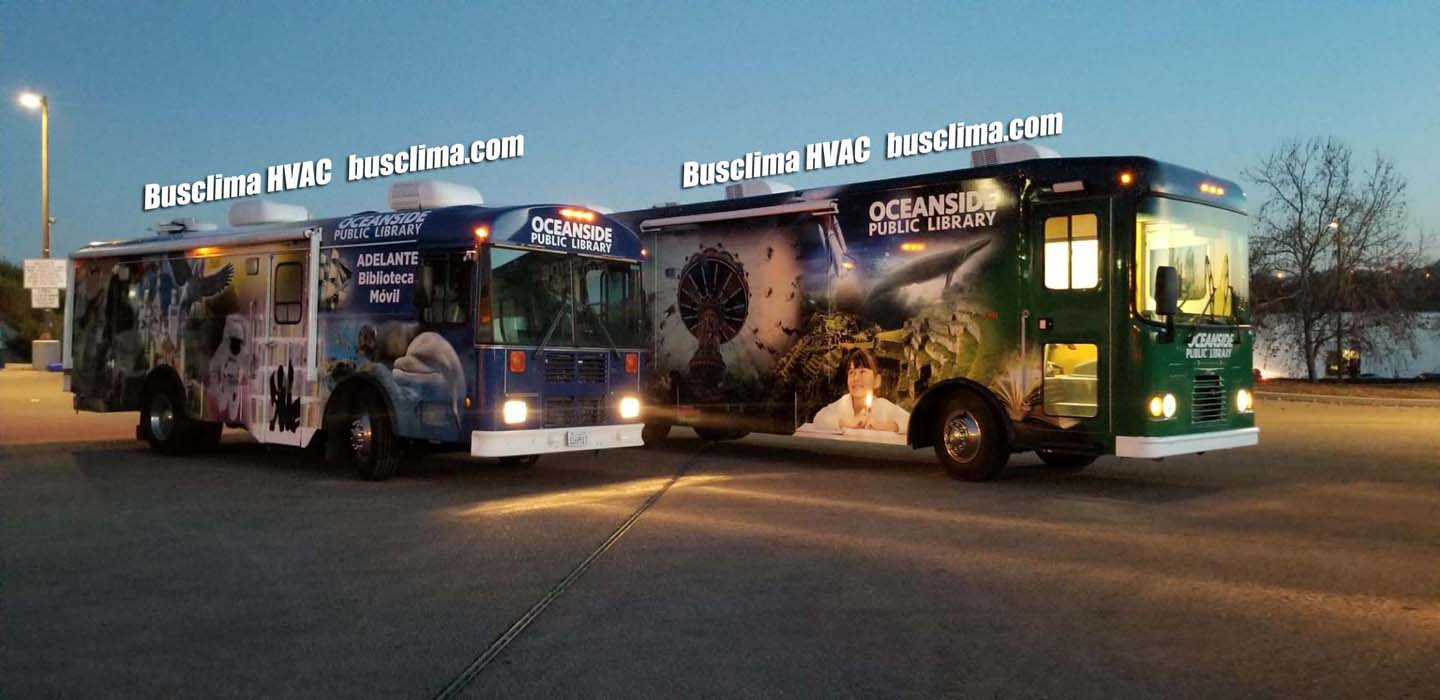
Long-Term Off-Grid Operation: This is the scenario where the rooftop air conditioning unit maximizes its value. It must be deeply integrated with a powerful on-board microgrid: a large-capacity lithium iron phosphate battery provides the energy storage foundation, a solar panel array exceeding 3000 watts provides daily replenishment, and a high-power vehicle charger serves as a rapid replenishment method. An intelligent energy manager (BMS) monitors the power in real time, dynamically adjusting the operating power and start-stop strategies of each air conditioning unit to achieve optimal energy distribution.
Seamless Switching Between Driving and Parking: An excellent multi-unit rooftop air conditioning system can achieve seamless switching between cooling while driving and cooling while parked. Brands like KME offer all-DC inverter systems that utilize on-board power generation for efficient cooling while the vehicle is in motion, and automatically switch to battery-powered silent mode after parking. This eliminates the need to start the main engine, saving energy and enhancing comfort throughout the journey.
Result: A leap in experience from “temperature control function” to “energy independence”
When distributed overhead air conditioning units are deeply integrated with intelligent energy systems, bus-based motorhomes truly break free from dependence on fixed infrastructure. Users gain the absolute freedom to independently create a comfortable living environment with constant temperature, humidity, and fresh air, anytime, anywhere. This completely reshapes the meaning of luxury travel.
Systemic Product Advantages – Air Con Units For Motorhomes
Reason: Limitations of single-dimensional performance and users’ pursuit of a comprehensive experience
Users ultimately purchase not just the 12 Volt Air Conditioner For Rv itself, but a holistic travel experience composed of temperature uniformity, spatial tranquility, air quality, and system reliability. The overhead air conditioning system, through its top-level design, systematically addresses many inherent shortcomings of traditional solutions.
Process: Integration and construction of multi-dimensional advantages
| Advantage dimensions | Technical implementation principles | User Value |
|---|---|---|
| Comfort | The distributed cooling system, combined with ducted air delivery, achieves “multi-point supply and short-distance transmission,” resulting in a scientifically designed airflow distribution. | Completely eliminate the problem of “cold head and warm feet” or temperature differences between the front and back of the room, achieving a uniform temperature similar to high-end residences and enhancing all-day comfort. |
| Mute | The compressor’s operating noise is distributed across multiple units and isolated in the roof, resulting in only a gentle breeze sound inside the vehicle. High-quality brushless motors are used. | The noise level in the sleeping area can be controlled to below 40 decibels, ensuring high-quality rest, making it especially suitable for business trips or family vacations that require a quiet environment. |
| Energy saving | Full DC inverter technology is the core. Each compressor can independently and continuously adjust its speed according to the load in its corresponding area, always operating at the highest energy efficiency point, thus avoiding the waste of electricity caused by oversized equipment running at low loads. | The overall energy efficiency ratio (COP) is significantly improved, resulting in 25%-40% energy savings compared to traditional solutions, which directly translates into longer off-grid operating time and reduced operating costs. |
| Integration and aesthetics | All equipment is integrated into the roof, maximizing valuable interior and chassis space for water tanks, batteries, or storage. The clean exterior design and concealed air ducts maintain a premium feel in the interior. | This improves the vehicle’s space utilization and overall design aesthetics, aligning with the positioning of a high-end product. |
| System reliability | The multi-unit architecture provides inherent backup capabilities. In the event of a single module failure, the system can automatically adjust the operating strategy of the remaining units to ensure a basic habitable temperature environment. | This significantly enhances the safety and peace of mind for travelers in remote areas, and is an essential feature for high-end adventure travel. |
Result: Shaping the core value label that defines vehicle class
This system transforms air conditioning from a high-energy-consuming feature into a core value unit that showcases the vehicle’s technological strength and luxury attributes. It directly relates to users’ travel happiness and brand recognition, becoming a key technical benchmark that distinguishes ordinary modified vehicles from top-tier mobile luxury homes.
Target Customer Group and Value Decision – Air Con Units For Motorhomes
Reason: The underlying value logic behind the high investment
Equipping a bus-based motorhome with a complete multi-unit overhead air conditioning and energy system can account for a significant portion of the total vehicle modification cost. This determines that the target customers are not price-sensitive users, but rather elite groups who have an extreme pursuit of quality of life, reliability, and unique experiences.
Process: Precise matching of customer profile and core demands
Global traveling families and seasoned adventurers: These are the core users. They plan long-term, intercontinental trips, and the vehicle is their only home. They have almost demanding requirements for the system’s absolute reliability, all-weather adaptability, and ultimate off-grid capabilities. This investment is the highest “insurance” they purchase for their family’s safety and comfort. Top-tier Business Reception and Mobile Public Relations Platform Operator: Used for hosting executives of multinational corporations, mobile press conferences, and high-end brand presentations. In this scenario, silent, unobtrusive, and consistent environmental control is fundamental to demonstrating professionalism and prestige. The system’s stable operation and zoned temperature control capabilities ensure that every guest feels meticulously cared for, directly enhancing the quality and success rate of business activities.
Specialized Industries and Research Institutions: For example, field documentary film crews, geological exploration teams, and mobile medical examination stations. These vehicles need to remain in remote areas for extended periods, serving as a base for work and life. The system’s ultra-high reliability, redundant design, and powerful ability to operate in extreme environments are core productivity tools that guarantee mission completion.
Result: The evolution of business logic from “selling products” to “providing solutions”
For RV manufacturers and high-end modification companies, providing rooftop air conditioning solutions represents a fundamental shift in their business model. They are no longer simply selling a vehicle or a collection of parts, but rather providing users with a customized, high-end mobile lifestyle solution. The key to successful sales lies in deeply understanding users’ travel dreams and specific scenarios, and using systematic engineering data (such as temperature control simulations under different climates and off-grid endurance analysis reports) to verify its long-term value, thereby establishing strategic partnerships with high-net-worth clients based on deep trust and shared vision.
Future Outlook: Intelligent, Integrated, and Green – Air Con Units For Motorhomes
The future of rooftop air conditioning systems for motorhomes will be deeply integrated into the “four new trends” of the automotive industry (electrification, intelligence, connectivity, and sharing). According to industry analysis, the intelligence and environmental friendliness of automotive air conditioning systems have become key indicators for classifying vehicle grades. Future systems will not only be temperature control devices but also core nodes in the vehicle’s intelligent thermal management network.
Deep integration with intelligent connectivity: Through V2X (vehicle-to-everything) technology, vehicles can pre-cool/pre-heat the air conditioning using grid power before entering a charging station, saving on-board energy. The system can also be linked with navigation and weather forecasts to achieve predictive energy management and temperature control strategy adjustments based on geofencing. Evolution towards Integrated Thermal Management Systems: Rooftop air conditioning units will be integrated with battery thermal management systems and motor cooling systems, with a unified domain controller performing global energy scheduling. This will prioritize ensuring the three core electric systems operate within their optimal temperature range while maintaining passenger comfort, thereby improving overall vehicle energy efficiency and range.
Environmental Protection and Sustainability: The use of environmentally friendly natural refrigerants such as R290 and lower power consumption components will become the industry standard. As demonstrated by the strategies of leading companies like Dongfeng Mahle in the field of new energy thermal management, a company’s technological foresight will determine its market position.
Conclusion – Air Conditioning Units for Motorhomes
From centralized to distributed systems, from fixed-frequency to variable-frequency operation, and from independent equipment to system integration, the development trajectory of rooftop air conditioning units for buses and motorhomes clearly reflects humanity’s relentless pursuit of quality in mobile living spaces. It is no longer a cold machine, but a “life support system” that understands the environment, anticipates needs, and intelligently collaborates. It calmly maintains a spring-like climate within the vehicle, transforming even the most remote and harsh environments into comfortable and poetic homes. This is not only a victory for technology, but also a victory for a philosophy of life centered on freedom, dignity, and dreams.
Related posts:
 Modular Temperature Control Solution for Motorhomes
 4 sets of Rooftop AC Units for Campers for a 15m bus
 Air Conditioning Units For Motorhomes
 RV Rooftop Air Conditioning Units, 2 stes, Golden Partner for Minibus RV
 12V Camper Air Conditioner used in medicalmobile
 15000 BTU Camper AC Multiple units
 Camper Aircon Unit – Modular Design Leads to a New Comfortable Travel
 12 Volt RV Air Conditioning Units represent an energy and technological revolution
 Technical White Paper on Multi-Unit Roof AC for Campers and Buses
 12 Volt Camper Ac
 15000 Btu Air Conditioner Rv
 Air Conditioning Units for RV and Minibus Air Conditioner
 15000 Btu Camper Air Conditioner
 Air Conditioning for Motorhomes Manufacturing Process
 Air Conditioning Units for Campers Installation Process
 Similarities between RV Camper Air Conditioner and Minibus AC
 Ac For RV Camper Market Analysis Report
 Camper Air Conditioner