
Air Conditioner For Minibus
Air conditioners for minibuses not only determine passenger comfort but also directly impact vehicle energy consumption and operational efficiency.
With the global trend towards smaller and electric passenger vehicles, minibuses, typically under 7 meters in length, are becoming the mainstay of urban micro-circulation and personalized travel.
According to a technical white paper from busclima, a leading global supplier of air conditioners for minibuses, the core mission of roof-mounted air conditioning is to “efficiently cool the interior space while minimizing air resistance.”
Songz points out that providing a comfortable temperature for small and medium-sized passenger vehicles is crucial for ensuring driver focus and passenger safety.
Key Technical Parameters of Air Conditioner for Minibuses
Busclima design engineers say that the compact interior space of minibuses necessitates integrating high-powered temperature control equipment within a limited roof area and height, while also considering vehicle center of gravity, wind resistance, and aesthetic harmony.
Traditional under-mounted or built-in air conditioning solutions would encroach on valuable passenger or storage space, while roof mounting is the optimal solution to this dilemma.
Busclima design engineers explain that the roof-mounted air conditioner achieves efficient integration through modular and aerodynamic design. Its technical parameters directly correspond to the vehicle’s size:
| Model | E-Clima2200 | E-Clima3000 | E-Clima4000 | E-Clima6000 | E-Clima8000 | E-Clima2600S |
| Voltage (V) |
DC12V/24V | DC12V/24V | DC12V/24V | DC12V/24V | DC12V/24V | DC12V/24V |
| Cooling Capacity (W/BTU) |
2200W//7500 | 3000W/10000BTU | 4000W/15000BTU | 6000W/20472BTU | 8000W/27300BTU | 2600W/78870BTU |
| Installation | Rooftop Mounted | Rooftop Mounted | Rooftop Mounted | Rooftop Mounted | Rooftop Mounted | Split Mounted |
| Evaporator Air Volume (m³/h) |
650 | 700 | 650 | 650 | 1500 | 450 |
| Condenser Air Volume (m³/h) |
1050 | 1400 | 1050 | 1700 | 3600 | 1400 |
| Refrigerant | R134a | R134a | R134a | R134a | R134a | R134a |
| Dimension (mm*mm*mm) |
700*580*263 | 885*710*290 | 700*580*263 | 1580*385*180/ 920*928*250 |
1260*1030*180 | 682*465*192 540*362*165 |
| Weight (KG) |
32 | 35 | 18/47 | 18/47 | 31 |
Air Conditioner for Minibus Selection
Busclima design engineers state that minibus operating scenarios vary greatly, especially in Southeast Asia and South America. From high-frequency, short-distance urban shuttles to long-distance group tours and even personalized RV conversions, there are tiered requirements for air conditioning cooling capacity, power consumption, quiet operation, and intelligent control.
Urban Public Transportation Micro-circulation
Busclima design engineers cite the example of the 36 recently deployed 9-seat minibuses in Thailand, which are only 6 meters long. Such scenarios require air conditioning that is responsive, durable, and able to operate stably under frequent start-stop and idling conditions. Equipping the minibus with Air Conditioner for Minibus enhances the passenger experience.
High-End Tourism and Group Transportation
Busclima design engineers note that some government vehicles in Malaysia prioritize overall comfort and low-noise operation. The application of inverter technology smoothly adjusts power according to the vehicle’s load, significantly reducing noise and improving travel quality while saving energy.
Customized Conversions (e.g., RVs)
Busclima design engineers say that rooftop air conditioning, commonly found in Iveco and other chassis modifications, is an essential feature of these “mobile homes.”
In this case, a 12V/24V parking inverter air conditioner becomes an ideal choice. It can operate independently on battery power after the vehicle is turned off, providing quiet cooling or heating for extended periods without starting the engine.
Busclima design engineers say that targeted selection transforms rooftop air conditioning from a standardized component into a key configuration that enhances the vehicle’s competitiveness in various scenarios. Operators can maximize the added value of their services while controlling costs through precise matching.
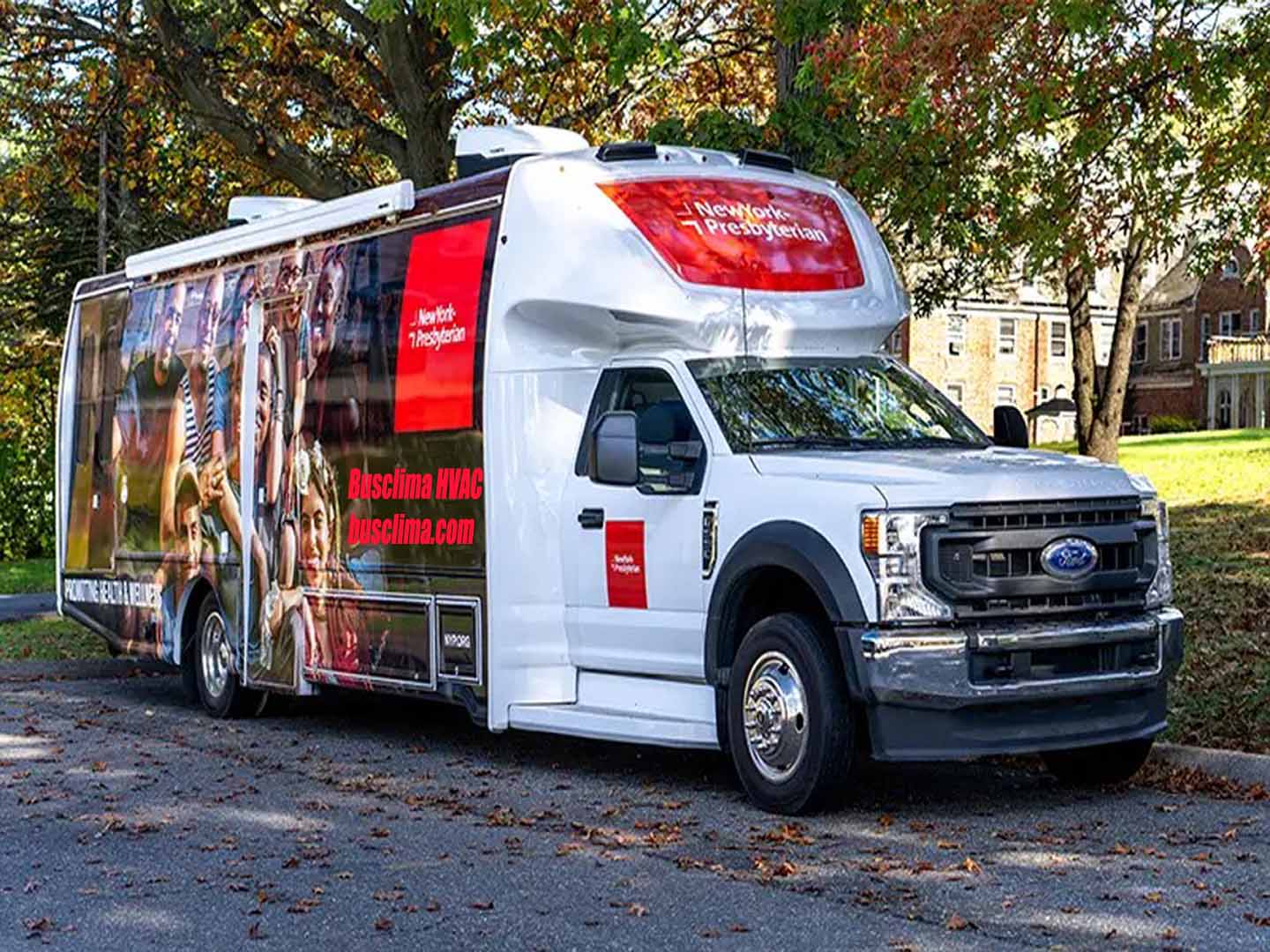
Comprehensive Advantages of Air Conditioner for Minibus
Busclima design engineers say that using industrial-grade components and mature design, it boasts “extremely long service life and virtually maintenance-free operation.” High-quality components ensure durability under frequent vibrations and harsh weather conditions.
High energy efficiency is achieved through intelligent control of the fan and compressor. Variable frequency technology further optimizes energy consumption, directly impacting the driving range of electric minibuses.
Roof-mounted installations save interior space and are easy to maintain. A wide range of accessories supports customized installation solutions, resulting in low maintenance costs.
This directly translates to lower operational failure rates, reduced maintenance expenses, better energy economy, and increased customer satisfaction and brand loyalty due to improved comfort, maximizing return on investment.
Roof-mounted installations have become the gold standard for Air Conditioner for Minibuses, perfectly balancing space, efficiency, and aesthetics.
With the increasing prevalence of new energy minibuses, roof-mounted air conditioners will be more deeply integrated with the vehicle’s thermal management system, evolving towards higher energy efficiency, smarter connectivity, and lighter weight.
For operators, viewing it as a strategic investment related to operational efficiency and brand image, rather than a simple functional component, is crucial to establishing a key advantage in the fierce market competition by providing “coolness throughout the vehicle.”
Related posts:
 Minibus Air Conditioning
 Minibus Air Con
 Minibus Air Conditioner
 SNVI Minibus Air Conditioning is largely absent
 Aircon Units For Motorhomes
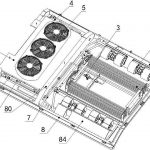 Bus Air Conditioner is used for buses and medium-sized commercial vehicles
 Small Air Conditioner For Rv
 Motorhome Rooftop Air Conditioners
 RV Rooftop Air Conditioning Units, 2 stes, Golden Partner for Minibus RV
 Small Rv Ac
12V 24v Bus Air Con
Small Rv Ac
12V 24v Bus Air Con
 12 Volt Rv Ac Unit
 Camper Roof Air Conditioner
 12V Ac Unit For Rv
 Small Ac For Camper
 Low Profile Rv Ac Unit
 Camper Air Conditioner 12V
 Rv Aircon