
Air Conditioning Units for Motorhomes
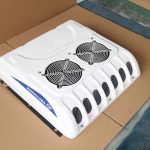
Air conditioning units for motorhomes: Modular units enable precise temperature control in minibuses.
With the increasing diversification of urban travel and the growing demand for personalized travel and living spaces, B-type motorhomes and small commercial passenger vehicles built on chassis such as the Ford Transit and Mercedes-Benz Sprinter are experiencing a surge in market popularity due to their flexible maneuverability and efficient space utilization.
However, the interior space of these vehicles is compact (typically 10-15 square meters of living area), and is often divided into multiple functional compartments such as driving, living, kitchen/bathroom, and sleeping areas. Traditional single air conditioning systems face serious challenges in terms of cooling speed, temperature uniformity, and energy consumption.
Therefore, using Aircon Units For Motorhomes—a distributed temperature control system composed of two or more miniaturized, modular roof-mounted air conditioning units—has become a key technological path to improving the comfort and practicality of minibus models.
According to the “2025 China RV Industry Development White Paper,” the installation rate of multi-unit collaborative temperature control solutions in vehicles under 8 meters has increased by more than 30% annually, indicating market recognition of refined environmental control.
1. Core Parameters and System Architecture – Aircon Units For Motorhomes
Reason: Complex thermal environment and power limitations in small spaces
Although the interior space of minibuses is small, the heat load sources are complex. Large side windows and windshields introduce a large amount of radiant heat in the summer, and the compact layout leads to concentrated sensible and latent heat loads when there are many people. More importantly, the power system capacity of small vehicles (especially 12V/24V batteries and inverters) is relatively limited, and cannot support the continuous operation of a single high-power air conditioner like large motorhomes. Traditional integrated roof-mounted air conditioners, in order to cover the entire vehicle, often use high-power fixed-frequency compressors, resulting in frequent starts and stops, high power consumption, and difficulty in solving the temperature difference between the front and rear of the vehicle.
Solution: Modular combination and low-power design
The core of the “air conditioning unit” solution lies in “divide and conquer.” By deploying two or more low-power roof-mounted air conditioners specifically optimized for medium and small vehicles, zone management and collaborative operation are achieved. The core parameter configuration must follow the following logic:
Single-unit capacity and energy efficiency: The cooling capacity of a single air conditioner is typically designed to be between 2.2kW (approximately 7,500 BTU/h) and 3.5kW (approximately 12,000 BTU/h), utilizing full DC inverter technology. For example, an inverter unit with an energy efficiency ratio (COP) of 3.0 or higher can not only reduce power consumption by more than 30%, but also achieve stepless speed control, quietly maintaining the set temperature.
System layout and duct design: The optimal layout for two air conditioners usually adopts a “front-rear distribution” or “main-auxiliary distribution.” One unit is located in the front of the cabin (covering the driving and seating areas), and the other is located in the middle and rear (covering the sleeping area). To ensure independent and efficient airflow from each unit and avoid airflow interference, patented technologies such as “evaporative independent air ducts” are applied. This design uses physical reinforcing ribs to separate the shared air duct into multiple independent channels, so that the airflow from the centrifugal fan of each air conditioner does not affect each other, reducing wind resistance and turbulence, thereby indirectly improving overall cooling efficiency and reducing operating noise.
Power system coordination: The total peak power of the two inverter air conditioners needs to be precisely matched with the vehicle’s power system (lithium battery capacity, solar power supplement, and on-board charger). The intelligent controller manages the start-up sequence and operating power of the two air conditioners to avoid excessive instantaneous impact on the circuit.
| Model | E-Clima2200 | E-Clima3000 | E-Clima4000 | E-Clima6000 | E-Clima8000 | E-Clima2600S |
| Voltage (V) |
DC12V/24V | DC12V/24V | DC12V/24V | DC12V/24V | DC12V/24V | DC12V/24V |
| Cooling Capacity (W/BTU) |
2200W//7500 | 3000W/10000BTU | 4000W/15000BTU | 6000W/20472BTU | 8000W/27300BTU | 2600W/78870BTU |
| Installation | Rooftop Mounted | Rooftop Mounted | Rooftop Mounted | Rooftop Mounted | Rooftop Mounted | Split Mounted |
| Evaporator Air Volume (m³/h) |
650 | 700 | 650 | 650 | 1500 | 450 |
| Condenser Air Volume (m³/h) |
1050 | 1400 | 1050 | 1700 | 3600 | 1400 |
| Refrigerant | R134a | R134a | R134a | R134a | R134a | R134a |
| Dimension (mm*mm*mm) |
700*580*263 | 885*710*290 | 700*580*263 | 1580*385*180/ 920*928*250 |
1260*1030*180 | 682*465*192 540*362*165 |
| Weight (KG) |
32 | 35 | 18/47 | 18/47 | 31 |
Result: Building a flexible, efficient, and reliable distributed temperature control network
Through precise parameter configuration, the air conditioning system transforms from a high-energy-consuming device into an intelligently managed environmental control system. Users can independently control the temperature and airflow of the front and rear areas according to their actual needs (for example, only turning on the front air conditioner during the day and switching to the rear silent mode at night), maximizing energy utilization efficiency while ensuring comfort, and significantly extending off-grid parking time.
2. Typical Application Scenarios and Adaptability Analysis – Air Conditioning Units for Motorhomes
Reason: The diverse usage attributes of minibus models
The value of the Rv Rooftop Ac Unit for minibuses is fully reflected in its rich application scenarios. Whether for long-distance family travel, business commuting and reception, or special industry operations, the needs vary. Process: Scene-Driven System Operating Modes
Long-Distance Family Travel and Camping: This is the most common scenario. Users have extremely high demands for quiet operation and temperature stability during nighttime sleep. The value of the air conditioning unit’s “zone control + silent mode” is highlighted: during driving, the two units can work together to quickly lower the temperature; when parked at night, only the air conditioner above the sleeping area can be turned on and operated at the lowest fan speed, consuming only 20%-30% of the energy of full-power operation, while ensuring a quiet sleeping environment.

Urban Business Reception and High-End Commuting: Used for corporate shuttle buses, airport transfers, or mobile business negotiations. In this case, rapid cooling, uniform temperature, and discreet operation are key. The dual air conditioning units can cool the entire vehicle to a comfortable temperature faster than a single unit, and due to the increased number of air vents, there are no hot or cold spots in the cabin, improving the comfort of all passengers and demonstrating service quality.
Specialized Industry Vehicles: Such as mobile medical testing vehicles, small command vehicles, and high-end equipment transport vehicles. These vehicles have stringent requirements for temperature stability and reliability. The redundant design of the air conditioning unit provides safety assurance: when one unit fails, the other can still maintain basic temperature control in critical equipment areas or personnel activity areas, buying time for repair or evacuation. This is an advantage that a single air conditioning system cannot match.
Result: Achieving a leap from “basic temperature control” to “scene-enabled functionality”
The air conditioning unit solution transforms the minibus from a simple means of transportation into a “mobile space platform” capable of adapting to various complex tasks. Through the flexibility of its technical configuration, it deeply empowers the vehicle’s uses, enhancing its value and competitiveness in various market segments.
3. Core Product Advantages and User Value – Aircon Units For Motorhomes
Reason: Addressing the inherent shortcomings of single-device solutions
Users choose the air conditioning unit not only to obtain double the cooling capacity, but also to systematically solve the pain points of traditional solutions in terms of comfort, energy consumption, and reliability.
Process: Multi-dimensional Value Deconstruction
Enhanced Comfort: Distributed airflow fundamentally eliminates the temperature difference between the front and rear of the minibus, achieving “uniform temperature throughout.” Independent zone control meets the personalized needs of different passengers. Utilizing variable frequency technology and an independent air duct design, the operating noise, especially at night, is controlled to a “library-level” quietness of below 40 decibels.
Energy Efficiency and Power Friendliness: DC inverter technology allows the compressor to always operate at the most economical speed. The dual-unit system intelligently determines the operating strategy based on the load (single-unit operation or dual-unit low-frequency collaboration), avoiding the energy waste of “oversized equipment for a small job.” For small RVs with limited power, this refined management can mean an increase of more than 50% in off-grid living time.
System Reliability and Safety: The modular architecture provides natural redundancy and backup. The failure of any single unit will not cause the entire temperature control system to fail. In addition, the design of two low-power units reduces the current load on a single circuit path, resulting in significantly lower electrical safety risks compared to a single high-power unit.
Result: Shaping the Differentiated Competitiveness of High-End Minibus Products
For vehicle manufacturers and conversion companies, the roof-mounted air conditioning system is a powerful value proposition. It directly relates to the comfort experience and reliability that users care about most, becoming a key technological differentiator between ordinary modifications and high-end, premium conversions, significantly enhancing product premium potential.
4. Target Customer Decision Drivers and Configuration Choices – Aircon Units For Motorhomes
Reason: Precise Needs Matching Behind Rational Investment
Selecting an electric air conditioning system for a minibus involves additional costs and space occupation. The target customers are those who have clear requirements for quality of life or professional functions.
Result: Sales Transformation from Product List to Solutions
For salespeople, promoting air conditioning systems means deeply understanding the customer’s usage scenarios and providing customized thermal management solutions based on this understanding, rather than simply listing equipment. Through scenario-based demonstrations (such as showcasing dual-zone independent control and quiet operation comparisons) and data-driven analysis (such as off-grid endurance calculations), the long-term value can be effectively communicated, winning the favor of rational customers.
Future Outlook – Aircon Units For Motorhomes
The future of roof-mounted air conditioning systems for minibuses will be more deeply integrated into the overall vehicle’s electronic and electrical architecture. By connecting with Internet of Things (IoT) terminals and intelligent cockpit domain controllers, the system can achieve more intelligent functions: for example, when the user unlocks the vehicle via a mobile app, the air conditioning system is activated in advance based on the outside temperature; when the vehicle battery level is low, the system automatically adjusts the operating mode and notifies the user. Furthermore, deep integration with the 48V vehicle electrical system will further improve energy efficiency and reduce energy conversion losses. This deep level of intelligence and integration will completely transform the air conditioning system from an “energy-consuming device” into an “intelligent environmental manager that enhances overall vehicle efficiency and user experience,” continuously leading the trend of technological innovation in small commercial vehicles.
Related posts:
 Air Conditioning Units For Motorhomes
 Air Conditioning Units for Motorhomes: A Distributed Temperature Control System
 RV Rooftop Air Conditioning Units, 2 stes, Golden Partner for Minibus RV
 4 sets of Rooftop AC Units for Campers for a 15m bus
 Modular Temperature Control Solution for Motorhomes
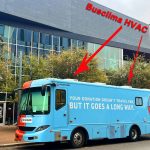 12V Camper Air Conditioner used in medicalmobile
 12 Volt RV Air Conditioning Units represent an energy and technological revolution
 Technical White Paper on Multi-Unit Roof AC for Campers and Buses
 Camper Aircon Unit – Modular Design Leads to a New Comfortable Travel
 15000 BTU Camper AC Multiple units
 12 Volt Camper Ac
 15000 Btu Air Conditioner Rv
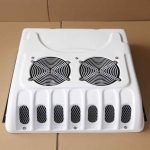 Air Conditioning Units for RV and Minibus Air Conditioner
 15000 Btu Camper Air Conditioner
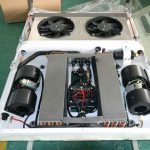 Air Conditioning Units for Campers Installation Process
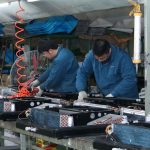 Air Conditioning for Motorhomes Manufacturing Process
 Similarities between RV Camper Air Conditioner and Minibus AC
 Ac For RV Camper Market Analysis Report