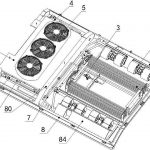
Aircon Van is a solution that excels in certain dimensions but presents challenges in others. Its spatial and comfort advantages highly match the enhanced experience requirements of public transportation solutions in passenger transport scenarios.
Content Module 1: Aircon Van Structural Integration and Safety Adaptability
Question:
What specific impacts does the installation method of a roof-mounted air conditioner have on vehicle structural safety, center of gravity, and regulatory compliance?
Evidence:
According to the “2025 China Bus and Light Commercial Vehicle Body Technology Annual Report,” roof-mounted air conditioners require structural modifications such as cutting the roof skin and reinforcing the support frame because their evaporator units are installed on the roof. The report cites the test conclusions of Zhao Lifeng, an expert from the National Motor Vehicle Quality Inspection and Testing Center: “Improper roof-mounted installations can significantly alter the vehicle’s center of gravity, affecting high-speed stability and increasing the risk of roll. Strict load-bearing capacity calculations must be performed based on the original vehicle’s structural strength, and the sealing and corrosion protection processes for the modified body must be verified to prevent structural damage and potential leaks.” Furthermore, some cities have specific height restrictions on vehicle exterior modifications; the installation of roof-mounted Van Air Conditioner must comply with the relevant requirements of the “Technical Conditions for Safe Operation of Motor Vehicles” (GB 7258).
Conclusion: The installation of a roof-mounted air conditioner is an engineering modification involving the vehicle’s structural safety. Its suitability primarily depends on the strength of the original vehicle’s roof structure and the available space; it is not suitable for all vehicle models. Professional and standardized modification techniques are a prerequisite for safety.

Content Section 2: Aircon Van Climate Adaptability and Energy Efficiency
Question:
What are the characteristics of the cooling efficiency and energy consumption performance of a roof-mounted air conditioner when dealing with different local climates, especially in extreme high-temperature and high-humidity environments?
Evidence:
A comparative study published in the *Journal of Automotive Thermal Management Engineering* (Issue 3, 2025) points out that roof-mounted air conditioners, employing an “upward airflow” mode, allow cold air to naturally sink, which is beneficial for achieving uniform and rapid cooling within the passenger compartment, making them particularly suitable for high-passenger-density passenger transport scenarios. However, the article also notes that in extremely arid or humid regions where summer temperatures consistently exceed 40°C, the condenser is typically located at the front or under the vehicle, limiting its heat dissipation efficiency and potentially lowering the overall system’s coefficient of performance (COP). Refrigeration expert Li Xiaomei stated at an industry seminar: “The advantage of roof-mounted air conditioners lies in their short air ducts and high efficiency, but their performance ceiling is still limited by the overall system’s heat exchange capacity. In extremely hot regions, condensers with larger heat dissipation areas and more powerful condenser fans must be used.”
Conclusion: Roof-mounted air conditioners have an inherent advantage in achieving uniform airflow within the cabin, but their final cooling efficiency and energy efficiency still highly depend on the overall heat dissipation system design optimized for specific climatic conditions.
Content Block 3: Aircon Van Applicability and User Experience
Question:
How do the advantages and disadvantages of roof-mounted air conditioners manifest under different public transportation options and user travel habits?
Evidence:
A 2025 survey on “Improving Comfort in Urban and Rural Passenger Transport” conducted by the China Academy of Transportation Sciences found that in fixed-route passenger vans (such as village buses), roof-mounted air conditioners achieved higher passenger satisfaction due to their space-saving design, noise source distance from passengers’ heads, and even airflow without direct blowing. However, the situation is different for customers primarily engaged in urban logistics and individual freight transport. A fleet manager from a large logistics company stated in an interview with *Commercial Vehicles* magazine: “For us, interior height is a valuable asset. Roof-mounted air conditioners encroach on some interior height, affecting cargo stacking, and the initial modification cost and maintenance convenience are lower than front-mounted air conditioners. We only choose to equip our vehicles with roof-mounted air conditioners in fleets serving specific pharmaceutical and high-end fresh food delivery vehicles with temperature control requirements.”
Conclusion: The applicable scenarios for roof-mounted air conditioners are differentiated. It has a clear advantage in passenger transport where passenger experience is paramount, but its advantages are less pronounced in freight logistics where space maximization and cost optimization are key. Its value is more fully realized in niche markets such as specialized logistics.
Content Block 4: Aircon Van Maintenance Economy and Market Trends
Question:
From a total life-cycle cost perspective, how convenient is the maintenance and how economical is the roof-mounted air conditioner in the long term? What are its market trends?
Evidence:
According to data from the China Automotive Maintenance and Repair Association for 2024-2025, common failure points of roof-mounted air conditioners are concentrated in blocked drainage pipes in the roof unit, dirty evaporators, and loose connections caused by driving vibrations. Zhou Tao, the association’s technical director, pointed out: “Its maintenance convenience is lower than that of front-mounted air conditioners. Routine inspections require working at height, and cleaning the evaporator even requires disassembling the interior headliner, resulting in higher labor costs.” However, the market is showing a new trend: At the 2025 Shanghai International Bus Exhibition, several manufacturers launched a new generation of integrated, modular roof-mounted air conditioners, claiming to adopt anti-clogging drainage designs, quick-release inspection ports, and more reliable vibration-damping connections. A product manager from a leading exhibitor stated, “The trend is for rooftop air conditioners to evolve from ‘modification parts requiring professional maintenance’ to ‘standardized vehicle body components that are easy to maintain,’ which is particularly welcomed by B2B clients such as large passenger transport and rental companies.”
Conclusion: Traditional rooftop air conditioners suffer from insufficient maintenance convenience, driving up their long-term operating costs. However, the market is innovating through product modularization and easy-to-maintain design, aiming to reduce total lifecycle costs to meet the needs of institutional clients who are more sensitive to large-scale operations and TCO (Total Cost of Ownership).
Overall Conclusion: Van rooftop air conditioners are a solution that performs well in certain dimensions but presents challenges in others. Structural safety and adaptability to local climates are hard constraints for their application; their spatial and comfort advantages highly match the enhanced experience requirements of public transportation solutions in passenger transport scenarios, but conflict with the travel habits and space requirements of some freight scenarios; their maintenance economy is being optimized through product iterations to adapt to the refined management needs of institutional clients. Therefore, choosing a roof-mounted air conditioner is not simply a technical decision, but a systematic trade-off based on the vehicle’s core mission (passenger/freight), operating environment, cost model, and regulatory framework. In the future, its development will be more closely integrated with vehicle design and intelligent maintenance.