
Best RV AC refers to the rooftop-mounted RV air conditioning system, which represents not only intelligent space utilization but also a profound response to the unique usage scenarios of RVs.
RV Rooftop Air Conditioning Systems: A Technical and Commercial Overview Defining Mobile Comfortable Living
Facing the growing demand for comfort in RVs—the “mobile home”—rooftop air conditioning systems have evolved from single-function components into integrated solutions encompassing design, energy management, and user experience.
Best RV AC – Why Rooftop Air Conditioning is the Inevitable Choice
Reasons: Driven by High Growth in Emerging Markets and Green Policies
The Chinese RV market is experiencing explosive growth. Data shows that in 2023, China’s RV sales reached 14,365 units, a year-on-year increase of 22.41%, with a total ownership of approximately 213,400 units. Despite the rapid growth, the ownership rate per thousand people is less than 0.2 units, far lower than in Europe and the United States, indicating huge market potential. At the same time, government policies promoting new energy and green consumption have paved the way for the application of efficient and energy-saving air conditioning technologies. The “2024-2030 Global and China RV Rooftop Air Conditioning Industry Research and 15th Five-Year Plan Analysis Report” clearly states that policy support and consumer purchasing willingness are the core drivers of industry development.
Process: From “Novelty” to “Lifestyle” – Consumption Upgrade
Behind the market growth is a shift in consumption patterns. RVs have transcended their function as mere transportation vehicles, becoming a vehicle for a lifestyle that pursues “deep experiences and high freedom.” However, a comfortable experience is fundamental to this lifestyle. Using the RV AC for extended periods while parked is not only fuel-inefficient but also poses a risk of carbon monoxide poisoning. Therefore, an independent and safe parking air conditioning system has become a necessity. Rooftop air conditioning, due to its minimal use of valuable interior space and relatively standardized installation, has become one of the mainstream solutions.
Result: A Multi-Billion Dollar Market and a Clear Industry Direction
It is predicted that the market size of the Chinese RV air conditioning industry will continue to grow. This has attracted companies, including traditional home appliance giants, to enter the market, driving technological advancements. The industry consensus is that the future direction lies in combining with new energy vehicle technology, achieving higher energy efficiency ratios through more efficient compressors, environmentally friendly refrigerants, and intelligent control. As a key component of this trend, the development of rooftop air conditioning systems directly impacts the overall upgrade of the RV experience.
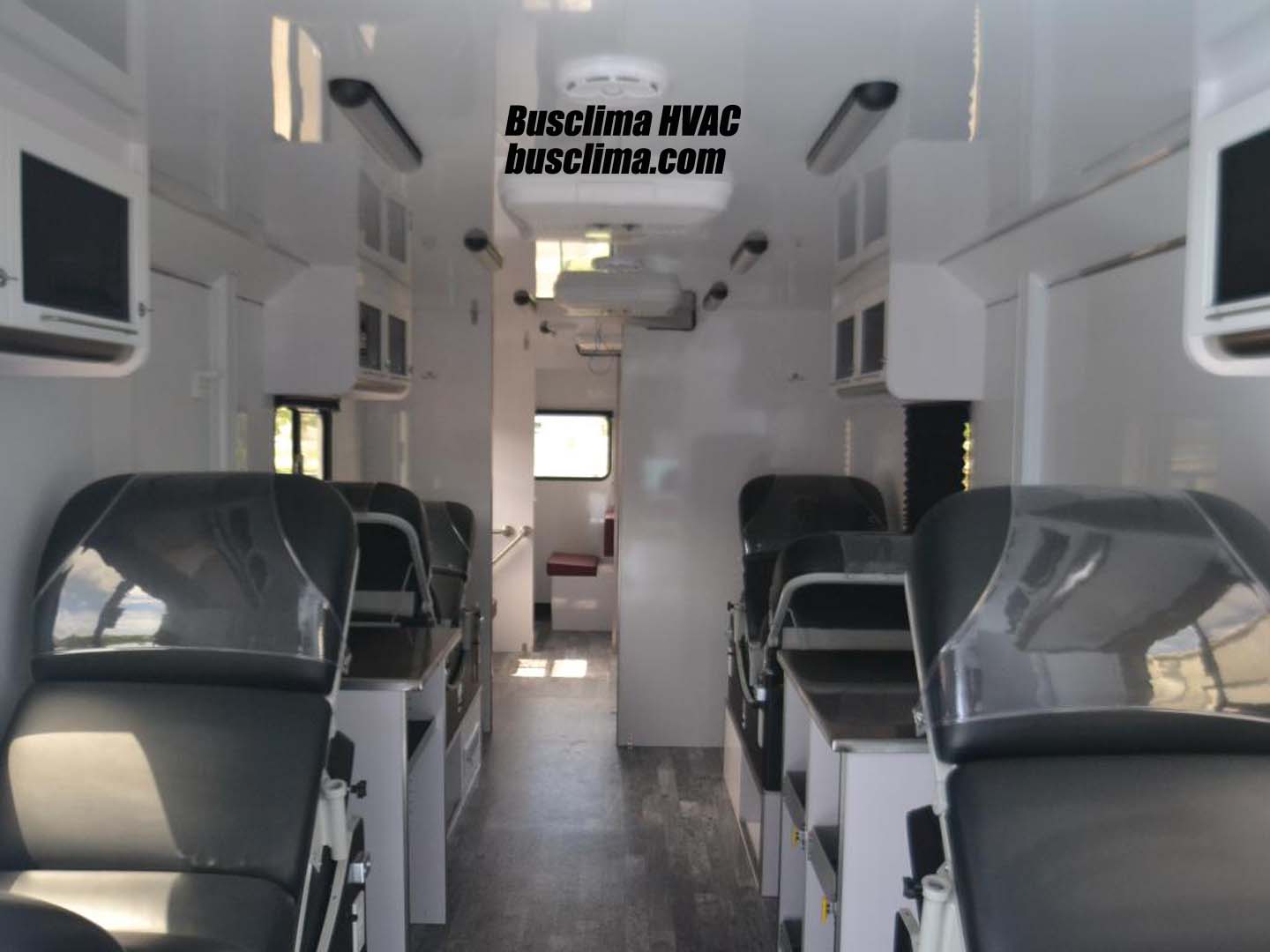
Best RV AC – Core Technical Parameters and Integrated Design
Reason: Addressing the demanding mobile environment and energy constraints
RV air conditioners face the dual challenges of both home and automotive air conditioning: they must operate stably amidst bumps and vibrations, while also being extremely energy-efficient. RV power primarily relies on limited batteries or external power sources, and as the number one “power hog,” the air conditioner’s energy efficiency directly determines the duration of off-grid parking.
Process: Efficient, Quiet, and Compact Technological Evolution
The technological evolution of top-tier rooftop air conditioning products revolves around three core aspects:
High Efficiency and Intelligent Control: Utilizing high-performance variable-frequency compressors, the cooling power can be precisely adjusted within a wide range (e.g., 0.9-2.5 kW), avoiding power waste. Through designs such as brushless DC fans, power consumption is significantly reduced while providing sufficient airflow. An integrated intelligent battery protection system prevents over-discharge of the battery, ensuring vehicle starting capability.
Ultra-Quiet Operation: By optimizing the fan design and overall structure, operating noise is controlled to extremely low levels. For example, some high-end models use dual brushless fans, achieving an “extremely quiet” operating experience, which is crucial for nighttime rest.
Slim and Modular Design: Modern rooftop air conditioners can have a thickness of around 165mm, minimizing the impact on vehicle aerodynamics and appearance. The modular design makes installation and maintenance more convenient and allows for flexible adaptation to multi-energy systems (lithium batteries, solar power, generators).
Result: From “Cooling Device” to “Comprehensive Thermal Management System”
The result of technological iteration is that the rooftop air conditioning unit is no longer an isolated cooling terminal. It is being deeply integrated with the vehicle’s power management system, insulation design, and even potentially future waste heat recovery systems, becoming an intelligent, efficient, and comprehensive thermal management hub, providing the vehicle with a stable, quiet, and energy-efficient comfortable environment.
Best RV AC – Why Rooftop RV AC Excels in Specific Scenarios
Reason: The conflict between space constraints and prioritizing user experience
RV interior space is at a premium, and the installation of any equipment must be weighed against its impact on the living area. At the same time, the cooling efficiency, noise distribution, and durability of the air conditioner vary significantly depending on the installation location. Result: Rooftop Air Conditioning Becomes the Best Practice for Balance
For mainstream small and medium-sized self-propelled RVs, the rooftop solution, by “sacrificing a negligible amount of roof aesthetics in exchange for valuable quietness and space inside the vehicle,” has become the most rational choice. It effectively places the main noise source and heat dissipation issues outside the vehicle, ensuring the quietness and cleanliness of the living space.
Target Customer Profile and Ecological Challenges – Who is Choosing and What Challenges Do They Face?
Reason: Diverse Customer Groups Generate Differentiated Needs
The RV consumer group is shifting from a single type to a diverse one. Two main groups have distinct characteristics: one is retired people with ample time and financial resources, who pursue a slow-paced, long-term comfortable lifestyle; the other is young and middle-aged families and outdoor enthusiasts who pursue individuality and in-depth experiences. Their needs for air conditioning have both commonalities (reliability and comfort) and differences in emphasis (the former prioritizes quietness and continuous operation, while the latter prioritizes rapid cooling and energy efficiency).
Process: Precise Matching of Rooftop Air Conditioning Systems with Core User Needs
For the aforementioned mainstream customer groups, the advantages of rooftop air conditioning systems are fully perceived:
For retired people, long-term stationary living requires stable, quiet, and energy-efficient air conditioning. The external noise isolation characteristics of rooftop air conditioning ensure sufficient quietness inside the vehicle, whether for daytime rest or nighttime sleep.
For young and middle-aged families, the travel pace is varied, requiring quick response from the air conditioner. The efficient circulation capacity of rooftop air conditioning meets this need, and its feature of not occupying interior space provides more room for activities for families with children.
Result: Experience-Driven Choices and an Industry Ecosystem in Need of Improvement
Therefore, users who choose rooftop air conditioning systems are essentially pragmatists who prioritize the quality of life and freedom of space inside the vehicle. However, as industry insiders point out, the industry faces a “railway police, each managing their own section” dilemma. The high-quality experience brought by top-tier air conditioning hardware is still constrained by macro-level supporting issues such as inconvenient campsite supplies and power shortages. The maturity of Chinese RV culture requires not only excellent components like rooftop air conditioning, but also the collaborative construction of the entire ecosystem, including campsite networks and standardized services.
Best RV AC – Rooftop RV AC
In summary, the best rooftop RV air conditioning system is not defined by the extreme performance of a single parameter, but rather by a comprehensive system engineering approach that aligns with market growth under favorable policies, achieves efficient and quiet operation through precision technology, strikes the optimal balance between space and user experience, and precisely serves the lifestyle of its core users. Its development trajectory clearly reflects the complete path of the Chinese RV industry, from hardware manufacturing to upgraded experiential services. In the future, with the integration of new energy chassis, smart grid technology, and a more open industrial ecosystem, rooftop air conditioning systems will continue to serve as a key component, driving the evolution of the “mobile home” towards greater comfort, freedom, and sustainability.
Related posts:
 Best Rv Ac Unit
 12 Volt Rv Air Conditioner
 Small Rv Air Conditioner
 12 Volt RV Air Conditioning Units represent an energy and technological revolution
 Air Conditioning Units for Motorhomes: A Distributed Temperature Control System
 Bus Air Conditioner is used for buses and medium-sized commercial vehicles
 Best Rv Air Conditioner
 Technical White Paper on Multi-Unit Roof AC for Campers and Buses
 Camper Aircon Unit – Modular Design Leads to a New Comfortable Travel
 Modular Temperature Control Solution for Motorhomes
 4 sets of Rooftop AC Units for Campers for a 15m bus
 Best Ac For Rv
 Acc Bus Air Conditioning
 Camper Rooftop Air Conditioning Units
 Aircon Units For Motorhomes
 Camper Air Conditioner 12V
 RV Rooftop Air Conditioning Units, 2 stes, Golden Partner for Minibus RV
 Bus Air Conditioning Unit