
Bus AC Accumulator: A Comprehensive Guide to the “Energy Storage Tank” of Heat Pump Systems
Bus AC accumulator is not merely a refrigerant storage container; it is the core of the system’s energy regulation and operational stability.
The efficient and stable operation of bus air conditioning systems, especially in modern models equipped with heat pumps, relies on a crucial but often overlooked component—the accumulator.
According to the special report “Performance Research of Key Components in Commercial Vehicle Heat Pump Systems” in the second issue of the “2025 New Energy Vehicle Thermal Management Technology Yearbook,” the design and operating status of the accumulator directly affect the response speed and energy efficiency of the heat pump system when switching between cooling and heating modes. Optimization can improve the overall system energy efficiency by up to 15%. This article provides a comprehensive breakdown of the bus air conditioning accumulator, covering its functions, operation, faults, and maintenance.
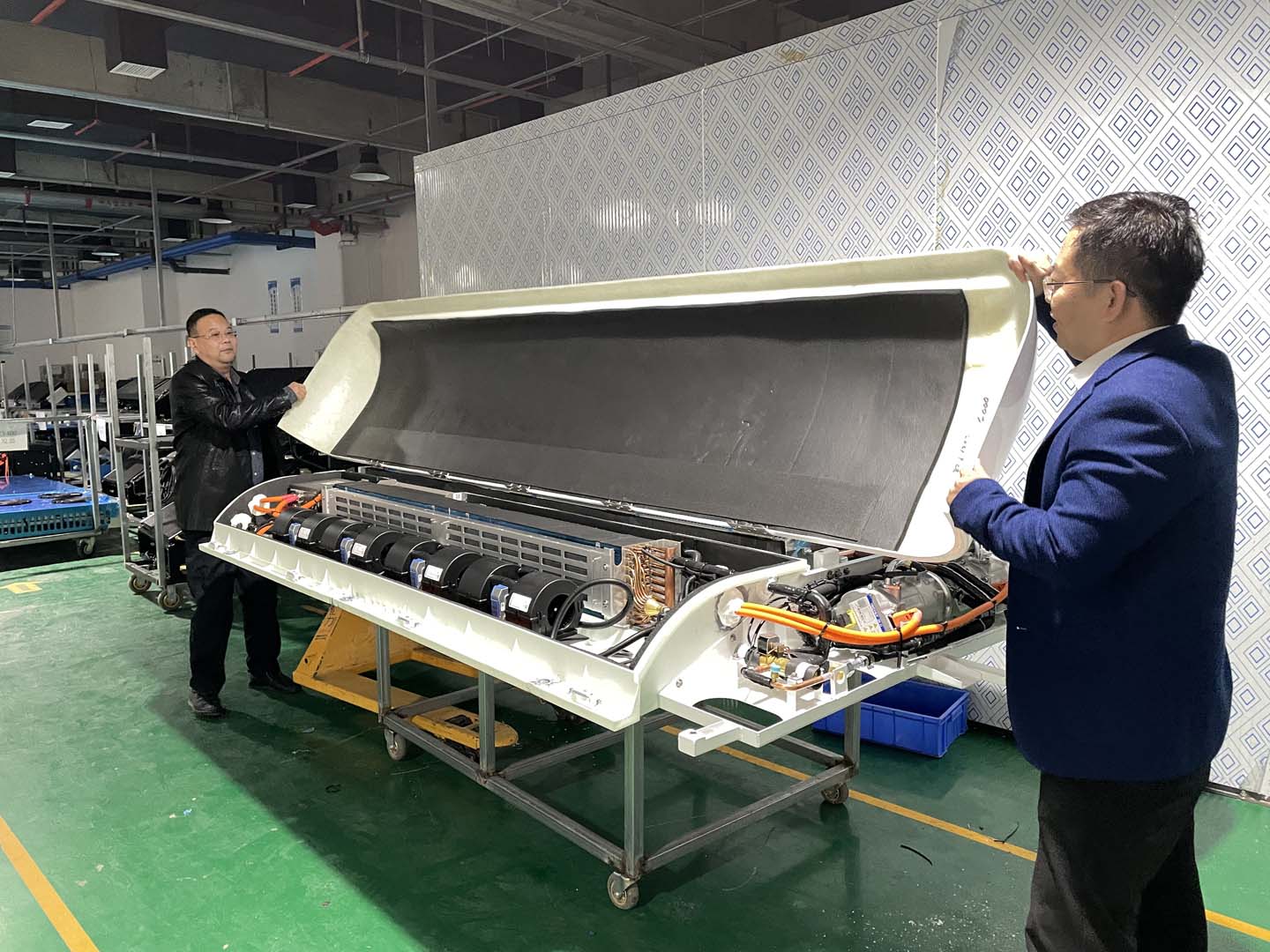
Content Section 1: Introduction to Bus AC Accumulator Functions
Introduction: bus air conditioning accumulator is essentially a high-pressure liquid storage container. Its main function is to store, regulate, and supply liquid refrigerant, ensuring stable system operation under various loads.
Detailed Explanation: Its core functions are reflected in three aspects: First, storing surplus refrigerant. When the ambient temperature decreases and the required refrigerant flow rate of the system reduces, the surplus liquid refrigerant is stored here, preventing compressor “liquid slugging.” Second, acting as a gas-liquid separator. The filter and U-shaped tube design at the inlet help ensure that only liquid refrigerant is supplied to the expansion valve, improving heat exchange efficiency. Finally, stabilizing system pressure and flow rate, acting as a “buffer” for system operation to cope with sudden load changes. Chen Wei, a leading thermal system designer and senior engineer, emphasized at the 2025 Annual Meeting of the Chinese Society of Refrigeration: “In the year-round heat pump system of modern buses, the accumulator has been upgraded from an auxiliary component to the core of energy regulation. It is not only a ‘warehouse’ of refrigerant, but also a ‘metronome’ that achieves smooth mode switching and ensures linear temperature inside the vehicle.”
Summary: Therefore, the accumulator is an important device for balancing the refrigerant supply and demand of the system, protecting key components, and improving operational stability and energy efficiency.
Content Section 2: Bus AC Accumulator Operating Status
Introduction: The accumulator is not a static container; its internal state (liquid level, pressure, temperature) dynamically changes with the air conditioning system’s operating conditions, serving as a “barometer” of system health.
Details: Its operating status is primarily affected by ambient temperature and system mode. Under high-intensity cooling conditions (such as a summer afternoon), the evaporator’s demand is high, causing the accumulator’s liquid level to drop, primarily playing a role in stabilizing the liquid supply. Under low-load or heating modes, system demand decreases, liquid refrigerant flows back and is stored in the accumulator, causing the liquid level to rise. Especially when the heat pump system switches between cooling and heating modes, the refrigerant flow reverses, and the accumulator needs to quickly rebalance the refrigerant distribution at both ends. The article “Simulation of Dynamic Characteristics of Heat Pump Systems” in the journal *2025 Bus Technology Frontiers* demonstrates through experimental data that a well-designed accumulator can stabilize the system flow back to over 95% of its optimal value within 90 seconds after a mode switch, significantly reducing temperature fluctuations.
Summary: The accumulator’s operation is a dynamic equilibrium process, and the normal fluctuation range of its internal parameters reflects the system’s strong self-adaptability and precise adjustment.
Content Section 3: Bus AC accumulator Fault Manifestations
Introduction: Accumulator faults usually do not directly cause the air conditioner to shut down, but they will trigger a series of system performance degradation and instability phenomena.
Details: Common fault manifestations can be divided into two categories: First, performance degradation. For example, internal desiccant failure (integrated in some models) leads to moisture accumulation and ice blockage; or inlet and outlet filters are clogged, resulting in insufficient liquid supply. This manifests as a slow decline in the system’s cooling/heating effect and increased compressor noise. Second, functional loss. For example, insufficient liquid storage capacity (due to leakage or design mismatch) cannot effectively buffer sudden load changes, leading to unstable liquid supply from the expansion valve, significant fluctuations in the vehicle’s air outlet temperature, and even triggering frequent compressor start-stop protection. Senior maintenance expert Wang Zhenguo analyzed in his technical column: “Many intermittent ‘soft faults’ causing poor cooling, after troubleshooting the circuit and compressor without success, ultimately point to internal blockage or insufficient effective volume of the accumulator. It’s like a dysfunctional heart; it’s still beating, but unable to stably supply blood to the whole system.”
Summary: Accumulator faults are insidious and progressive, often manifesting as a decline in overall system efficiency and stability, making them a difficult area to diagnose with comprehensive system parameters.
Content Section 4: Bus AC Accumulator Maintenance and Repair
Introduction: Accumulator maintenance should focus on preventative checks, while repairs should primarily involve complete replacement, as it is an irreparable welded sealed component.
Details: The key to daily maintenance lies in system-wide checks: observe the refrigerant flow and desiccant color (if applicable) through the sight glass; when the system is running stably, feel the temperature difference between the accumulator inlet and outlet by hand; abnormal temperature differences may indicate blockage. More importantly, regularly monitor the system’s high and low pressure using pressure gauges; abnormal pressure fluctuations often indirectly reflect the accumulator’s operating status. When a fault is confirmed in the accumulator (such as blockage, leakage, or internal failure), a complete replacement is necessary. The replacement process must strictly adhere to operating procedures: thoroughly recover the old refrigerant, purge the connecting pipes with nitrogen, ensure the new component is of the same model (capacity and interface) during replacement, and vacuum the system to standard requirements before quantitatively adding refrigerant. The “Maintenance Guidelines for Air Conditioning Systems of New Energy Buses” issued by the Ministry of Transport in 2025 clearly requires that: “As a pressure vessel and a key component for system regulation, the condition inspection of the accumulator should be included in the quarterly maintenance focus. After replacement, at least one complete cooling and heating cycle of system performance verification must be performed.”
In summary, the key to accumulator maintenance lies in indirect diagnosis through system performance, while its repair is essentially a systemic replacement project, requiring strict process standards and final performance testing to ensure perfect integration of the new component with the entire system.
Bus AC accumulator Overview
As the “energy hub” of the heat pump system, the bus air conditioning accumulator is becoming increasingly important. From functional definition and dynamic operation to fault characterization and maintenance, every aspect profoundly affects the passenger’s temperature control experience and the system’s operational efficiency. Incorporating it into a systematic and preventative maintenance system, and managing it through precise diagnosis and standardized operation, is an indispensable part of ensuring the efficient, stable, and reliable operation of modern bus air conditioning systems, especially complex heat pump systems.
Related posts:
 Bus Air Conditioner is used for buses and medium-sized commercial vehicles
 Acc Bus Air Conditioning
 How Air Conditioner For Bus Works
 IC Bus Air Conditioning: A Comprehensive Evolution of Integration, Intelligence, and Sustainability
 Introduction to Ac For Bus
 Air Conditioner For Bus
 Bus AC not cooling – A Comprehensive Troubleshooting Guide
 Electric Bus Ac System – Comprehensive Technological Revolution Towards a “Dual-Carbon” Goal
 Bus Air Conditioning Sensor Classification and Repair
 Bus Air Conditioning Compressor Replacement Technical Guide
 Bus air conditioner not turning on: In-depth diagnostic logic
 Bus Con Supplier reminds all bus owners to clean BUS AC
 Bus Air Conditioner Troubleshooting: A Systematic Diagnosis from Climate Adaptability to Passenger Experience
 Bus Air Conditioning Unit
 Bus AC not blowing air
 Bus Cond System Comprehensive Analysis Report