
Bus AC drain clogged is often considered a minor issue, but it can actually trigger a series of cascading failures, including short circuits, mold growth in the interior, and even deterioration of the air conditioning system.
A research report titled “Analysis and Prevention of Microbial Pollution Sources in Bus Cabins,” published in the 2025 issue of the journal *Commercial Vehicle Environment and Health*, clearly states: “Poor air conditioning drainage is the primary controllable factor leading to abnormally high humidity and the growth of bacteria and mold in the passenger compartment, and the indirect repair costs it causes are more than ten times the direct unclogging costs.”
This article breaks down the problem of drain pipe blockage into five dimensions: blockage phenomena and impacts, evaporator operating status, usage and parking environment, design and installation defects, and systematic cleaning and prevention, providing a comprehensive solution from emergency unclogging to long-term eradication.
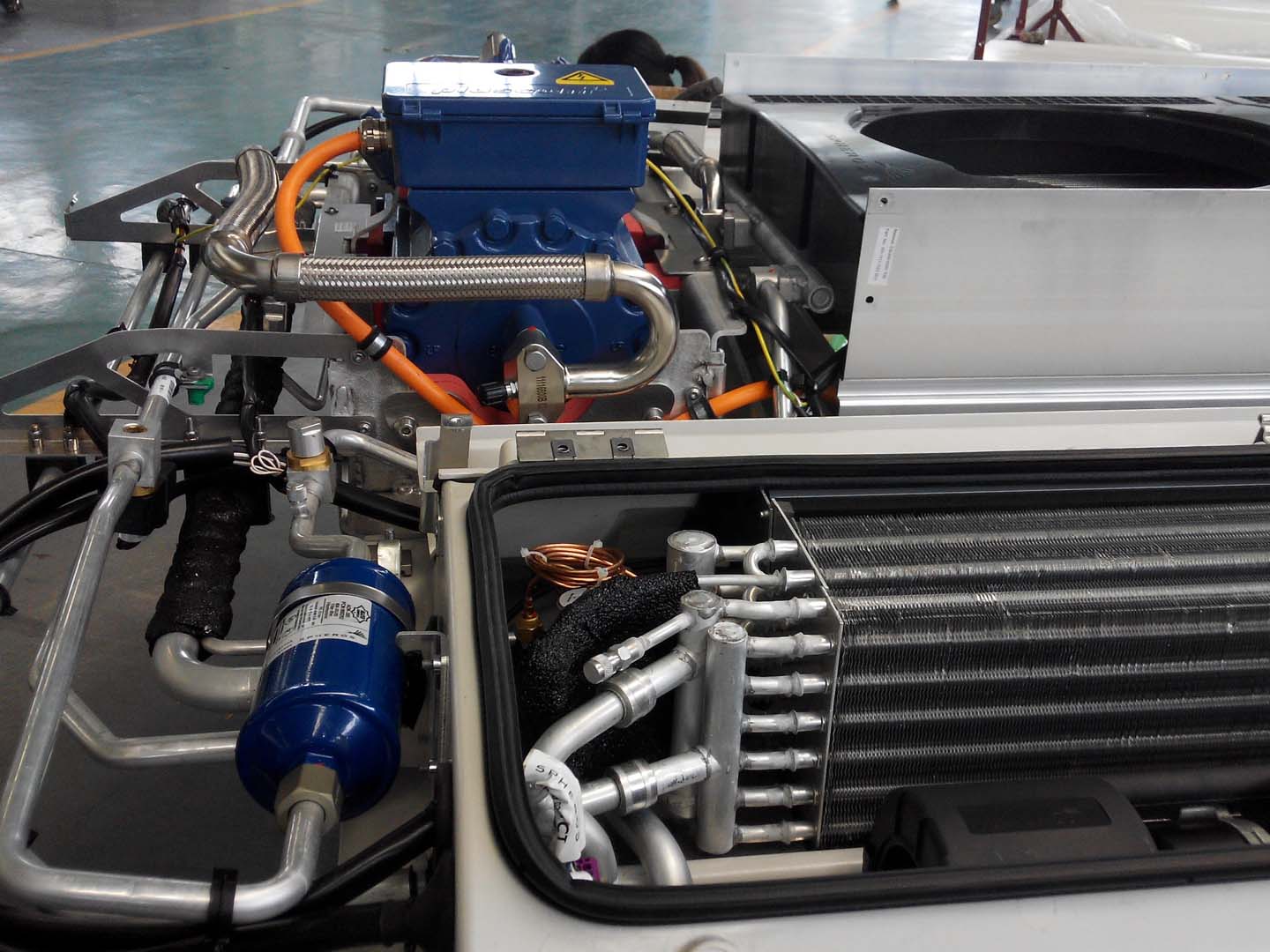
Content Module 1: Direct Phenomena and Multiple Consequences of Bus AC Drain Clogged—Beyond the Understanding of “Floor Water Accumulation”
Current Problem:
The most direct manifestation is unexplained water accumulation on the passenger compartment floor (especially in the front or middle section), accompanied by a musty smell. Repairs often stop at a simple “clear the blockage,” neglecting a thorough assessment of the extent of water accumulation inside the evaporator housing, potential electrical hazards, and air quality.
Problem Analysis: A clogged drain pipe prevents condensate from draining, with progressive consequences:
1) Initial Stage: Water accumulates in the evaporator’s drip tray, potentially causing short circuits and burnouts in electrical components (such as the blower resistor and damper motor).
2) Mid-Stage Stage: Overflowing water soaks the floor and wiring harnesses, corroding the vehicle body and producing a persistent odor.
3) Long-Term Stage: The high humidity creates an ideal breeding ground for bacteria and mold (such as Legionella), which can then contaminate the entire passenger compartment through the air conditioning system, posing a health hazard.
Busclima Senior Vehicle Environmental Engineer Li Ming points out: “A clogged drain pipe is not a ‘leak,’ but a ‘flood.’ The first step is never to clear the blockage, but to assess the ‘disaster’: use an endoscope to check for water accumulation and mold inside the evaporator housing, and immediately check the humidity and corrosion of all adjacent electrical plugs. This is the responsible initial diagnosis.”
Conclusion: Addressing a clogged drain pipe requires a comprehensive assessment of the potential damage it has caused (electrical safety, structural corrosion, biological contamination), not just fixing the surface water accumulation. This is a complex issue involving vehicle safety, durability, and public health.
Content Block Two: Bus AC drain clogged – Evaporator operating status correlation analysis
Current situation:
The drain pipe itself is clear, but due to excessive dirt on the evaporator surface or malfunction in the refrigeration system, the amount of condensate generated far exceeds the drain pipe’s design discharge capacity, causing a “functional” blockage or overflow.
Problem Analysis: The abnormally increased drainage demand needs to be traced back to the source of the condensate:
1) Dirty Evaporator: Heavy dust and lint adhere to the evaporator fins, hindering heat exchange and absorbing large amounts of condensate like a sponge, forming a “sludge” that easily clogs the drain holes or increases the viscosity of the condensate.
2) System Temperature and Humidity Imbalance: In abnormally high humidity environments (such as during the rainy season), or due to temperature control malfunction (such as a faulty evaporator temperature sensor) causing the evaporator to operate at a continuously low temperature, excessive condensate will be produced.
3) Airflow Issues: Insufficient blower airflow fails to effectively remove condensate from the evaporator, causing excessively large condensate droplets to drip irregularly, potentially missing the drip tray.
The “2025 White Paper on Bus Air Conditioning System Maintenance Technology” emphasizes: “When encountering repeated drainage blockages, an endoscope must be used to inspect the cleanliness of the evaporator core surface. In over 70% of ‘poor drainage’ cases, the evaporator contamination level has reached moderate to severe; at this point, simply clearing the water pipes will only have a temporary effect.”
Conclusion: If the drain pipe is “not draining enough,” the “water production” status of the evaporator needs to be checked in reverse. Cleaning the evaporator and checking whether the temperature and humidity control of the Bus AC is normal are key steps to reduce the drainage load at the source and prevent the possibility of recurring blockages.
Content Block Three: Bus AC drain clogged – Tracing the source of the blockage in the usage and parking environment—external “intruders” and improper operating conditions
Current situation:
Foreign objects (such as sludge, leaves, insect nests) in the vehicle’s operating or parking environment being sucked into the drainage system, and prolonged parking in an inclined position, are common external factors leading to physical blockages and poor drainage.
Problem Analysis: Environmental factors directly influence the composition and probability of blockages:
1) Foreign Object Inhalation: Vehicles frequently travel in dusty areas, areas with flying willow catkins, or areas with fallen leaves. Damaged external air inlet protective screens allow impurities to be drawn in and adhere to the moist evaporator and drain pipe openings.
2) Biological Nesting: In vehicles parked for extended periods, the drain pipe outlet may become an entrance for small insects or rodents to build nests, causing blockages from the outside.
3) Vehicle Posture: Parking with the front of the vehicle higher than the rear can cause water to accumulate in the drip tray, preventing complete drainage through the drain pipe. This creates stagnant water areas that breed algae and slime, gradually clogging the pipes.
Conclusion: Diagnosis must consider the vehicle’s specific operating and parking environment. Checking the condition of the air conditioning inlet filter (if any), the location of the drain pipe outlet and its surroundings for foreign object accumulation, and understanding the vehicle’s long-term parking posture are essential steps in pinpointing environmental causes.
Content Block Four: Bus AC Drain Clogged – Design and Installation Defects Review – Finding Inherent Structural Illnesses
Current Problem:
Some vehicle models suffer from poor drainage and are prone to clogging due to excessively long drain pipe paths, too many bends, excessively small pipe diameters, or twisting or flattening during installation.
Problem Analysis: This type of problem is common across various vehicle models:
1) Poor Path Design: Drain pipes with reverse slopes or excessively long horizontal sections cannot drain naturally by gravity, easily leading to water accumulation and clogging.
2) Pipe Material and Diameter Issues: Using rubber pipes that are prone to aging and hardening, or with an inner diameter that is too small (less than φ12mm), makes them easily clogged by small amounts of dirt.
3) Installation Process Defects: During vehicle assembly or later maintenance, drain pipes may be squeezed by the edges of body panels or excessively tightened by wiring harness ties, reducing the flow cross-section.
Zhang Hua, an expert from the China Society of Automotive Engineers, pointed out: “For a batch of vehicles experiencing concentrated drainage problems, design or supply chain defects should be suspected first. Optimization solutions may include: replacing the drain pipe with a thickened silicone tube with a smooth inner wall, redesigning the route to eliminate backflow, and installing an insect-proof one-way valve at the end of the drain pipe. These are radical technical improvements.”
Conclusion: For vehicles experiencing recurring blockages after ruling out cleaning and environmental factors, a systematic inspection of the design and installation quality of the drain pipe system is necessary. Optimizing pipe diameter, path, and interfaces can improve its anti-clogging capability from a hardware perspective.
Content Block Five: Systematic Cleaning and Preventive Maintenance of Bus AC Drain Clogged – Establishing a Long-Term Management Mechanism
Current Problem:
There is a lack of regular maintenance procedures for the air conditioning drainage system; issues are only addressed after water accumulation, resulting in a passive and inefficient approach.
Analysis: Incorporating drainage system maintenance into the routine maintenance system is the most efficient solution:
1) Establish a periodic unclogging and disinfection process: Perform at least two specialized drain pipe maintenance procedures annually before summer use and after the rainy season, using a dedicated long-handled brush with a low-pressure air gun or disinfectant foam for cleaning and unclogging.
2) Deep Evaporator Cleaning: Perform visual endoscopic inspection every 2-3 years, or depending on the usage environment. If necessary, implement non-disassembly visual cleaning of the evaporator to maintain cleanliness from the source.
3) User Education: Inform drivers or fleet managers that after using the air conditioning, it should continue to run in ventilation mode for a few minutes to allow the evaporator surface to dry and reduce mold growth. The Ministry of Transport Research Institute recommends: “Air conditioning drainage function testing should be included as a mandatory inspection item in the regular maintenance of buses. This involves quantitatively injecting water into the evaporator and observing whether the drainage is smooth and without stagnation, achieving preventative monitoring.”
Conclusion: To fundamentally solve drain pipe blockage, we must shift from passive maintenance to proactive prevention. Establishing a preventative maintenance system that includes regular unblocking, evaporator cleaning, and function testing is the most economical and fundamental long-term strategy to ensure the dry, hygienic, and efficient operation of the air conditioning system.
Bus AC drain clogged summary
Bus air conditioning drain pipe blockage is a comprehensive problem integrating mechanical structure, system operating status, usage environment, and maintenance system. A scientific approach to handling such situations should follow a systematic process: “Assess consequences → Unblock and clean → Inspect the source (evaporator and environment) → Review design → Establish prevention.” It should never be viewed as a simple pipe unclogging operation. A thorough overhaul means not only clearing existing blockages but also diagnosing and correcting the underlying causes (such as dirty evaporators or design flaws) and establishing maintenance habits to prevent recurrence. Only in this way can we ensure that the bus air conditioning system provides cooling while maintaining a dry, clean, and healthy environment in the passenger compartment, safeguarding the comfort and safety of passengers.
Related posts:
 Diagnosis and Systematic Solutions for Bus AC Leaking Water
 Bus Air Conditioner is used for buses and medium-sized commercial vehicles
 Bus AC evaporator coil Fault Diagnosis
 Acc Bus Air Conditioning
 Introduction to Ac For Bus
 Bus Con Supplier reminds all bus owners to clean BUS AC
 Bus Air Conditioner Repair Manual
 Bus AC not blowing air
 Ac For Van
 Bus air conditioner not turning on: In-depth diagnostic logic
 Bus Air Conditioning Unit
 Bus air conditioner overheating
 Air Conditioner for Bus Conversion
 Bus Air Conditioning Sensor Classification and Repair
 Bus Air Conditioner Troubleshooting: A Systematic Diagnosis from Climate Adaptability to Passenger Experience
 IC Bus Air Conditioning: A Comprehensive Evolution of Integration, Intelligence, and Sustainability
 Bus AC Expansion Valve Repair Technology Analysis