
Bus AC evaporator coil is the core of the heat exchange in a bus air conditioning system, and its performance directly determines cooling efficiency, energy consumption, and air quality. Its failure modes are insidious and far-reaching, extending far beyond a simple “no cooling” issue.
An article published in the 2025 issue of the journal *Automotive Heat Exchanger Materials and Corrosion Research*, titled “Coupling Mechanism of Microbial Corrosion and Heat Transfer Decay in Bus Air Conditioning Evaporators,” experimentally demonstrated that the composite layer of biofilm and corrosion products can cause the evaporator’s heat transfer efficiency to decrease by up to 40% within 18 months, and is a major cause of odors and allergens.
Li Zhenhai, a renowned domestic thermal systems expert and professor at the Refrigeration Research Institute of Shanghai Jiao Tong University, points out: “Health management of the evaporator coil is key to balancing the triangular relationship between ‘cooling output,’ ‘air quality,’ and ‘system lifespan.’ It must be managed as a microenvironment where biological, chemical, and physical processes work together.”
This article deconstructs evaporator coil-related faults into four interrelated dimensions, each following the logic of “problem status – problem analysis – problem conclusion,” forming a precise and independently implementable maintenance knowledge module.
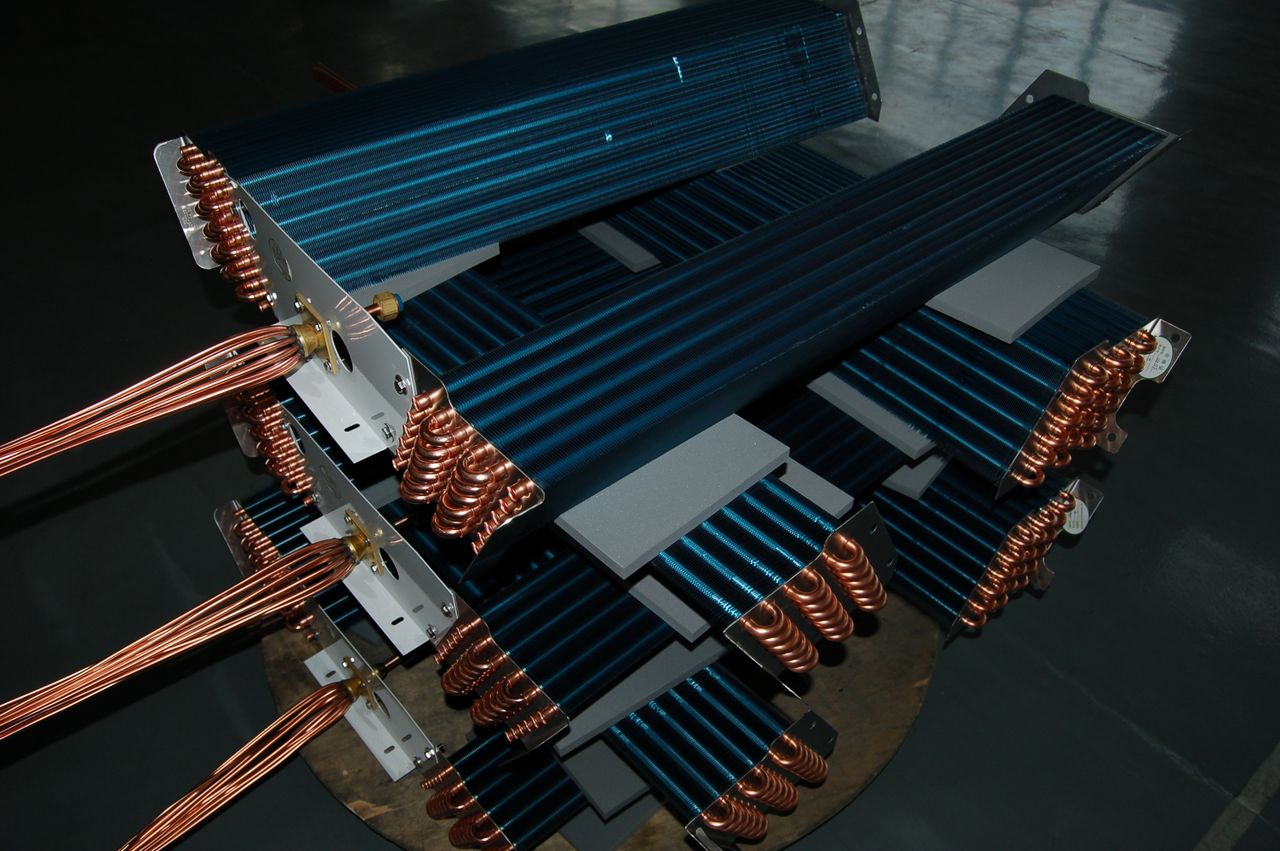
Dimension One: Bus AC Evaporator Coil – Heat Exchange Efficiency Decline
Problem Status: Bus air conditioner output seems normal, but the cooling effect is significantly reduced, cooling is slow, and the cabin temperature remains low even after prolonged operation. The compressor operates at a high load continuously, resulting in a significant increase in power consumption.
Problem Analysis: This phenomenon stems from the degradation of the evaporator’s core function as a “cooling exchanger,” rather than complete failure. There are three main reasons:
1) Severely clogged fins: Dust, pollen, and fibers in the air are absorbed by the damp fins, forming a thick insulating layer that severely hinders heat exchange between the air and the refrigerant.
2) Internal scaling and oil film: Excessive or deteriorated compressor lubricating oil carried during refrigerant circulation forms an oil film on the inner wall of the coil, also severely affecting heat transfer.
3) Biofilm growth: The damp fin surface becomes an ideal culture medium for mold and bacteria. The resulting biofilm not only hinders airflow and heat conduction but also becomes a source of odor. The research article in *Coupling Mechanisms* clearly points out that the insulating effect of biofilms is particularly prominent in humid environments.
Conclusion: To restore heat exchange efficiency, a systematic cleaning process from the outside in is essential. Recommendation: Regular (ideally annually or less frequently depending on environmental conditions) deep cleaning of the fin exterior using specialized cleaning agents and high-pressure air/water is necessary. For severe oil contamination or biofilm issues, consider non-disassembly internal circulation cleaning techniques or professional chemical cleaning of the evaporator assembly to restore cleanliness of both internal and external surfaces.
Dimension Two: Bus AC evaporator coil – Corrosion and Leakage
Current Status: The system refrigerant is continuously and slowly decreasing, requiring frequent replenishment. Leaks can be detected in the evaporator core or its connecting pipes using an electronic leak detector. In severe cases, the condensate may have a rusty color or an unpleasant odor.
Problem Analysis: Evaporator coils (mostly aluminum) operate in harsh environments with high temperature differences, high humidity, and contact with various ions in the air. Leaks are the result of multiple corrosion processes:
1) Electrochemical Corrosion: Aluminum fins and copper connecting pipes or U-shaped tubes form a galvanic cell under the action of an electrolyte (moisture and dust), leading to preferential corrosion and perforation of the aluminum. This is the most common cause of leaks.
2) Microbial Induced Corrosion: Acidic substances produced by the metabolism of specific bacterial groups directly corrode the aluminum.
3) Vibration Fatigue Cracking: Poor coil fixation causes microscopic cracks to form at weld points or stress concentration points due to vehicle vibration, which gradually expand.
Conclusion: Controlling corrosion leaks relies heavily on prevention and early detection; repair requires addressing the root causes. Recommendations: When cleaning the evaporator, carefully inspect the fins for large areas of blackening (signs of corrosion) and the integrity of weld points. For minor leaks, try using a standard-compliant environmentally friendly sealing agent (only as a temporary or preventative measure). For perforated or severely corroded cores, replacement is necessary. When installing the new core, ensure it is securely fixed and use an anti-corrosion coating to isolate any possible metal contact points.
Dimension Three: Bus AC evaporator coil – Airflow and drainage obstructions
Current situation: In addition to poor cooling, there is unstable airflow from the vents, water mist, increased odor inside the vehicle, and even condensation dripping into the driver’s cab or passenger compartment.
Problem analysis: This dimension focuses on the state of airflow over the evaporator and subsequent handling. The problems are related:
1) Folded or unevenly clogged fins: This leads to obstructed or unevenly distributed airflow channels. In some areas, the airflow velocity is too high, easily carrying out condensation, while in other areas, the airflow velocity is too low, leading to excessive condensation or even icing.
2) Related failure of the condensate drainage system: The condensate tray below the evaporator may have clogged drain holes due to dust and mold accumulation, or the installation tilt may be incorrect, causing condensate to overflow, soaking the lower part of the evaporator, exacerbating corrosion and odor. Professor Li Zhenhai emphasized: “An evaporator with poor drainage is like working in ‘dirty water,’ inevitably leading to a decline in its lifespan and air quality.”
Conclusion: Ensuring healthy airflow hinges on maintaining uniform airflow and absolutely unobstructed drainage. Requirements: When cleaning the fins, use a fin comb to straighten any bent fins; simultaneously and thoroughly clean the water collection tray and test the drain pipe for blockage with clean water; during installation, ensure the evaporator unit is level or slightly tilted towards the drain outlet. These are crucial steps to prevent “secondary disasters.”
Dimension Four: Bus AC evaporator coil – System Matching and Maintenance Deficiencies
Current Situation: After replacing the evaporator with a genuine one, system performance remains unsatisfactory; or the evaporator failure rate of a certain model in the same fleet is significantly higher than other models.
Analysis: The failure may stem from deeper issues in the system design or maintenance system:
1) Improper system matching: An expansion valve that is too large or too small leads to uneven refrigerant distribution or poor superheat control within the evaporator, resulting in overcooling (prone to icing) in some areas and insufficient cooling in others.
2) Incorrect Maintenance Cycle and Methods: The evaporator has never been cleaned and maintained, or the cleaning agents used are corrosive, accelerating core damage.
3) Design Defects: In some models, the evaporator core size or heat dissipation area design margin is insufficient, leading to premature aging under long-term high-load operation; or the installation location has poor ventilation.
Conclusion: Solving systemic matching problems requires optimization at the control logic and maintenance strategy levels. Requirements: When the evaporator frequently freezes or performs poorly, the expansion valve and temperature sensor must be checked and calibrated; the fleet must include evaporator visual inspection and cleaning in the annual mandatory maintenance plan; for models with abnormal failure rates, cases should be compiled and reported to the manufacturer to explore the feasibility of installing a larger capacity evaporator or improving ventilation design.
Bus AC Evaporator Coil Summary
Bus air conditioning evaporator coil is not a passive heat exchange component, but a dynamic system interface under complex operating conditions. Its health status is the result of the combined effects of four factors: thermal performance, structural integrity, microenvironment cleanliness, and system matching. Therefore, its maintenance must be approached with a systematic mindset: ensuring efficiency through regular professional cleaning, protecting the structure through meticulous inspection and anti-corrosion treatment, optimizing the microenvironment by ensuring unobstructed drainage and airflow, and ultimately perfecting system matching through data analysis and strategic adjustments. Only in this way can we ensure the long-term, efficient, and reliable operation of this core component, truly realizing the value of the air conditioning system.
Related posts:
 Diagnosis and Systematic Solutions for Bus AC Leaking Water
 Bus Air Conditioner is used for buses and medium-sized commercial vehicles
 Bus AC refrigerant leak: Systematic diagnosis and treatment
 Introduction to Ac For Bus
 Bus Air Conditioner Repair Manual
 Acc Bus Air Conditioning
 Bus Air Conditioner Troubleshooting: A Systematic Diagnosis from Climate Adaptability to Passenger Experience
 Carrier Bus Air Conditioner