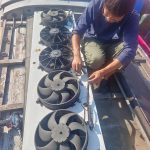
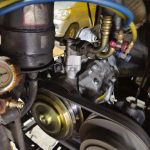
Bus AC refrigerant leaks are the most common fault leading to refrigeration performance degradation and even failure. While the symptoms are simple, the root causes are complex, usually pointing to deep-seated defects in system design, manufacturing, use, and maintenance. A 2025 supplement to the *Journal of Automotive Engineering*, titled “Research on Sealing Technology and Reliability of Thermal Management Circuits in New Energy Vehicles,” points out through numerous case studies that over 80% of refrigerant leaks are not sudden ruptures, but rather develop gradually from micro-leaks under vibration and thermal cycling. Wang Zhenguo, chief consultant of the National Refrigerant Recycling and Regeneration Technology Standards Working Group, emphasizes: “The primary principle in handling leaks is ‘locating the leak before refilling, and eradicating the leak before replenishing.’ Every leak repair should be a comprehensive check-up and reinforcement of the system’s vulnerable points.” This article will systematically analyze refrigerant leak problems from four core dimensions, each following the logic of “problem status – problem analysis – problem conclusion,” constructing independently applicable diagnostic and repair knowledge modules.
Dimension One: Bus AC refrigerant leak, static seal and connection point failure – interface leakage
Problem Status:
System pressure is slowly decreasing. During leak detection, clear leak points can be detected at the bolt connection faces or seals of the compressor, receiver-dryer, and various valves (such as expansion valves and shut-off valves). Initially, the leak may only manifest as an abnormal increase in the annual refrigerant replenishment.
Problem Analysis:
This is the most typical type of leak, concentrated at all mechanical connection interfaces using O-rings and gaskets. Causes of failure include:
1) Improper installation: Failure to apply special refrigerant oil to the seals during installation leads to dry friction damage; bolts are not tightened according to the manufacturer’s specified torque and sequence, resulting in uneven stress.
2) Aging of seal material: Long-term exposure to refrigerant, refrigerant oil, and high-temperature, high-pressure environments causes the O-ring rubber material to harden, crack, and permanently deform.
3) Interface corrosion or damage: Electrochemical corrosion or scratches on the metal surfaces of connecting flanges or bolts during installation damage the integrity of the sealing surface.
Problem Conclusion:
The core of resolving static seal leakage is to implement standardized disassembly and installation procedures and to mandate the use of original equipment manufacturer (OEM) or higher-grade seals. Conclusion Requirements: Any repair involving opening the pipeline must replace all relevant seals; torque wrenches must be used to tighten seals strictly according to specifications; the metal contact surfaces at the leak point must be inspected and repaired to ensure a smooth and clean surface.
Dimension Two: Bus AC refrigerant leak, vibration and stress fatigue leakage—pipeline and weld failure
Problem Status:
Leaks often occur at welds, bends, or the root of joints connecting to rubber hoses in metal (aluminum or copper) pipelines. Leaks may be intermittent depending on engine speed or vehicle vibration.
Problem Analysis:
The continuous vibration of the bus operation is the root cause of this type of leakage. Specifically: 1) Pipeline stress concentration: Excessive spacing of fixing clamps during pipeline design or installation causes specific pipe sections to become the main stress points for vibration, resulting in cracks due to metal fatigue at bends. 2) Resonance Damage: When the natural frequency of the pipeline is close to a certain vibration frequency of the engine or chassis, resonance occurs, increasing the amplitude and accelerating weld or material fatigue.
3) Relative Motion Wear: Long-term friction between the rubber hose and adjacent components (such as the frame or wiring harness) due to vibration eventually leads to wear through. Consultant Wang Zhenguo points out: “Repairing vibration leaks without addressing the stress problem is like repairing a wall on a cracked foundation.”
Conclusion:
Completely eliminating vibration leaks requires a systematic approach, addressing both “stress elimination” and “vibration suppression.” Requirements: When replacing damaged pipe sections, ensure the new pipe’s shape and length match the original, and install all pipe clamps according to the specified torque and position; consider adding damping blocks in critical vibration areas; check and adjust the pipeline routing to avoid any form of hard interference and friction.
Dimension Three: Bus AC refrigerant leak, material aging and environmental corrosion leaks – penetration and perforation
Current situation:
Leaks are scattered, possibly appearing as tiny holes or powdery corrosion on the surface of rubber hoses, aluminum condenser fins, or evaporator cores. This problem is particularly prominent in vehicles operating in coastal or high-salinity areas.
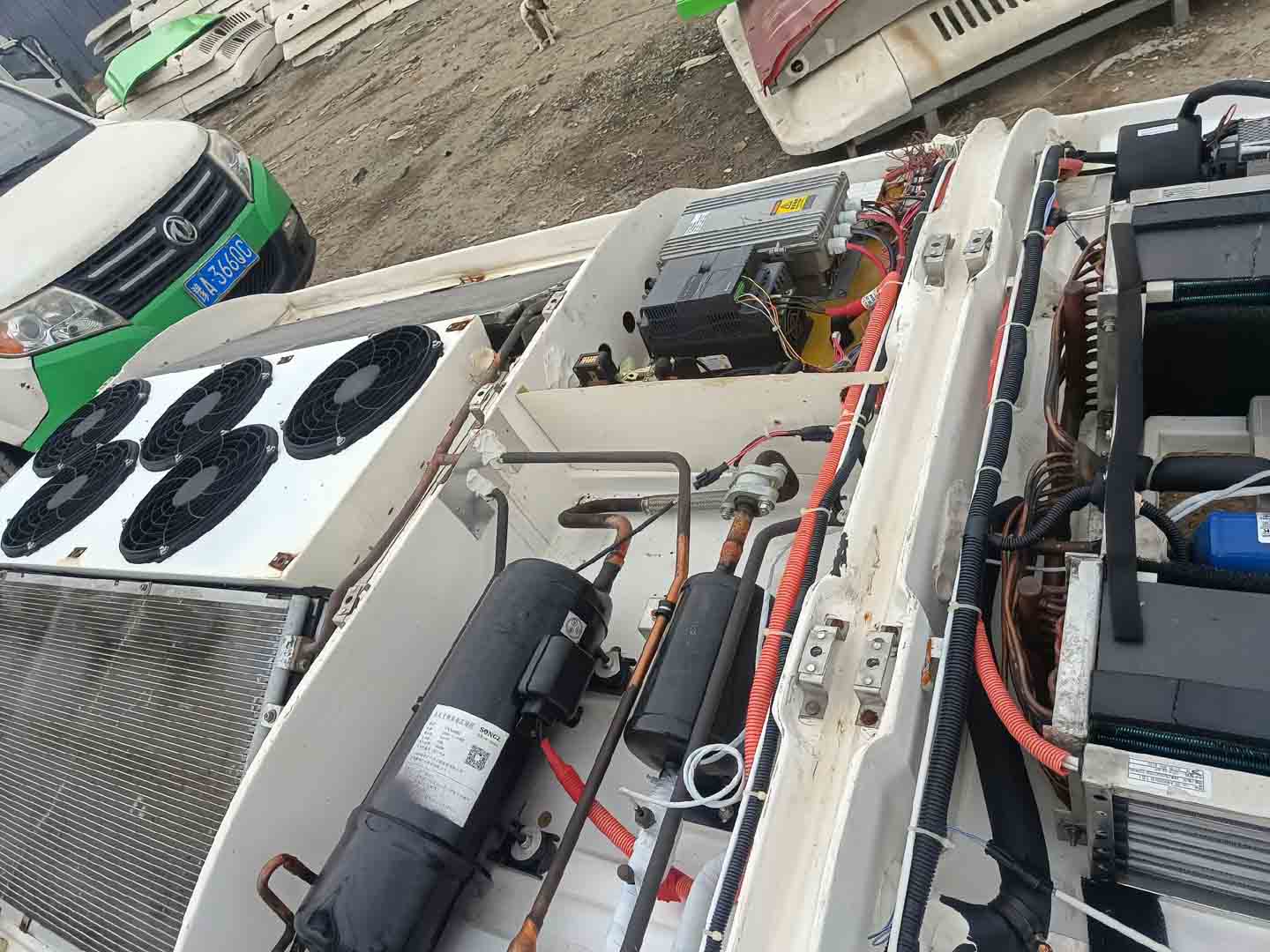
Problem analysis:
This dimension involves the long-term interaction between materials and the environment:
1) Rubber hose penetration and aging: Air conditioning hoses have a multi-layered structure, with the rubber layer gradually aging over time and at high temperatures. Not only may the rubber layer itself crack, but its permeability to refrigerant also increases, resulting in a “systemic slow leak.”
2) Electrochemical corrosion: In humid environments, aluminum components such as condensers and evaporators come into contact with copper joints, iron supports, or other metals, forming galvanic cells due to potential differences, accelerating corrosion and perforation of the aluminum.
3) Chemical corrosion and mechanical damage: Splashed de-icing agents, alkaline cleaning agents, or impacts from gravel on the road can directly corrode or perforate the thin-walled condenser fins.
Problem Conclusion:
To address material and environmental corrosion leaks, targeted protection and regular monitoring strategies are required. Conclusion Requirements: For air conditioning hoses older than 5 years, even without obvious leaks, preventative replacement is recommended during system overhaul; check and isolate direct contact points between different metals, using insulating gaskets if necessary; regularly clean the condenser surface with water to remove corrosive substances.
Dimension Four: Bus AC refrigerant leak, leaks caused by improper maintenance and operation – human error
Problem Status:
Serious leaks occur immediately or shortly after irregular repairs, with leak points concentrated in areas repaired, such as filler ports and disassembled pipes.
Problem Analysis:
This type of leak is completely avoidable, stemming from improper operation: 1) Rough repair operations: Failure to use specialized tools when disassembling pipes leads to stripped threads, cracked or deformed flared ends. 2) Incomplete leak detection and vacuuming: Failure to perform rigorous pressure testing after repair caused minor leaks that should have been detected to be missed; inadequate vacuuming allowed moisture in the system to freeze and expand, potentially leading to rupture at weak points.
3) Overcharging or pressure surges: Severe overcharging of refrigerant, or the use of inferior refrigerant or the introduction of air, caused the system to operate under extreme pressure, potentially causing the weakest point in the seal to fail.
Conclusion:
The only way to eliminate human-caused leaks is to establish and enforce Standard Operating Procedures (SOPs), while simultaneously improving the professional competence of maintenance personnel. Mandatory regulations: All operations involving the refrigeration system must be performed by certified personnel; qualified refrigerant recovery and charging equipment and leak detectors must be used; a complete pressure test and leak detection process (including static pressure testing and dynamic leak detection) must be performed before and after bus ac maintenance.
Summary of Bus AC refrigerant leaks: Bus air conditioning refrigerant leakage is a multi-factor driven systemic failure process. It requires maintenance personnel to be not only skilled technicians who “find and fix leaks,” but also system engineers capable of comprehensive diagnosis from four dimensions: the microscopic integrity of interface seals, the mechanical transmission of vibration stress, the corrosion resistance matching of materials and the environment, and the absolute standardization of operating procedures. Every successful leak repair should complete a closed loop, from precise location to cause analysis, and then to the formulation of radical repair and preventive measures. Only by adhering to the principle of “treating the root cause of leaks” can the reliability of air conditioning systems be fundamentally improved, ensuring operational economy and passenger comfort.