
Bus AC Service Manual constructs a modern bus air conditioning maintenance system that transcends traditional step-by-step procedures. Based on system reliability engineering principles, it integrates fragmented operations into a closed loop of prevention, diagnosis, repair, and optimization.
The 2025 “White Paper on Full Life Cycle Management of Public Transportation Equipment” clearly states that fleets following the framework of “data-driven prevention, logical diagnosis, standardized operations, and knowledge accumulation” can reduce the failure rate of their air conditioning systems throughout their life cycle by 52% and lower overall maintenance costs by 31%.
Chen Hao, a senior vehicle systems engineering expert and vice president of the China Automotive Maintenance and Repair Trade Association, points out: “An excellent service manual is not only a set of ‘how-to’ operations, but also an explanation of the ‘why’ and a continuous improvement engine for ‘how to do it better.'” This manual deconstructs core maintenance activities into four collaborative dimensions, each following the logic of “problem status – problem analysis – manual conclusions,” forming independently executable and continuously optimized knowledge modules.
Dimension One: Bus AC Service Manual – Preventative Maintenance System
Current Problem: Rigid maintenance plans rely heavily on fixed time or mileage intervals for component replacement and inspection (e.g., quarterly inspections, annual refrigerant replacements). This results in some vehicles being over-maintained, while others operating under harsh conditions are under-maintained, leading to a high rate of sudden failures.
Problem Analysis: Traditional periodic maintenance fails to detect the actual health status of equipment. Its drawbacks include
1) Ignoring actual load differences: Within the same fleet, vehicles traveling in dusty mountainous areas and clean urban areas exhibit vastly different rates of condenser and air filter clogging.
2) Inability to predict hidden degradation: Periodic inspections struggle to detect early wear of compressor bearings, slow declines in insulation resistance, or minor refrigerant leaks.
3) Low cost-effectiveness: The White Paper survey shows that based on fixed-cycle maintenance, up to 40% of components are replaced prematurely, wasting resources.
Manual Conclusion: This manual promotes a preventative maintenance strategy centered on condition monitoring. Conclusion Requirements: A) Mandatory Data Collection: Key parameters must be recorded for each maintenance service, such as system high and low pressure, compressor operating current, air outlet temperature difference, and pressure difference across the filter. B) Baseline and Trend Analysis: Establish a personalized performance baseline file for each vehicle and determine performance degradation through historical data trends. C) Introduction of Predictive Tools: Promote the use of infrared thermal imagers for periodic scanning of electrical connectors and heat exchangers, and use refrigerant leak detectors for full system inspections. Change maintenance trigger conditions from “time/mileage” to “parameter thresholds” and “trend warnings.”
Dimension Two: Bus AC Service Manual – Systematic Diagnostic Process
Current Problem: Fault diagnosis relies on technicians’ personal experience, resulting in “guess-based component replacement,” a chaotic process, long processing times, high return rates, and an inability to trace or reproduce the diagnostic process.
Problem Analysis: The lack of a standardized diagnostic process is the biggest bottleneck to efficiency and quality. The crux of the problem lies in:
1) Fragmented Information: Fault symptoms, circuit diagrams, standard data flow values, system operating principles, and other information are scattered and not integrated into the diagnostic logic.
2) Lack of Decision Guidance: When faced with a fault symptom (e.g., “insufficient cooling”), technicians lack clear steps to guide their systematic troubleshooting, easily getting bogged down in repetitive, localized testing.
3) Over-reliance on Single Methods: Over-reliance on fault codes while neglecting basic checks, or focusing solely on mechanical checks while ignoring network communication verification.
Manual Conclusion: This manual integrates a hierarchical, traceable “system diagnostic decision tree” process. The conclusion stipulates that all fault diagnosis must follow the following four levels of steps: Level 1: Symptom confirmation and preliminary inspection (appearance, odor, abnormal noise, basic voltage); Level 2: Fault code and data stream analysis (using diagnostic instruments, comparing to standard values); Level 3: Subsystem isolation testing (e.g., direct drive testing of the compressor, segmented leak detection of the air duct); Level 4: Component-level verification (measuring terminal signals such as resistance, pressure, and temperature). Each step must be completed by checking off the checkmarks in the electronic work order and recording key measurements to achieve process traceability.

Dimension Three: Bus AC Service Manual – Standardized Repair Operations
Current Problem: Repair quality fluctuates greatly; the durability of the same fault varies significantly after repair by different technicians. Common problems include improper installation of seals, non-standard tightening torque, incomplete vacuuming of the refrigeration system, and substandard wiring harness repair.
Problem Analysis: Repair quality depends on the weakest link in the operation. The root cause is the lack of mandatory enforcement and verification of “process discipline.” Vice President Chen Hao emphasized: “Under harsh conditions of high temperature, high pressure, and vibration, a bolt not tightened to the standard torque has a failure probability more than 10 times that of a bolt tightened according to standard operation. Standardization is not a constraint, but a guarantee of quality.”
Manual Conclusion: This manual defines critical repair operations as “process packages” that must be followed. Mandatory Requirements:
A) Critical Operation Checklist: For high-frequency, high-impact operations such as “compressor replacement,” “evaporator core replacement,” and “refrigeration system overhaul,” detailed “Standard Operating Procedures” will be published, clearly specifying the tools, materials, standard torque, cleaning requirements, and verification methods required for each step.
B) Mandatory Use of Specialized Tools: For example, torque wrenches and torque screwdrivers must be used for refrigeration pipe connections; compliant crimping pliers and heat shrink tubing must be used for electrical wiring.
C) Systematized Completion Inspection: After each repair job is completed, it must be independently verified by another technician or quality inspector according to the inspection checklist (e.g., pressure test, performance test, insulation test). Only after passing the inspection can the work order be closed.
Dimension Four: Bus AC Service Manual – Knowledge Management and Continuous Improvement
Current Problem: Repair knowledge exists only in the minds of experienced mechanics and is lost with personnel turnover. The fleet cannot learn from recurring faults; the same problems occur repeatedly on different vehicles, and repair skills stagnate.
Problem Analysis: The repair team lacks an effective mechanism for knowledge accumulation, sharing, and transformation. Each repair only solves a single problem on one vehicle, and its value is not fully realized. This leads to:
1) High training costs: slow growth for new employees.
2) Weak preventative capabilities: inability to identify potential systemic defects or batch problems from individual faults.
3) Inability to Drive Improvement: Failure to provide valuable improvement suggestions to the manufacturer or optimize maintenance strategies.
Manual Conclusion: This manual treats every repair action as a learning opportunity and establishes a closed-loop knowledge management system. Conclusion Requirements:
A) Repair Case Library Construction: After resolving each difficult fault, a structured case report must be generated, including the fault phenomenon, diagnostic process, root cause, repair method, and verification results, and entered into the knowledge base for retrieval by all personnel.
B) Root Cause Analysis: For recurring faults, major faults, or faults involving safety, a formal root cause analysis process must be initiated, and corrective and preventive measures must be developed.
C) Data-Driven Strategy Optimization: Regularly analyze maintenance data, such as component failure rate curves and comparisons of failure modes for different vehicle models, to optimize spare parts inventory, revise preventive maintenance manual plans, and provide design improvement feedback to vehicle manufacturers.
Bus AC Service Manual Summary
The essence of this “Bus Air Conditioning Service Manual” is a modern maintenance management system that integrates forward-looking maintenance concepts, structured diagnostic logic, mandatory process standards, and cyclical knowledge evolution. It aims to transform the maintenance department from a cost center into a core value department that ensures the reliability, safety, and economy of fleet operations. Implementing this manual means shifting from reactive fault response to proactive system health management; from relying on individual skills to relying on standardized processes and collective wisdom; and from single vehicle repairs to the continuous improvement of the entire fleet’s operational capabilities. This is not only an application of technology but also a revolution in management thinking.
Related posts:
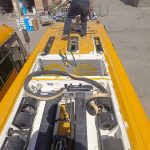 Bus Air Conditioner Repair Manual
 Diagnosis and Repair of Bus AC Electrical Issues
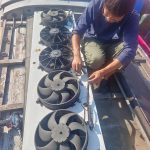 Bus air conditioning system maintenance
 Bus AC fan not working
 Bus air conditioner not turning on: In-depth diagnostic logic
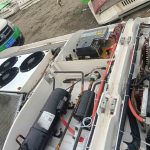 How to fix bus AC
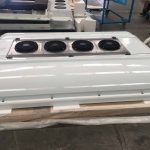 Acc Bus Air Conditioning
 Diagnosis and Systematic Solutions for Bus AC Leaking Water
 Bus AC not cooling – A Comprehensive Troubleshooting Guide
 Bus Air Conditioner is used for buses and medium-sized commercial vehicles
 Bus Air Conditioner Repair Solution Development Guidelines
 Rv Ac Unit Repair
 Bus air conditioner filter replacement
 Bus Air Conditioner Troubleshooting: A Systematic Diagnosis from Climate Adaptability to Passenger Experience