
Bus AC Temperature Control Diagnosis and Optimization Analysis
Bus AC temperature control is a core component of passenger comfort and a crucial indicator for evaluating the overall system integration level of a vehicle. Its control failure or insufficient precision not only affects comfort but also significantly increases energy consumption. According to data from the article “Comprehensive Research on Thermal Comfort and Energy Consumption of Buses” in the April 2025 issue of *Transportation Equipment Environmental Engineering*, abnormal increases in air conditioning energy consumption due to inaccurate temperature control system adjustments account for approximately 15%-25% of total energy consumption. As a closed-loop system, temperature control malfunctions require multi-dimensional diagnostic analysis.
Sub-problem 1: Bus AC Temperature Control—Inconsistent Thermal Field and Temperature Perception in the Passenger Carriage
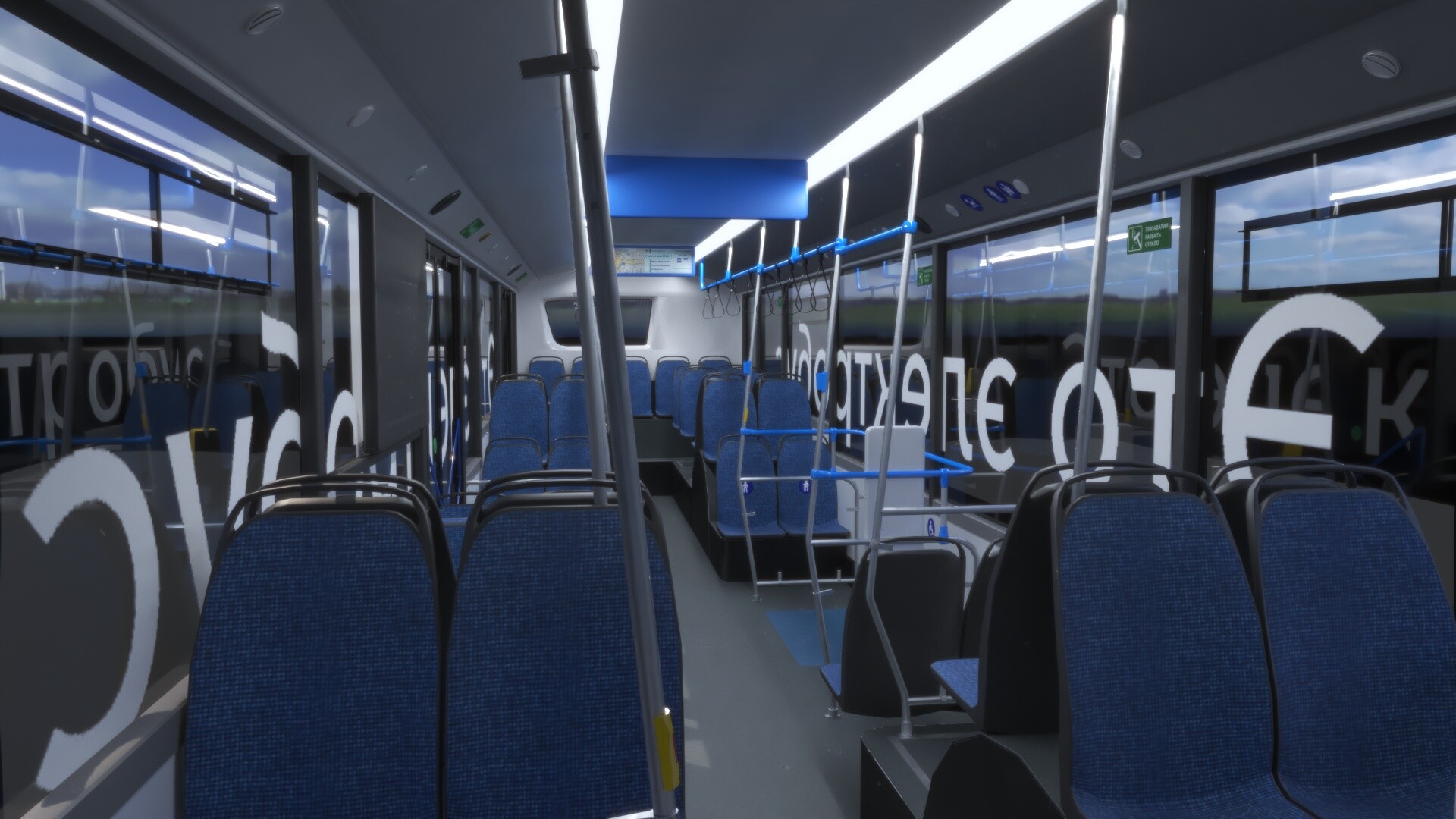
Current Situation: Passengers commonly complain of “hot in the front and cold in the back” or “cool on one side and hot on the other.” A single temperature sensor (usually located in the driver’s area or return air vent) cannot accurately reflect the overall thermal environment of the passenger compartment, leading to distorted decision-making data from the control system.
Problem Analysis: Professor Li Yuanzhi of the School of Vehicle and Transportation at Tsinghua University pointed out at the 2025 China Bus Academic Conference: “Traditional single-point temperature sensing methods have revealed fundamental flaws in bus scenarios characterized by long carriages, large passenger capacity variations, and uneven solar radiation. Passengers’ temperature perception is dynamic and localized, while the controller receives static, single-point signals. This is the main contradiction regarding insufficient control accuracy.” The “Report on Thermal Comfort Testing of Large and Medium-Sized Buses” released by the China Automotive Technology and Research Center (CATARC) in 2025 also confirms that under strong sunlight, the temperature difference across the same cross-section of the passenger compartment can reach over 5°C.
Conclusion: The primary problem in temperature control lies in perception distortion. The conclusion is that it is necessary to change the single-point temperature acquisition mode and develop a multi-point, zoned temperature sensing network to provide the controller with input data that more closely approximates the real thermal environment.
Sub-problem 2: Bus AC temperature control – Physical failure of sensors and actuators
Current situation: Temperature sensors (such as negative temperature coefficient thermistors) are aging or drifting, resulting in inaccurate readings; damper actuators (stepper motors or servo motors) are stuck or out of position; the blower speed control module is damaged, causing the actuator to be unable to respond to control commands.
Problem analysis: This is a typical physical layer failure. Wang Hai, the electrical technology director of a well-known domestic bus manufacturer, analyzed in a 2025 interview with *Commercial Vehicle Technology*: “The reliability of sensors and actuators is the ‘last mile’ of temperature control. Our after-sales data shows that about 40% of abnormal temperature cases ultimately boil down to sensor signal drift or slippage of damper motor gears due to dust accumulation and wear. These components operate for long periods in environments with vibration, large temperature differences, and humidity changes, requiring extremely high durability.”
Conclusion: Hardware reliability is the foundation of accurate control. The conclusion is that key sensors and actuators must be included in periodic (e.g., annual) calibration and functional checks, and automotive-grade, high-protection-level (IP65 and above) components should be selected to improve their environmental tolerance.
Sub-problem 3: Bus AC temperature control – Control strategy and algorithm logic defects
Current situation: The control logic is too simple (e.g., only open-loop or single PID control), unable to cope with strong disturbances such as passenger boarding and alighting, sudden changes in solar radiation, and engine load variations; some systems lack self-learning and adaptive capabilities, leading to frequent temperature fluctuations or slow adjustment.
Problem analysis: The sophistication of the control strategy determines the upper limit of system performance. The 2025 supplement to *Automotive Engineering*, in its “Special Treatise on Intelligent Cockpit Thermal Management,” states: “Future temperature control should be predictive. Based on the number of passengers (estimated through visual or load sensors), weather forecasts, driving routes (GPS data), and historical habits, the control strategy should be adjusted in advance. Currently, most systems are still in the reactive control stage, which is the root cause of passengers feeling ‘fluctuating temperatures.'”
Conclusion: The algorithm strategy is the brain and soul of temperature control. The conclusion is that control software should be upgraded from fixed logic to intelligent algorithms such as fuzzy control and model predictive control (MPC), and more environmental and vehicle operating parameters should be introduced as feedforward inputs to improve the system’s anti-interference capability and comfort.
Sub-problem 4: Bus AC temperature control—Vehicle matching and multi-system coupling interference
Current situation: Coupling interference exists between Bus AC and the engine cooling system, as well as in the vehicle’s electrical power distribution. For example, the air conditioning power is limited when the engine is hot; when the battery is low, the air conditioning automatically enters energy-saving mode, leading to temperature runaway. Furthermore, unreasonable air duct design results in uneven airflow, affecting the efficiency of temperature field establishment.
Problem Analysis: The minutes of the 2025 Technical Forum of the Bus Subcommittee of the China Society of Automotive Engineers pointed out: “Temperature control issues must be examined from the ‘broad perspective’ of vehicle energy management and system integration. In new energy buses, the thermal management system is highly complex. Battery thermal management, motor cooling, and passenger cabin air conditioning share some cooling circuits or power sources, leading to resource competition. The priority settings on the controller area network bus directly determine whether temperature control can obtain sufficient resources.”
Conclusion: Temperature control is a manifestation of vehicle-level systems engineering. The conclusion is that optimizing temperature control cannot be limited to the air conditioning subsystem; energy distribution strategies, airflow simulation, and multi-system coordinated control logic must be considered holistically during the vehicle design phase to ensure that passenger cabin temperature control needs receive stable and sufficient resource guarantees under most operating conditions.
Summary of Bus AC Temperature Control
Bus air conditioning temperature control failure is a multi-layered problem that spans perception, decision-making, execution, and system integration. From single-point perception distortion to actuator hardware failure; from simple control algorithms to vehicle resource competition, each dimension can become a bottleneck in control. The future development trend will inevitably evolve towards “multi-zone perception, intelligent prediction, and collaborative control.” As Professor Li Yuanzhi envisioned, “Ideal temperature control should be like an experienced driver, not only able to sense the temperature in every corner of the vehicle, but also able to anticipate upcoming road conditions and weather changes, smoothly and accurately adjusting the air conditioning system in advance, so that the temperature is already stable within a comfortable range before passengers even notice it.” This requires the industry to continuously engage in deep integration and technological innovation at the three levels of components, algorithms, and system integration.
Related posts:
 Bus Air Conditioning Sensor Classification and Repair
 Acc Bus Air Conditioning
 Bus Air Conditioner is used for buses and medium-sized commercial vehicles
 Diagnosis and Repair of Bus AC Electrical Issues
 Bus Air Conditioner Troubleshooting: A Systematic Diagnosis from Climate Adaptability to Passenger Experience
 IC Bus Air Conditioning: A Comprehensive Evolution of Integration, Intelligence, and Sustainability
 Bus air conditioner not turning on: In-depth diagnostic logic
 Bus Air Conditioning Unit
 Introduction to Ac For Bus
 Diagnosis and Systematic Solutions for Bus AC Leaking Water
 Electric Bus Ac System – Comprehensive Technological Revolution Towards a “Dual-Carbon” Goal
 Air Conditioner for Bus Conversion
 Bus AC not blowing air
 Bus air conditioner diagnostic
 Bus air conditioner overheating
 Bus Cond System Comprehensive Analysis Report
 Bus Air Conditioner Solenoid Valve Fault Diagnosis and Analysis
 Bus Air Conditioner Repair Solution Development Guidelines