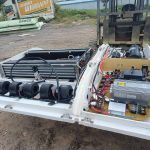
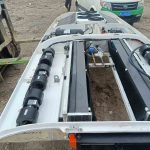
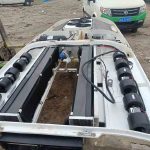
Bus air cnditioning operational status directly impacts passenger comfort and health safety. However, due to the complex operating environment and high usage frequency of vehicles, air conditioning systems often experience reduced cooling efficiency or even complete failure due to various problems. This article systematically reviews common problems and solutions in bus air conditioning maintenance, combining professional experience and practical skills to provide scientific guidance for maintenance personnel.
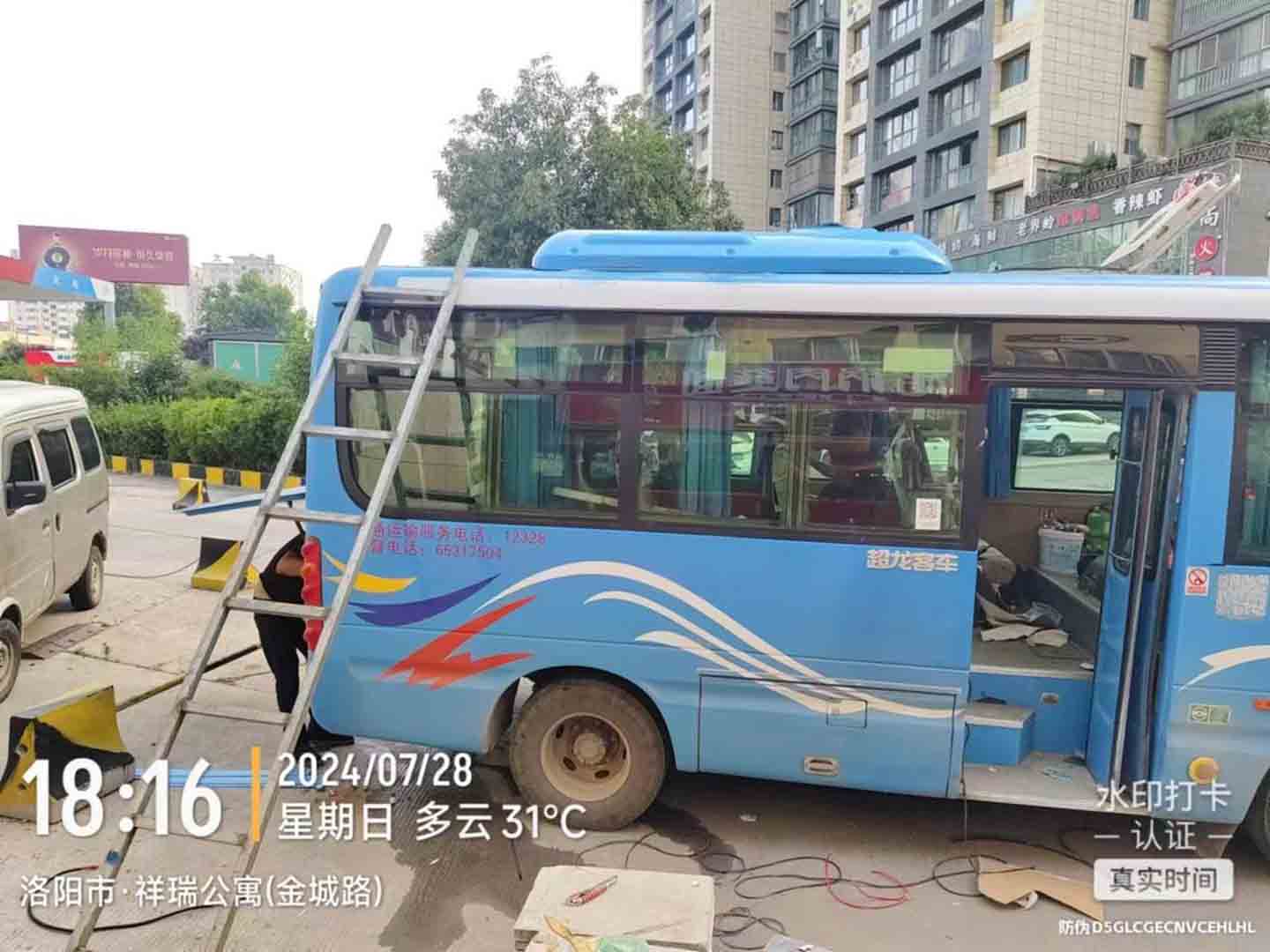
Poor Cooling Performance of Bus Air Conditioning: Troubleshooting System Hazards at the Root Cause
Poor cooling performance in Ac For Buses is often the result of multiple factors. The primary problem may be insufficient refrigerant, manifested by frequent bubbles appearing in the compressor’s observation window during operation. In this case, the system pressure should be checked with a pressure gauge, and environmentally friendly refrigerant (such as R134a) should be added. Secondly, a loose or overly tight multi-ribbed belt can directly affect the compressor’s power transmission; the former prevents the compressor from starting normally, while the latter may cause belt slippage and abnormal noise. It is recommended to use a tension meter to measure the belt tension, ensuring it is within the manufacturer’s specified deflection range of 0.8-1.2mm.
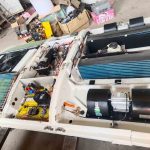
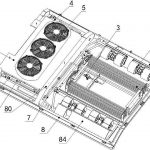
A deeper hidden danger may stem from mechanical failure of the compressor. If the compressor’s electromagnetic clutch fails to engage, or internal piston ring wear reduces airtightness, disassembly, inspection, and replacement of damaged parts are necessary. Additionally, dust or insect remains accumulating on the condenser surface can hinder heat dissipation efficiency; it is recommended to clean the condenser fins quarterly with a high-pressure water gun, and use a specialized degreaser to remove stubborn stains if necessary.
Bus Air Conditioning Filter Failure: A Double Threat to Air Quality and Energy Consumption A long-term neglect of the air conditioning filter is a hidden killer that leads to system performance degradation. When the filter becomes saturated with dust, it not only obstructs airflow (reducing airflow by more than 30%) but can also breed bacteria, causing respiratory discomfort for passengers. It is recommended to replace the filter every 6 months or 10,000 kilometers, and clean the spare filter using the reverse air blowing method to extend its lifespan.
Meanwhile, evaporator frosting or icing should be taken seriously. This is usually related to a faulty temperature sensor or excessive refrigerant. When the sensor misjudges the ambient temperature, the system may continue to operate at low temperatures, causing the evaporator surface temperature to drop below 0°C. In this case, the sensor wiring connection should be checked first, and its detection accuracy calibrated. If the sensor is confirmed to be functioning correctly, system balance needs to be restored by quantitatively charging the refrigerant.
Solving the Problem of Exposed Heat: Scientific Operation Extends Equipment Lifespan
In high-temperature, sun-exposed environments, bus air conditioning systems face a double challenge. First, the temperature difference between the inside and outside of the vehicle increases dramatically, increasing the compressor load by over 40%. It is recommended that drivers open the windows for ventilation for 5 minutes before starting the air conditioning, using the circulation mode to expel hot air, and then gradually lower the temperature setpoint. Second, insufficient battery power can cause difficulty in starting the compressor, especially during cold starts. Maintenance personnel should regularly check the battery electrolyte specific gravity (standard value 1.26-1.28) and terminal voltage (not lower than 12.4V under static conditions), replacing the AGM maintenance-free battery if necessary.
It is worth noting that the reliability of the condenser fan directly affects the cooling capacity under high-temperature conditions. When the fan fails due to motor carbon brush wear or a short circuit, the condenser’s heat dissipation efficiency may decrease by more than 60%. It is recommended to perform an insulation resistance test on the fan (standard value > 20MΩ) before summer and check the fan blade balance to prevent increased bearing wear due to vibration.
Emergency Handling: Rapid Response Ensures Operational Continuity
In the face of sudden malfunctions, maintenance personnel need to master rapid diagnostic skills. For example, when the air conditioning system emits a high-frequency humming sound and there is no cold air coming out of the vents, the first thing to check is whether the compressor clutch solenoid coil is burnt out. Use a multimeter to measure the coil resistance (normal value is about 3.5Ω). If the resistance is abnormal, the coil assembly needs to be replaced. For complete loss of cooling due to fluoride leakage, the leak point can be located using an electronic leak detector. Common leak locations include high-pressure pipe welds and shut-off valve seals.
In emergency situations where specialized equipment is unavailable, temporary measures can be taken to maintain basic cooling function. For example, switching the compressor to intermittent operation mode (stopping for 5 minutes every 15 minutes) can reduce the system load and prevent motor overheating caused by continuous operation. However, it should be noted that such measures are only suitable for short-term emergencies, and a thorough overhaul is still required afterward.