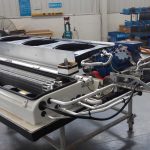
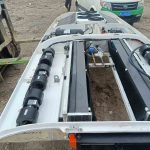
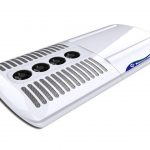
Bus Air Con Manufacturer boasts a research and development center where engineers utilize CAD and Solidworks for bus AC design and simulation experiments.
System Integration Design
Engineers no longer view air conditioning as a standalone add-on, but rather as an integral part of the vehicle’s “life system.”
They need to precisely calculate the bus’s interior volume, glass area, passenger density, engine waste heat, and the climate conditions of the operating area to customize cooling/heating capacity, air duct layout, and vent placement.
Lightweighting and Compactness
Facing the perennial challenge of energy conservation and emission reduction in buses, lightweighting of the air conditioning system is crucial.
The factory’s R&D team extensively uses high-strength aluminum alloys and composite engineering plastics, and through topology optimization design, minimizes the weight of each component while ensuring structural strength.
Meanwhile, designs such as ultra-thin roof-mounted evaporator units provide greater headroom for the bus.
At Bus Air Con Manufacturer, a highly automated and well-organized production line comes into view.
Bus air conditioning manufacturers have rapidly risen to prominence by leveraging the advantages of local bus manufacturing, with SONGZ and BUSCLIMA being typical examples. Visit www.busclima.com or contact busclima@kingclima.com
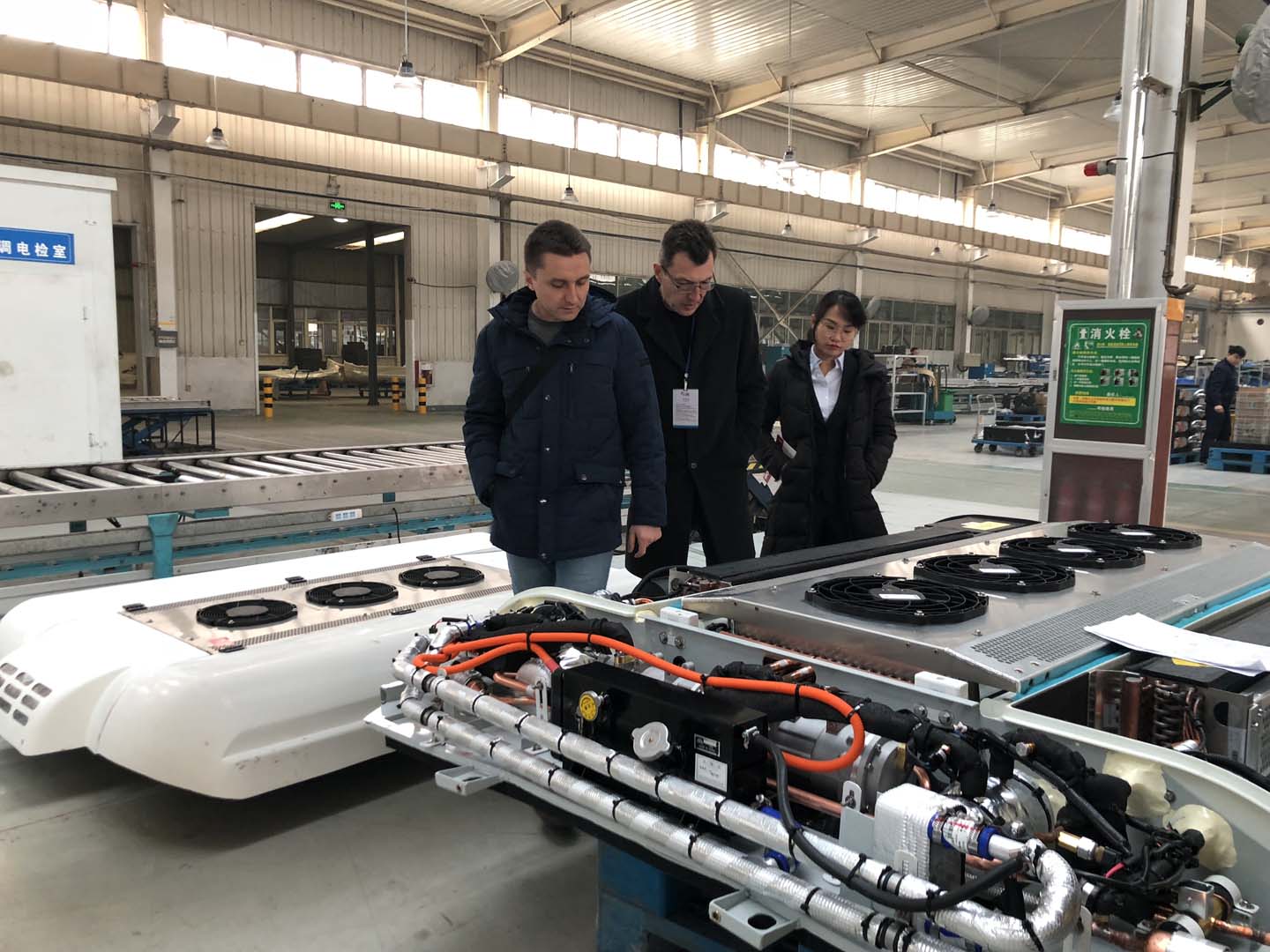
This area is mainly divided into several key regions:
1. Heat Exchanger Core Manufacturing Area
Fully automated fin stamping machines, tube bending machines, and brazing furnaces work together to manufacture condensers and evaporators.
Precision hydrophilic aluminum foil fins and internally threaded copper tubes, after oxygen-free brazing, form a highly efficient and reliable heat exchange core, whose performance directly determines the overall energy efficiency ratio of the unit.
2. Assembly Line and Helium Mass Spectrometry Leak Testing
In a temperature- and humidity-controlled cleanroom, core components—compressors (the “heart” of the air conditioner), heat exchangers, throttling devices, fans, etc.—are precisely assembled.
Strict torque control and quality verification are implemented at every stage.
After assembly, each air conditioning unit must undergo the most rigorous helium mass spectrometry leak testing.
This high-precision detection method can detect extremely small leaks, ensuring that refrigerant will not leak during years of operation, which is the cornerstone of product reliability.
3. Electrical and Control Unit Testing Area
Modern bus ac systems are highly intelligent. Here, electronic control units (ECUs), sensors, and complex wiring harnesses are integrated. Workers conduct aging tests and functional simulation tests to ensure accurate response to all commands, from simple temperature settings to complex multi-zone independent temperature control and remote pre-cooling/pre-heating.
Bus Air Con Manufacturer – Extreme Laboratory Environment
Air conditioners that roll off the production line cannot be shipped immediately. They must undergo a rigorous “ice and fire” test in a place called the “environmental simulation laboratory.”
High Temperature and High Humidity Chamber: Simulates tropical climates with temperatures above 45°C and extremely high humidity to test the air conditioner’s extreme cooling capacity and system stability.
Low Temperature Cold Start Chamber: Simulates extreme cold of -30°C to verify heat pump heating performance, defrosting efficiency, and the compressor’s start-up capability in extreme cold conditions.
Vibration and Durability Testing Bench: Simulates the long-term bumps and jolts of a bus on rough roads, testing the fatigue strength of all welds, connections, and pipes to ensure they have the same lifespan as the bus.
Only products that successfully pass these rigorous tests are eligible to be labeled as qualified.