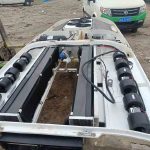
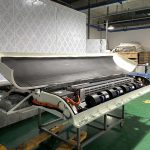
Bus Air Conditioner is used for air conditioning of medium-sized buses and medium-sized commercial vehicles.
From the perspective of market supply and demand as well as technical aspects, non-independent and overhead air conditioners have become the dominant products in the market and in technical design.
Built-in air conditioners are generally designed as separate units, and are arranged in limited spaces, with small adjustable space and difficult maintenance;
Secondly, the built-in condensers are generally placed at the bottom of the vehicle, on the skirt, or behind, and their heat dissipation effect is not as good as the overhead wind-facing type, and their lifespan is greatly affected by weather and road conditions.
The overhead air conditioner is placed on the roof, with a large adjustable space, easier installation and maintenance than built-in ones, and the development difficulty is also easier than that of built-in ones. The wind-facing overhead air conditioner condenser has a better heat dissipation effect.
The existing top-mounted air conditioning base and shell structure are complex and divided into multiple pieces for installation.
For the installation personnel, they need to first connect the air conditioning electrical components to the base, then connect each piece of the base in sequence, and finally cover each piece of the shell. There are too many parts and the assembly process is complex, which slows down the assembly process. During assembly line production, more workers are needed for assembly, and more warehouses are required to classify and store the parts, resulting in an increase in various manufacturing costs. This has limitations in large-scale production.
Bahman Bus Air Conditioner offers a top-mounted parallel-flow windward type coach air conditioning system. The fixed panel of the air conditioner is made by integrating aluminum alloy sheet components, while the outer cover of the air conditioner is made of a single-piece fiberglass material. The middle part reduces assembly processes and speeds up the assembly production efficiency.
The technical solution for the Bus Air Conditioner is as follows:
A top-mounted parallel-flow windward-type passenger vehicle air conditioner, including a condenser, an evaporator, a expansion valve, a drying reservoir, a heat exchange fan and a fan motor.
And the air conditioning pipes are interconnected between the condenser, evaporator, expansion valve, drying reservoir and compressor.
It also includes an air conditioning fixed panel and an air conditioning outer cover shell placed on the air conditioning fixed panel.
On the air conditioning fixed panel, there are evaporator chambers and condenser chambers. The evaporator, fan motor and expansion valve are installed in the evaporator chamber.
The condenser, the drying reservoir, and the heat exchange fan are installed in the condenser chamber.
There is a partition wall that is integrally bent and formed together with the fixed panel of the air conditioner between the evaporator chamber and the condenser chamber.
The partition wall is provided with pipe holes through which the air conditioning pipes pass.
In the condenser cavity, there is a condenser bracket with an intake opening welded in.
The side of the condenser bracket is equipped with ventilation holes.
The two ends of the condenser are installed on the condenser bracket.
A fan cover is placed above the condenser, and the two ends of the condenser are welded with lower legs fixed on the condenser bracket and upper legs for installing and connecting the fan cover.
On both sides of the evaporator chamber, inclined motor mounts for the fans are welded.
On the motor mounts, there are fan windows.
At the bottom of the fixed panel of the air conditioner, there is an air flow opening inside the vehicle that is connected to the fan window.
The outer cover of the air conditioner is made of a single-piece fiberglass reinforced plastic material. On the outer cover, there is a fan outlet facing the heat exchange fan. Based on the bus body, the condenser chamber is at the front and the evaporator chamber is at the back. The air conditioner outer cover is placed in front of the condenser chamber and has an inlet.
To be more specific, the described condenser is a parallel-flow condenser.
To be more specific, the air conditioning fixed panel, condenser bracket, and fan motor base are all made of aluminum alloy, and they are welded and combined with each other.
Advantages and Features of Bus Air Conditioner
Compact structure layout
Optimized layout of air conditioning pipes
Saves materials used for circuits and pipes
Integrated top-mounted air conditioning
Shortens the flow distance between various connecting pipes, further improving cooling efficiency
The entire top-mounted air conditioning is limited by the air conditioning fixing panel to define the layout of each component. The air conditioning fixing panel is made by integrating aluminum alloy sheet metal components.
The air conditioning outer cover is made of a single-piece molded fiberglass material. The middle part reduces assembly processes and improves production efficiency.
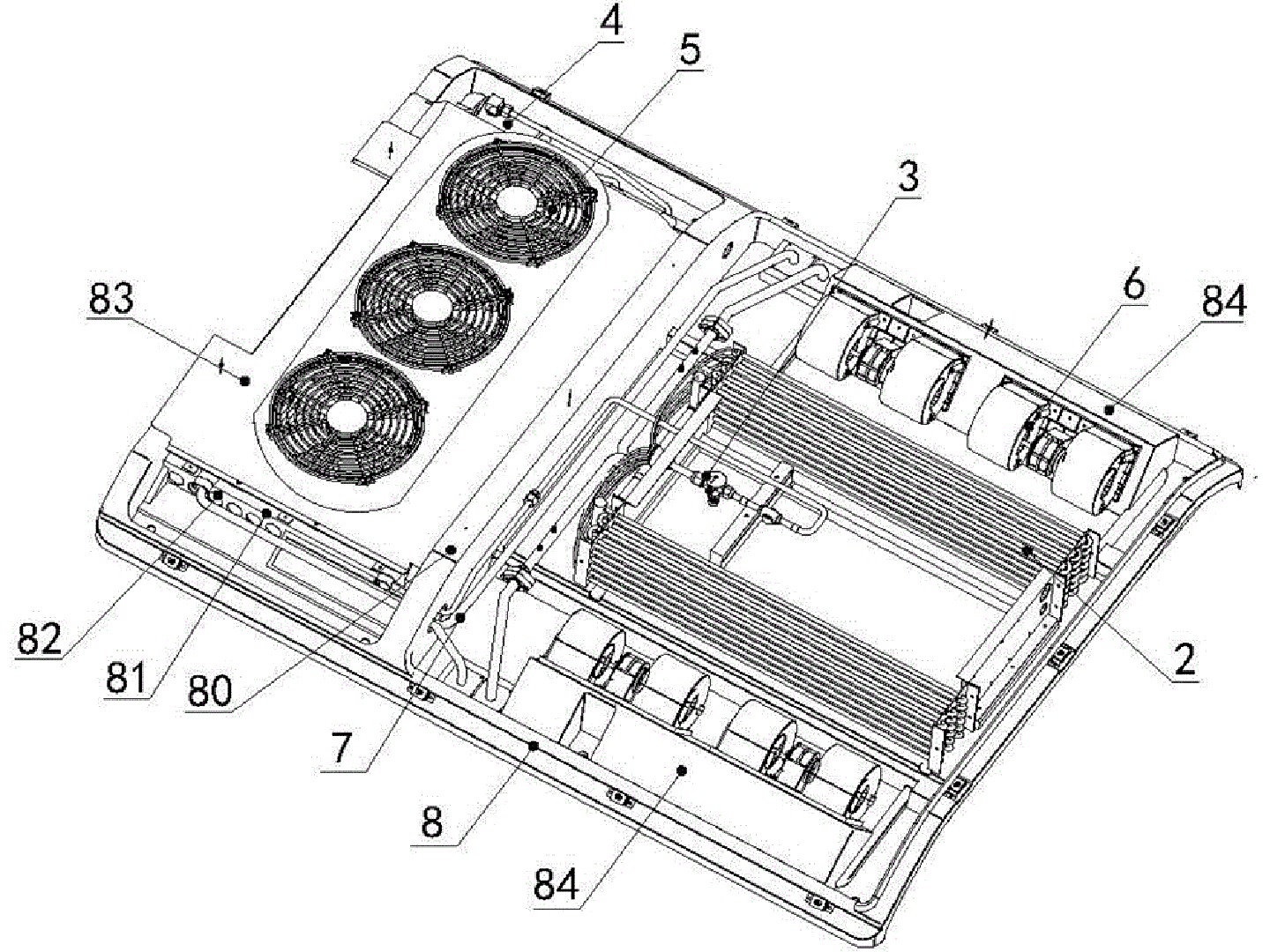
The Bahman Bus Air Conditioner includes:
Condenser 1, Evaporator 2, Expansion Valve 3, Dry Storage Tank 4, Heat Exchanger Fan 5 and Fan Motor 6.
The air conditioning pipes 7 are interconnected between Condenser 1, Evaporator 2, Expansion Valve 3, Dry Storage Tank 4 and the compressor.
Condenser 1 is a parallel-flow condenser and is externally connected to the compressor.
It also includes the fixed panel 8 for the air conditioner and the air conditioner outer cover shell 9 placed on the fixed panel 8. These form the evaporator chamber and the condenser chamber on the fixed panel 8.
The evaporator 2, the fan motor 6 and the expansion valve are installed in the evaporator chamber.
The condenser 1, the dehydrating reservoir 4 and the heat exchange fan 5 are installed in the condenser chamber.
Between the evaporator chamber and the condenser chamber, there is a partition wall 80 formed by bending integrally with the fixed panel 8. The partition wall 80 has a pipe hole for the air conditioner piping to pass through.
In the condenser cavity, a condenser bracket 81 with an intake opening is welded. The side of the condenser bracket 81 is equipped with ventilation holes 82. The two ends of the condenser 1 are installed on the condenser bracket 81, and a fan cover 83 is placed above the condenser 1.
The two ends of the condenser 1 are welded with lower legs fixed on the condenser bracket 81 and upper legs installed to connect the fan cover 83.
During assembly, first fix the condenser on the condenser bracket 81, then place the assembled fan cover 83 on top of the condenser 1 and directly tighten it on the upper legs using screws for positioning.
Then, the edge of the fan cover 83 is fixed with screws to the edge of the air conditioning fixed panel 8.
On both sides of the evaporator cavity, inclined fan motor mounts 84 are welded, and fan windows 86 are provided on the fan motor mounts 84.
At the bottom of the air conditioning fixed panel 8, there is an air flow passage 85 connecting to the fan window 86, covering the entire evaporator position and condenser position.
Whether for the circulation and ventilation of cold air or hot air inside the vehicle, the air enters from all four sides of the air conditioning fixed panel 8, and it can also adopt parallel flow and copper core form.
The outer cover shell 9 of the air conditioner is made of a single-piece molded fiberglass material. On the outer cover shell 9, there is a fan outlet 90 facing the heat exchange fan. Based on the bus body, the condenser chamber is at the front and the evaporator chamber is at the back. The outer cover shell of the air conditioner is placed in front of the condenser chamber and has an inlet 91.
The fixed panel for the air conditioner 8, the condenser bracket 81, and the fan motor base 84 are all made of aluminum alloy and are assembled together by welding.
The fixed panel 8 of the air conditioner is an aluminum alloy bent part, formed as one piece.
There is no need to re-connect the condenser chamber and the evaporator chamber with bolts. The installation bracket of the evaporator is also welded with aluminum alloy parts.
This air conditioner fixed panel is directly produced on the welding assembly line.
On the assembly line, the pipes, circuits and various electrical components of the air conditioner are directly connected manually, which is conducive to overall assembly.
The various electrical components of the air conditioner are installed in a modular way, concentratedly arranged, with a compact structure, high energy efficiency and easy installation.
Technical features:
1. A top-mounted parallel-flow windward type passenger car air conditioning system, comprising a condenser, an evaporator, a expansion valve, a drying reservoir, a heat exchange fan and a fan motor,
as well as air conditioning pipelines interconnected between the condenser, the evaporator, the expansion valve, the drying reservoir and the compressor.
Its features are as follows: it also includes an air conditioning fixed panel and an air conditioning outer cover shell covering the air conditioning fixed panel. On the air conditioning fixed panel, there are evaporator chambers and condenser chambers formed.
The evaporator, the fan motor and the expansion valve are installed in the evaporator chamber.
The condenser, the drying reservoir and the heat exchange fan are installed in the condenser chamber.
Between the evaporator chamber and the condenser chamber, there is a partition wall formed by bending integrally with the air conditioning fixed panel. The partition wall has pipe holes for the air conditioning pipelines to pass through.
In the condenser cavity, a condenser bracket with an intake opening is welded. The side of the condenser bracket is equipped with ventilation holes. The two ends of the condenser are installed on the condenser bracket. A fan cover is placed above the condenser. At both ends of the condenser, lower support legs fixed on the condenser bracket and upper support legs installed to connect the fan cover are welded.
On both sides of the evaporator chamber, inclined fan motor mounts are welded. On the fan motor mounts, there are fan windows. At the bottom of the fixed panel of the air conditioner, there is an air flow passage inside the vehicle that is connected to the fan window.
2. Top-mounted parallel-flow windward type passenger car air conditioning. Its features are as follows: The outer cover of the air conditioning is made of a single-piece molded fiberglass reinforced plastic material. On the outer cover, there is a fan outlet facing the heat exchange fan. Based on the passenger car body, the condenser chamber is in the front and the evaporator chamber is in the rear. The outer cover of the air conditioning is placed in front of the condenser chamber and has an inlet.
3. Top-mounted parallel-flow windward type passenger vehicle air conditioning system, characterized in that: The condenser is a parallel-flow condenser.
4. The top-mounted parallel-flow windward type passenger car air conditioning system, characterized by: The fixed panel of the air conditioner, the condenser bracket, and the fan motor base are all made of aluminum alloy, and are welded and combined together.
Technical Summary
Top-mounted parallel-flow windward type passenger car air conditioning system, including condenser, evaporator, expansion valve, drying reservoir, compressor, heat exchange fan and fan motor, as well as the air conditioning piping system connecting and interconnecting all the components.
It also includes the air conditioning fixed panel and the air conditioning outer cover shell. On the air conditioning fixed panel, the evaporator chamber and the condenser chamber are formed.
In the condenser chamber, a condenser bracket with an intake port is welded, and on the sides of the evaporator chamber, inclined fan motor seats are welded.
The air conditioning fixed panel is formed by integrally molding an aluminum alloy sheet, and the air conditioning outer cover shell is made of a one-piece molded fiberglass material.
The middle part reduces the assembly process, and this top-mounted air conditioning structure has a compact layout, optimizing the layout of the air conditioning piping, and saving the materials used for circuits and pipes.
The integrated top-mounted air conditioning shortens the flow distance between the connecting pipes and further improves the cooling efficiency.