Bus air conditioner design is a systematic engineering project that must ensure in-vehicle comfort while also considering energy efficiency and overall vehicle compatibility.
The design process typically follows a logic from theoretical calculations to structural implementation, and then to verification and optimization; the design philosophy is largely reflected in modern concepts such as modularity, integration, intelligence, and environmental protection.
The main process of bus air conditioner design can be divided into the following key stages:
Preliminary Analysis and Load Calculation
This is the cornerstone of the design. First, the vehicle type (e.g., city bus, long-distance bus), passenger capacity, and operating climate zone must be clearly defined to determine the interior and exterior design parameters. Then, the cooling, heating, and defrosting loads of the bus are calculated, which serves as the basis for all subsequent equipment selection.
Bus Air Conditioner Design – Scheme Design and Equipment Selection
1. Based on the load calculation results, select suitable Bus Air Conditioner. This mainly includes:
2. Matching and selection of core components such as compressors, condensers, evaporators, and expansion valves.
3. Determine the system type, such as whether to use a fully independent or split system, and whether to use a fixed-frequency or variable-frequency system.
4. For new energy buses, it is also necessary to consider how the air conditioning system can be linked with the battery thermal management system to utilize the air conditioning for battery cooling or heating.
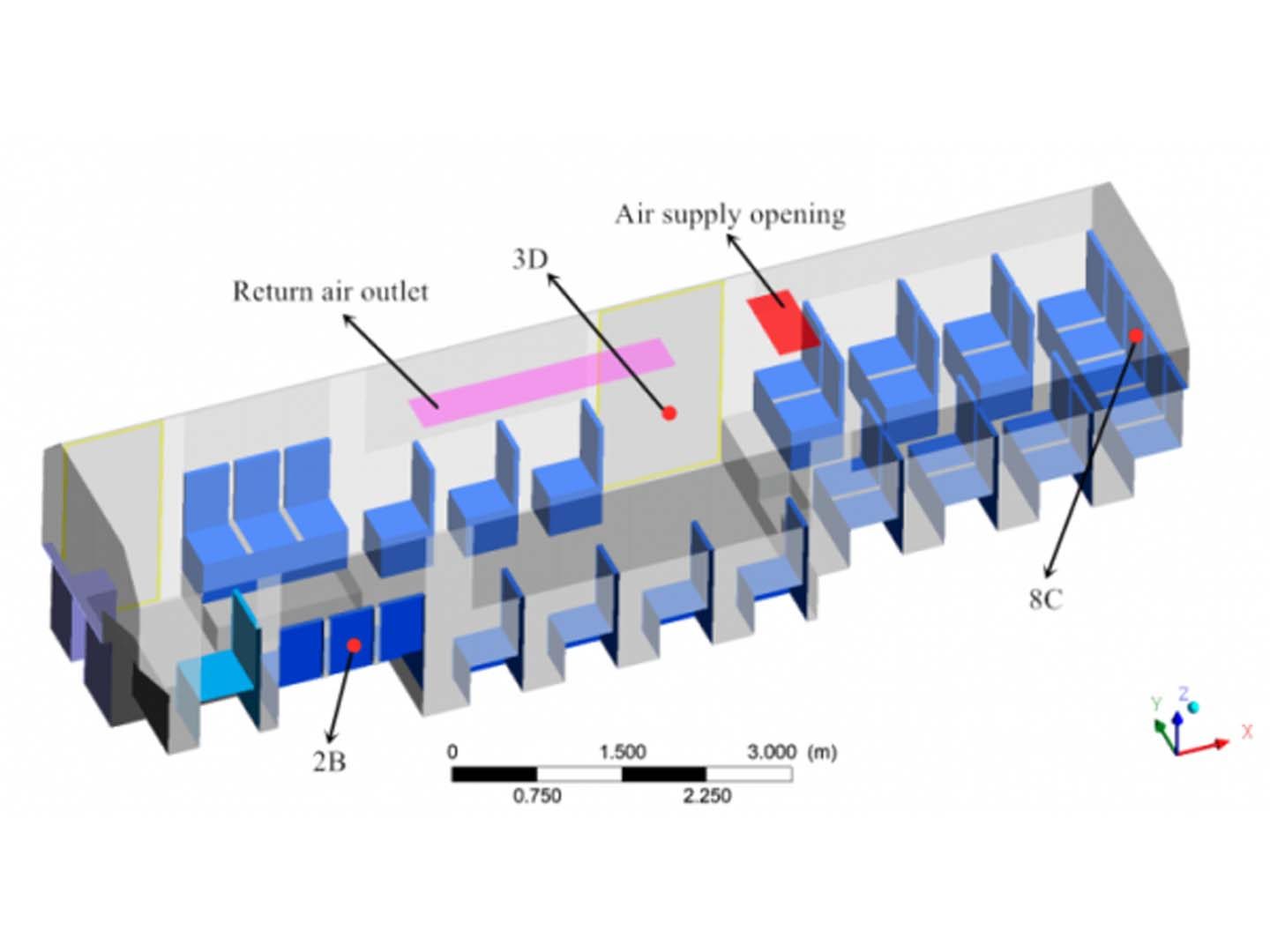
Bus Air Conditioner Design – Structural Layout and Airflow Organization Design
1. General Layout: How the air conditioning unit integrates with the vehicle body structure. Common layout methods include top-mounted (as shown in patent CN108725129B), bottom-mounted, or rear-mounted. The design should strive for compactness, consider ease of maintenance, and be coordinated with the overall vehicle styling.
2. Duct Design: Rationally arrange the air supply ducts, minimizing bends and length to reduce resistance and heat loss.
3. Airflow Organization: Utilize computational fluid dynamics (CFD) simulation technology to analyze the distribution of velocity and temperature fields inside the vehicle, optimize the location and form of the air outlets, and ensure uniform airflow, no dead zones, and comfortable drafts.
Bus Air Conditioner Design – Detailed Design and Drawing
After completing the above design, the engineering drawing stage begins, including two-dimensional production drawings of the air conditioning system and three-dimensional digital models for assembly analysis.
Bus Air Conditioner Design – Performance Verification and Optimization
The success of a design ultimately depends on experimental verification. This typically involves:
Laboratory Testing: Precise testing of the air conditioning system’s cooling capacity, heating capacity, energy efficiency ratio, and other performance parameters in an enthalpy difference laboratory, according to relevant standards (such as GB/T 21361).
Vehicle Environment Simulation: Road tests in extreme environments such as high and low temperatures to verify actual performance.
Control Strategy Optimization: For electronically controlled systems, PID parameters are optimized through software debugging and algorithms (such as genetic algorithms) to achieve optimal control and energy-saving goals.
Beyond the specific processes, modern bus air conditioning design emphasizes the following core concepts:
Modularization and Standardization: Decomposing the air conditioning system into functionally independent modules (such as fresh air modules, compressor modules, and electronic control modules). Standardized interfaces and installation transition beams simplify the installation process for vehicle manufacturers, improve production efficiency, and facilitate subsequent maintenance and upgrades.
Intelligent Control: Modern bus air conditioning is no longer a simple cooling/heating machine. It integrates CAN bus communication and cloud control technology, enabling automatic temperature control, fault self-diagnosis, and remote monitoring. It even achieves automatic dust removal from the heat exchanger by reversing the condenser fan to maintain efficient heat exchange.
Integrated Vehicle Thermal Management: Especially for electric buses, the air conditioning system is part of the overall vehicle thermal management system. The design concept shifts from simple “cabin environment control” to “unified vehicle energy management,” unifying the planning and heat allocation of air conditioning, battery pack cooling/heating, and motor electronic control heat dissipation to improve the overall energy efficiency of the vehicle.
High Efficiency and Environmental Protection: In terms of energy saving, it uses variable frequency technology to achieve stepless energy regulation, saving approximately 15% energy compared to traditional air conditioning. In terms of environmental protection, it selects green refrigerants that do not damage the ozone layer and have a low greenhouse effect (such as R407C), and strives to improve the system’s sealing performance to achieve near-zero refrigerant leakage.
Special Note: Design Differences for New Energy Buses
If you are designing air conditioning for a pure electric bus, you need to pay extra attention to the following points:
Power Source: Core components such as the compressor are driven by high-voltage electricity. The design must consider compatibility and safety with the vehicle’s high-voltage electrical system.
Battery Thermal Management: The air conditioning system may need to provide cooling or heating for the battery pack, which places new demands on the system’s piping design, control logic, and load capacity.
Energy Saving Priority: To improve vehicle range, the energy efficiency ratio of the air conditioning system is more stringent. Therefore, the application of variable frequency technology and efficient control algorithms is particularly important.