
Bus air conditioner fan motor selection serves as a bridge between design and practical application, a crucial decision-making step ensuring the airflow, efficiency, reliability, and cost control of the air conditioning system.
Selection is not simply parameter matching, but a comprehensive process of weighing all dimensions, from electrical characteristics and operating environment to structural installation and regulatory standards.
Bus air conditioner fan motor selection – precise voltage and power matching
The primary dimension of selection is the precise correspondence of electrical parameters. Bus electrical systems differ significantly: traditional fuel-powered buses typically use DC 24V power, while new energy buses may involve low-voltage power supply from a high-voltage platform after DC-DC conversion. During selection, it is essential to ensure that the motor’s rated voltage is completely consistent with the vehicle’s power system; otherwise, the motor will malfunction or burn out.
Power matching is another core element. The motor’s rated power must match the “required shaft power” of the fan load—insufficient power will lead to motor overload, overheating, or even burnout; excessive power will result in energy waste and increased costs. In actual selection, a safety factor of 1.1 to 1.2 times is typically considered. Taking the blower motor of the Haishi bus as an example, its power range is approximately 150W~200W, with a speed exceeding 3000 rpm and an air volume of approximately 300~500 m³/h. Selection requires calculating the required motor power and speed based on the total air volume demand of the Bus air conditioner and the duct resistance characteristics.
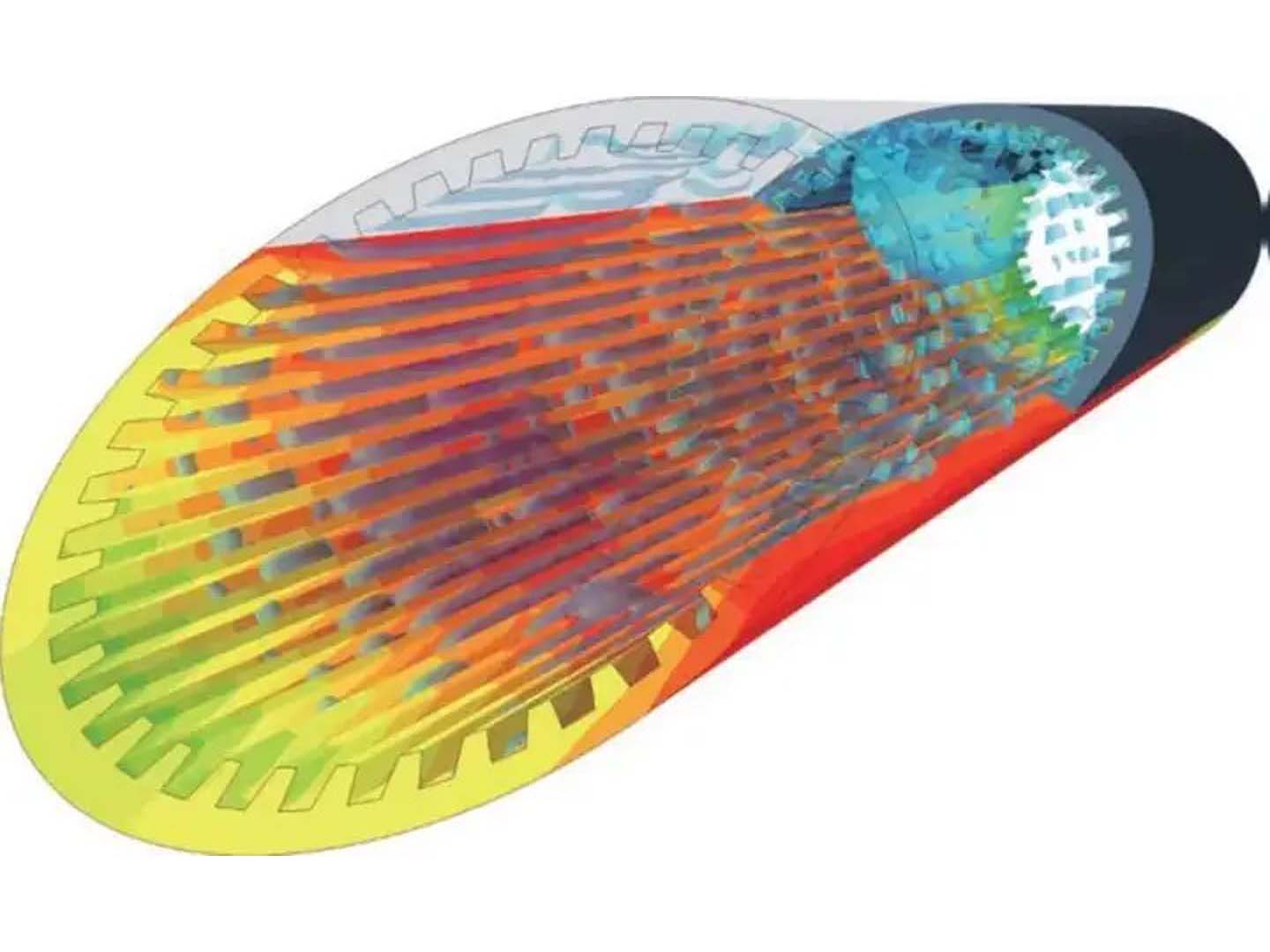
Bus Air Conditioner Fan Motor Selection – The Mainstream Trend of Brushless Motors
The choice of motor type determines the performance ceiling of the system. Based on power supply type and structural principles, fan motors are mainly divided into two categories: AC asynchronous motors and DC brushless motors. For bus air conditioning applications, brushless DC motors (BLDC) have become the mainstream choice.
BLDC motors have a brushless structure and are driven by electronic commutation, offering significant advantages such as longer lifespan, lower noise, and higher efficiency, making them particularly suitable for long-term continuous operation in bus air conditioning scenarios. According to the T/ZZB 2451-2021 standard “Intelligent Brushless DC Motors for Vehicle Air Conditioning Fans,” this type of motor is suitable for air conditioning fans used in passenger cars, trucks, and engineering vehicles, and can also be considered for mobile applications such as yachts and ships. When selecting a motor, it’s crucial to determine if it integrates intelligent control functions, including PWM speed control interfaces and fault protection circuits. For designs prioritizing ultimate reliability, a sensorless solution can be chosen, eliminating the need for Hall effect sensors, further simplifying the structure and improving environmental adaptability.
Bus Air Conditioner Fan Motor Selection – Protection Rating and Temperature Resistance
Buses operate in harsh environments, so motor selection must consider environmental protection and weather resistance. The protection rating (IP rating) is a core indicator, formatted as “IPXX,” where the first digit indicates the dustproof rating and the second indicates the waterproof rating. For roof-mounted air conditioner fan motors, exposed to rain, IP54, IP55, or even IP65 ratings should be selected to ensure dust and water spray resistance.
The insulation class determines the maximum temperature the motor windings can withstand. During the summer’s high temperatures and direct sunlight, the engine compartment or roof temperature of a bus can exceed 70°C. The combined heat from the motor and the ambient temperature places stringent requirements on the insulation materials. Among common insulation classes, F (155°C) and H (180°C) are recommended choices, effectively preventing insulation aging and burnout. In addition, the continuous vibrations during bus operation require the motor to have a robust vibration-resistant structure. When selecting a model, attention should be paid to the motor housing material, bearing type, and stator winding fixing process.
Bus Air Conditioner Fan Motor Selection – Structure and Installation
The motor must be physically integrated with the air conditioning assembly and duct system; therefore, accurate installation dimensions are crucial. Key dimensions to verify during selection include: motor length, diameter, mounting hole positions, shaft extension length, and keyway specifications. For example, model 16363-30040 has a length of approximately 180mm and a diameter of approximately 90mm; the mounting hole positions must perfectly match the pre-drilled locations on the air conditioning evaporator assembly.
The matching of the impeller and motor is essential for aerodynamic performance. Selection requires confirming the fit between the motor shaft and the fan impeller (e.g., set screw fixing, keyway fit), as well as the impeller material—aluminum alloy impellers are superior to plastic materials in terms of heat dissipation and durability. Simultaneously, the motor’s wiring method and connector type (e.g., 4-pin or 5-pin) must match the original vehicle wiring harness to avoid reliability risks associated with modifications.
V. Regulatory and Energy Efficiency Dimensions: Standard Compliance
Selection must comply with national and industry mandatory standards. Firstly, energy efficiency standards: According to GB 18613-2020 “Minimum Allowable Values of Energy Efficiency and Energy Efficiency Grades for Electric Motors,” capacitor-run motors and brushless DC motors for air conditioner fans have specific energy efficiency grade requirements. When selecting a model, high-efficiency grade products should be prioritized to reduce overall vehicle energy consumption.
Secondly, product standard compliance: T/ZZB 2451-2021 provides detailed regulations on the basic requirements, technical requirements, test methods, and inspection rules for intelligent brushless DC motors for automotive air conditioner fans. When selecting a model, suppliers should be required to provide test reports or certification certificates that comply with this standard.
Bus air conditioner fan motor Selection – Total Life Cycle Cost
Selection is not only a technical decision but also an economic one. It requires comprehensive consideration of procurement costs, operating energy consumption, maintenance frequency, and spare parts availability. Although the initial procurement cost of brushless motors is higher than that of brushed motors, their maintenance-free characteristics and long-term energy-saving benefits from high energy efficiency make their total life cycle cost more advantageous.
Ease of maintenance also needs to be considered: Does the motor have integrated fault self-diagnosis function? Does it support remote monitoring? Can the drive board be replaced separately? These factors directly affect the vehicle’s downtime and maintenance costs.
Related posts:
 Bus air conditioner fan motor design
 Bus air conditioner design
 Bus Air Conditioner Refrigerant Design
 Bus AC electrical design
 Bus Air Conditioner Fan Motor Fault Analysis and Solutions
 Bus Air Conditioner is used for buses and medium-sized commercial vehicles
 Bus Air Conditioning Airflow Diagnosis and Optimization
 Ac For Buses Master Motors