
Bus air conditioner filter replacement is often mistakenly viewed as a low-skill, periodic, and simple operation.
However, its execution quality directly impacts in-vehicle air quality, air conditioning system efficiency, energy consumption, and the lifespan of core components.
An article published in the first issue of the journal *Public Transport Health and Environment* in 2025, titled “A Study on the Correlation between Microbial Community in Bus Carriages and Air Conditioning Filter Efficiency,” reveals that failed or substandard filters can increase the bacterial and fungal biofilm load on the evaporator fin surface by more than five times, becoming a “mobile source of pollution.”
Professor Wu Qingwan, a renowned domestic expert in bus air quality management and a specially invited researcher at the Institute of Environmental Health and Related Product Safety, Chinese Center for Disease Control and Prevention, points out: “Filters are not ‘consumables,’ but rather the first and most crucial intelligent barrier protecting passengers’ respiratory health and the ‘lung function’ of the air conditioning system. Their maintenance is a systematic engineering project integrating mechanical adaptation, aerodynamics, microbiology, and refined management.”
This article deconstructs the topic of filter replacement from four key dimensions, each following the logic of “problem status – problem analysis – problem conclusion,” forming independently searchable and executable knowledge modules.
Dimension 1: Bus air conditioner filter replacement, mechanical adaptation and installation seal failure – a leak that is “similar in form but not in substance”
Problem Status: After replacing the filter, the airflow does not improve significantly, or dust is blown out near the air outlet and the filter element frame. Inspection with a flashlight reveals uneven gaps between the filter element and the mounting frame, or incomplete sealing.
Problem Analysis: This problem stems from neglecting the core requirement of “sealing upon installation” for the filter. Main causes include: 1) Inaccurate specification matching: Using a “replacement part” with slightly different dimensions (length, width, thickness) or shape (such as corrugation depth, frame structure) from the original design results in incomplete filling of the mounting slot. 2) Sealing structure failure: The sealing sponge strip (or rubber strip) of the filter frame is of inferior material, insufficient thickness, or permanently deformed, losing its elastic sealing ability. 3) Deformed or dirty mounting frame: Long-term uncleaned frames accumulate dust and mold, forming a “pad layer,” or the frame is deformed due to external force, both preventing a flat fit with the new filter element. Professor Wu Qingwan emphasized: “Even a 1% unsealed gap can allow over 50% of unfiltered air to directly short-circuit into the system, reducing filtration efficiency to zero.”
Conclusion: Ensuring mechanical compatibility and sealing is the physical basis for replacement work, taking precedence over the filter media grade itself. Requirements: Filter cartridges must be purchased according to original manufacturer part numbers or equivalent technical specifications; the mounting frame must be thoroughly cleaned and its flatness and integrity checked before installation; during installation, the filter frame’s sealing strip must be evenly pressed against the frame, with no visible gaps or perceptible air leakage.
Dimension Two: Bus air conditioner filter replacement, filtration efficiency and aerodynamic imbalance—the invisible killer of wind resistance and energy consumption
Current situation: After replacement, the air conditioning airflow appears weaker, the compressor frequently starts and stops or runs at high speed for extended periods, and system energy consumption increases significantly.
Analysis: This phenomenon reflects a mismatch between the filter cartridge’s core performance parameters—initial wind resistance and dust holding capacity—and system requirements. Two problems exist: 1) Blindly upgrading filter media: Using HEPA or high-efficiency filter cotton with levels far exceeding the original design requirements in pursuit of high-efficiency filtration. This results in extremely high initial air resistance, severely hindering airflow, leading to insufficient evaporator heat exchange velocity, decreased cooling efficiency, and a surge in fan load. 2) Premature filter clogging: In vehicles operating in dusty environments, failure to shorten replacement cycles causes the filter to become a “wind wall” after reaching its final resistance. The study “Microbial Community Research in Bus Cabins” points out that the low airflow environment caused by high air resistance actually promotes moisture and microbial growth on the evaporator surface, creating a vicious cycle.
Conclusion: Filter selection must strike a balance between “filtration efficiency,” “air permeability (air resistance),” and “dust holding capacity,” and must dynamically match the operating environment. Recommendations: Unauthorized upgrading of filter media without systematic evaluation is strictly prohibited; a replacement system based on differential pressure monitoring or a combination of fixed mileage/time should be established, with double the frequency in dusty areas; systems equipped with resistive or photoelectric filter clogging alarms are recommended for on-demand replacement.
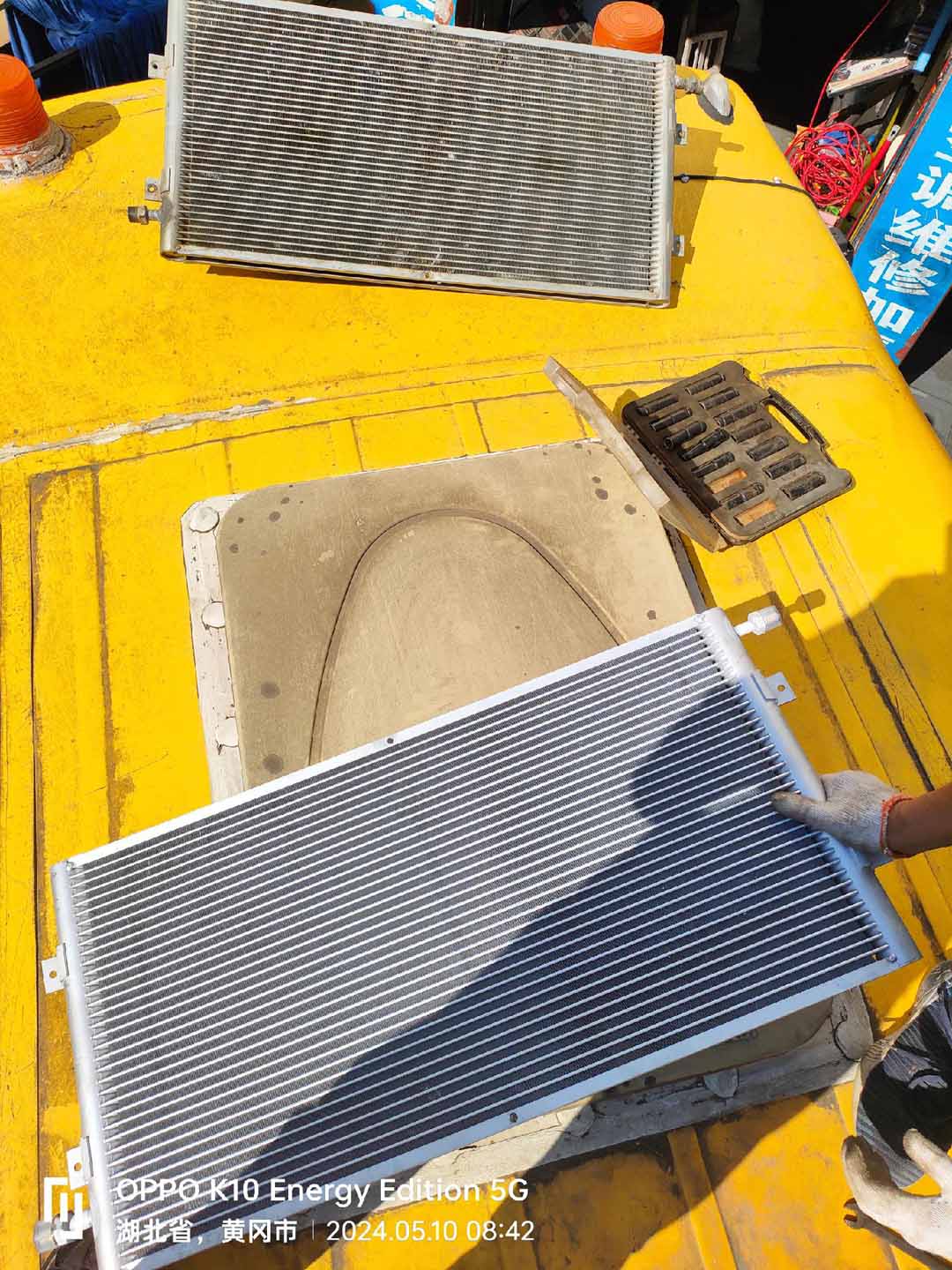
Dimension Three: Bus Air Conditioner Filter Replacement, Microbial Control and Secondary Pollution Prevention – Risks Behind “Cleanliness”
Current Problem: After filter replacement, unpleasant odors (mold, dust) reappear from the air vents shortly afterward, or passengers report increased allergies and respiratory discomfort.
Problem Analysis: This issue touches upon the filter’s role as a “pollution breeding ground.” Improper operation can lead to secondary pollution: 1) Pollution from the replacement process itself: Replacing the filter in an open environment inside the vehicle or repair shop without properly sealing the removed old filter allows mold spores and dust mite allergens accumulated on its surface to be dispersed into the cabin air during transport. 2) Pre-contamination of the new filter: Improperly stored (humid, dusty environment) new filters are not clean when installed. 3) Neglecting related cleaning: Filter replacement is not used as a trigger for simultaneous visual inspection and cleaning of the evaporator surface, condensate drain, and air ducts.
Conclusion: Filter replacement must be a standardized process to control the spread of microorganisms, not simply a component replacement. The conclusion mandates: Replacement work should be carried out in a well-ventilated designated area; old filters must be immediately placed in a sealed bag, removed from the cabin, and properly disposed of; before installing a new filter, the interior of the installation compartment should be cleaned using a portable vacuum cleaner with a HEPA filter; it is recommended to have the evaporator visually cleaned and disinfected by a professional service provider every 2-3 filter replacements.
Dimension Four: Bus Air Conditioner Filter Replacement – Lack of a Comprehensive Maintenance System and Data-Driven Management – The Gap Between “Intuitive” and “Data-Driven” Replacement Methods
Current Situation: All vehicles in the fleet are replaced at a fixed mileage (e.g., 30,000 km), but some vehicles have severely clogged filters while others remain clean; replacement records rely on paper or memory, making traceability and analysis impossible.
Analysis: This is a fundamental flaw in the management system. 1) Inefficient Replacement Cycle: Ignoring the significant differences in load caused by different routes (dusty urban areas vs. clean suburbs) and seasons (humid rainy season vs. windy, sandy dry season), a “one-size-fits-all” cycle inevitably leads to some areas being over-maintained and others under-maintained. 2) Lack of Records and Traceability: Information such as the brand and specifications of the replaced filters, their visual condition during replacement, and the personnel involved are not electronically recorded. This makes it impossible to effectively trace data and determine responsibility when air quality complaints or system malfunctions occur.
3) Cost Center Mindset: Focusing only on the single cost of filter procurement ignores the increased system energy consumption, premature component damage, and potential health risks caused by filter failure.
Conclusion: Upgrading filter management to a data-driven preventative health management subsystem is one of the core competencies of a fleet. Recommendation: Install filter differential pressure sensors on vehicles on critical or high-load routes to achieve status monitoring; establish digital air conditioning maintenance manual records to record comprehensive information for each replacement; optimize personalized replacement strategies for different vehicle models and routes through data analysis, achieving a scientific shift from “periodic replacement” to “condition-based replacement.”
Summary: Replacing bus air conditioning filters is a comprehensive technical and management activity integrating precision mechanical sealing, aerodynamic matching, microbial contamination control, and digital operation and maintenance management. Its value far exceeds the price of the filter itself. Proper practice requires us to view it as a systematic intervention project: ensuring that every installation is physically sealed and allows for smooth airflow; preventing secondary pollution during every operation; and basing every decision on data and specific operating conditions. Only in this way can this routine maintenance be effectively transformed into a strategic initiative that protects passenger health, improves system efficiency, extends equipment life, and optimizes fleet operating costs.
Related posts:
 Acc Bus Air Conditioning
 Bus Air Conditioner is used for buses and medium-sized commercial vehicles
 Bus Air Conditioner Repair Solution Development Guidelines
 IC Bus Air Conditioning: A Comprehensive Evolution of Integration, Intelligence, and Sustainability
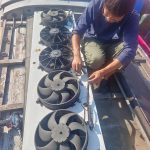 Bus air conditioning system maintenance
 Bus Air Conditioning Unit
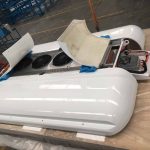 Air Conditioner for Bus Conversion
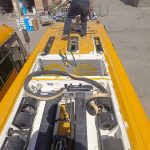 Bus Air Conditioner Repair Manual
 Van Air Conditioner
 Diagnosis and Systematic Solutions for Bus AC Leaking Water
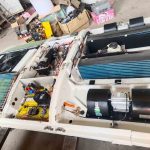 Introduction to Ac For Bus
 Bus Air Conditioner Troubleshooting: A Systematic Diagnosis from Climate Adaptability to Passenger Experience
 Electric Bus Ac System – Comprehensive Technological Revolution Towards a “Dual-Carbon” Goal