
Bus air conditioner not turning on is a typical highly integrated fault. Its symptom is singular (no response), but it may involve multiple layers of causes, ranging from power supply safety to vehicle network communication.
The case study “Root Cause Tracing of Bus HVAC System Wake-up Failure,” included in the 2025 *Commercial Vehicle Electrical and Electronic Architecture (EEA) Fault Diagnosis Yearbook*, points out that in addition to traditional power supply failures, “soft non-startup” caused by control logic conflicts and abnormal network sleep states has climbed to over 40%.
Zhou Mingyu, a specially appointed expert and senior engineer at the Bus Branch of the China Society of Automotive Engineers, emphasizes: “Faced with ‘fuse not turning on,’ repair personnel must shift their thinking from ‘checking fuses’ to ‘interpreting the status and intent of the entire vehicle’s electronic system.’ This is a systemic dialogue, not just single-component repair.”
This article constructs a systematic diagnostic path from four key dimensions, each following the logic of “problem status – problem analysis – problem conclusion,” providing independently executable modular solutions.
Dimension One: Bus air conditioner not turning on – Basic power supply and safety circuit interruption – Absolute lack of energy
Current situation: The air conditioning control panel has no display (black screen), all buttons are unresponsive, and there is no sound of relays engaging or the fan/compressor starting. Other electrical systems in the vehicle may be functioning normally.
Problem analysis: This dimension is the first step in diagnosis, focusing on whether the air conditioning system can receive the most basic electrical energy. There are three possible causes: 1) Main power path interruption: The main fuse dedicated to the air conditioning system (possibly located near the chassis power assembly or roof-mounted air conditioning unit) has blown, or the power supply is completely interrupted due to a fault in the battery main switch or power relay. 2) Safety protection triggering: Some models have an independent air conditioning system overload protector or fusible wire, which blows after an overcurrent, and may require manual reset. 3) Complete failure of grounding: The grounding terminal of the air conditioning control unit or main power supply is severely corroded or detached, causing the circuit to fail to form a loop. The “Root Cause Analysis” study emphasizes that for new energy buses, the SOC (State of Charge) of the low-voltage battery also needs to be checked. Severe depletion can prevent the entire vehicle’s low-voltage system from activating.
Conclusion: To resolve basic power supply faults, it is essential to perform integrity voltage measurements from power source to load and from positive to negative terminals. Requirements: Using a multimeter, first measure the voltage to ground across the air conditioning main fuse to confirm power supply; then measure the voltage at the constant power terminal and the wake-up power terminal controlled by the ignition switch of the air conditioning control unit (ECU); finally, a ground loop voltage drop test must be performed to ensure reliable grounding. This is the physical basis for eliminating all subsequent possibilities.
Dimension Two: Bus air conditioner not turning on – Human-machine interaction and control signal failure – “Commands” cannot be issued
Current situation: The control panel may have a backlight display, but it cannot enter operating mode; button operations are ineffective, or codes such as “communication failure” or “system error” are displayed. The system seems to be “powered but unresponsive.”
Analysis: This level of fault indicates that the main power supply is in place, but the logical conditions required for startup are not met. The core causes include:
1) Internal faults in the control panel or main controller (ECU): Damage to the control unit MCU (microcontroller unit) or a faulty internal power module prevents it from completing self-tests and initialization despite receiving power.
2) Missing critical enable signals: The air conditioning ECU requires “ACC” or “ON” signals from the ignition switch, “wake-up” messages from the vehicle network, or “operation permission” signals from safety circuits (such as door closing signals or remote start permission). If any signal is missing, the ECU will remain dormant.
3) Communication interruption between the control panel and the ECU: Open circuits or short circuits in the local bus (such as the LIN bus) or hardwired communication lines connecting the control panel and the air conditioning ECU prevent the transmission of user commands.
Conclusion: Diagnosing interaction and control faults hinges on verifying all necessary enable signals and communication links. Conclusion Requirements: Use a diagnostic tool to attempt communication with the air conditioning ECU. If communication is successful, read the fault codes and data stream, and check the “wake-up source” status. If communication fails, use a circuit diagram and an oscilloscope or multimeter to check if the voltage of the critical enable signal line appears at the correct time, and check if the waveform or resistance of the local communication line is normal.
Dimension Three: Bus air conditioner not turning on – Thermal Management System Pre-Check Protection and Interlock – The System’s “Self-Protection”
Problem Status: After the system powers on and performs a self-test, the panel displays normally, but it immediately fails after pressing the start button, or displays specific protective fault codes (such as “high pressure fault,” “water temperature too high,” “system pressure abnormal”).
Problem Analysis: This is the core safety logic of modern intelligent air conditioning systems. The air conditioning ECU performs a series of system status self-checks before or at the moment of startup. If any condition is not met, startup is prohibited:
1) Refrigerant pressure interlock: The system pressure sensor detects that the static pressure is severely too low (leakage) or too high (blockage, abnormal temperature), triggering protection.
2) Lack of feedback from key components: The ECU did not receive initialization feedback signals from core components such as the compressor and electronic expansion valve.
3) Related system limitations: For example, the engine ECU may send a start-prevention command to the air conditioning ECU via the CAN bus due to overheating of the engine coolant or the battery management system (BMS) may send a start-prevention command due to overheating or insufficient power. Engineer Zhou Mingyu pointed out: “At this time, ‘not starting’ is not a fault, but a correct decision made by the system to avoid catastrophic damage. The repair goal is to find the true cause of the protection trigger.”
Conclusion: To break through the system protection interlock, precise troubleshooting based on fault codes or data streams is necessary, rather than forcibly bypassing the protection. The conclusion requires: Prioritize reading and understanding the fault codes of the bus air conditioning system and related systems (engine, BMS). Focus on checking the refrigerant static pressure, compressor preset resistance, and initial values of relevant temperature sensors. The repair direction is to remove the conditions triggering the protection, not to disable the protection function itself.
Dimension Four: Bus air conditioner not turning on – Abnormal vehicle network and software status – a system “collective unconsciousness”
Problem Status: The fault occurs intermittently, or suddenly after certain operations (such as updating vehicle software or replacing other parts). It may be accompanied by malfunctions in other vehicle systems (such as the instrument panel and lights).
Problem Analysis: This is the most complex and hidden level; the root cause lies in software and system integration
. 1) Network sleep/wake-up disorder: Errors in the vehicle network management logic cause the air conditioning ECU to fail to wake up correctly when needed, or to fall into a “sleep-wake” deadlock.
2) Software incompatibility or conflict: The air conditioning control software version is incompatible with other vehicle modules, or the software data configuration is incorrect (such as VIN code verification failure).
3) Gateway filtering or routing errors: The gateway module incorrectly filters or blocks network packets sent to the air conditioning ECU, causing it to become a “network island.”
Problem Conclusion: Addressing network and software faults requires vehicle-level diagnostics and professional update/programming tools. Conclusion Requirements: Use a diagnostic tool capable of accessing all vehicle networks to check the network topology status and the dormant current of each control unit; verify that the software part number of the air conditioning ECU matches the vehicle configuration list; after confirming no hardware faults, attempt to perform a standardized software refresh or data reset on the air conditioning ECU, strictly following the manufacturer’s technical procedures.
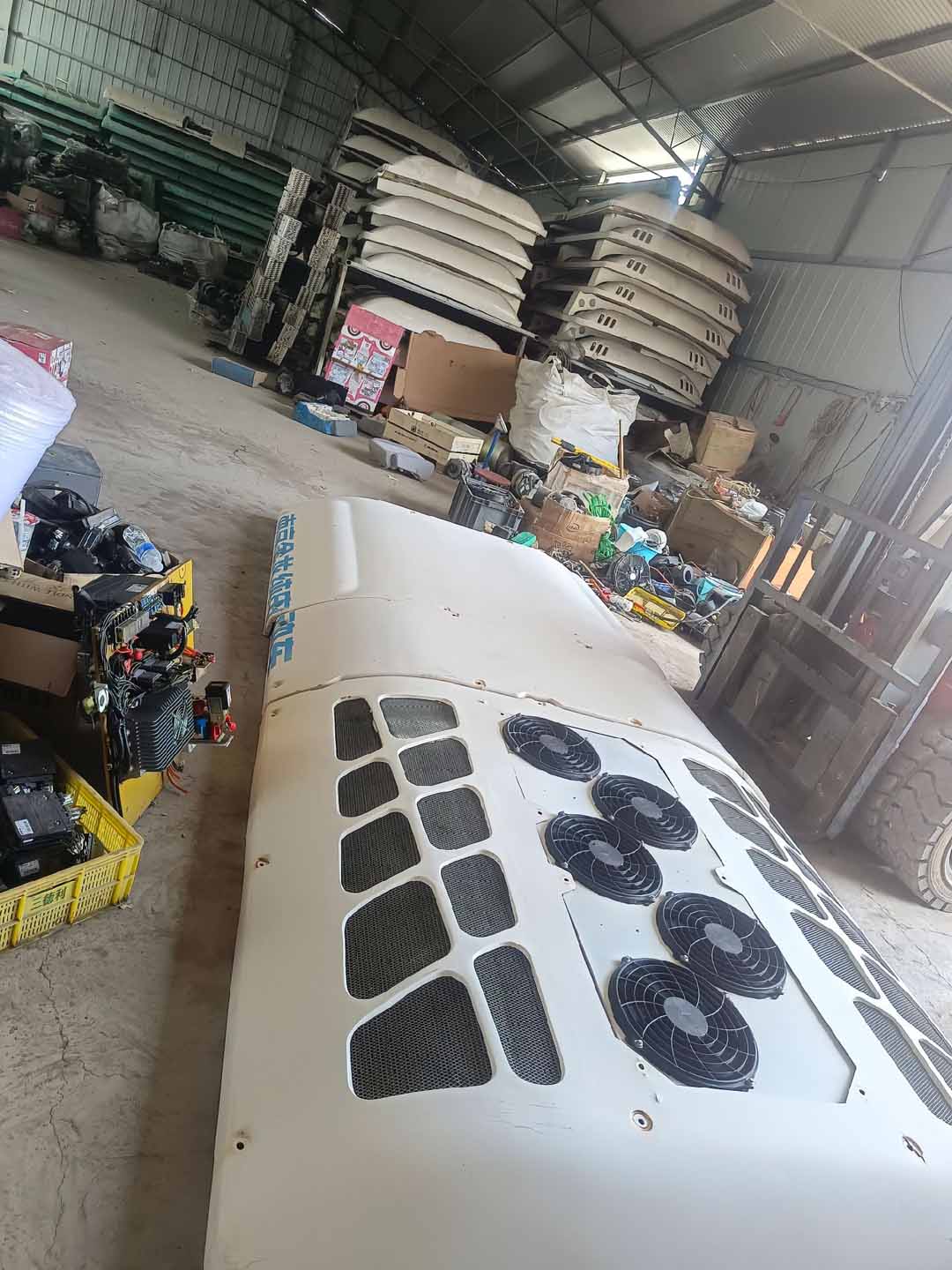
Bus Air Conditioner Not Turning On Summary
The inability of a bus air conditioner to turn on is a deep diagnostic journey, from basic energy flow (power supply) to control command flow (interaction and signals), then to system safety logic (pre-checks and interlocks), and finally to the vehicle’s information flow (network and software). It requires repair personnel to establish a clear systemic thinking framework: first, ensure the absolute reliability of the physical power supply; second, verify the complete path of the control logic; third, interpret the true intention of the system’s self-protection; and finally, examine the integration status at the level of the vehicle’s electronic architecture. This process is essentially a precise “dialogue” with the complex automotive electronic system through technical means to find the “switch” that has been quietly turned off.
Related posts:
 Diagnosis and Repair of Bus AC Electrical Issues
 Bus AC fan not working
 Bus AC not cooling – A Comprehensive Troubleshooting Guide
 Bus Air Conditioner is used for buses and medium-sized commercial vehicles
 Bus Air Conditioner Troubleshooting: A Systematic Diagnosis from Climate Adaptability to Passenger Experience
 Acc Bus Air Conditioning
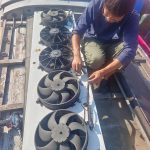 Bus air conditioning system maintenance
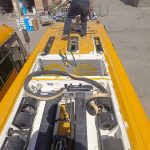 Bus Air Conditioner Repair Manual
 Bus Air Conditioning Unit
 Diagnosis and Systematic Solutions for Bus AC Leaking Water
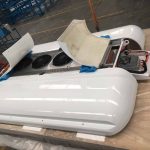 Air Conditioner for Bus Conversion
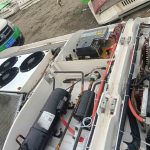 How to fix bus AC
 Introduction to Ac For Bus
 Rv Ac Unit Repair