
a
Content Block 1: Bus Air Conditioner Overheating – Reduced Cooling System Efficiency – The Direct Root Cause of Overheating Problems
Problem Status: As the main heat dissipation component, the condenser, due to surface contamination (catkins, insect remains, dust), fan malfunction (not rotating, insufficient speed), or poor ventilation in its installation location, prevents the high-temperature, high-pressure gaseous refrigerant from fully condensing and liquefying. This causes a rapid increase in pressure and temperature on the high-pressure side of the system, triggering overheat protection or directly leading to cooling failure.
Problem Analysis: Reduced heat dissipation efficiency is the most common cause of overheating. A clogged condenser is like “wearing a thick coat” on the system, severely hindering heat exchange. Electric fan malfunctions may stem from motor damage, relay failure, or problems with the speed control module. In a parallel dual-fan system, if one fanstops, the cooling capacity drops by nearly half. Senior thermal management system engineer Li Ming pointed out: “In idling or low-speed congested areas, due to insufficient wind resistance, the fan becomes the primary means of heat dissipation. If the fan malfunctions at this time, the high-pressure level may reach the red line within 5 minutes, forcing the compressor to shut down.”
Conclusion: The first and most effective measure to address overheating is to thoroughly inspect and clean the condenser tank assembly and systematically test the cooling fan’s full operating conditions (low speed, high speed, relay engagement) to ensure basic heat dissipation capacity is restored.
Content Block Two: Bus Air Conditioner Overheating – Internal Abnormalities in the Refrigeration Cycle—Intrinsic Causes of Increased Heat Load
Current Problem: Improper refrigerant filling (too much or too little), air or moisture mixed into the system, internal wear or reduced efficiency of the compressor—these factors can disrupt the normal heat exchange process from within, additionally increasing the system’s heat load and exacerbating overheating.
Analysis: Too much refrigerant leads to abnormally high condensing pressure, increasing the heat dissipation burden; too little refrigerant causes premature vaporization of the refrigerant in the evaporator, resulting in excessively high return gas superheat and a surge in compressor discharge temperature. Non-condensable gases such as air can form a film in the condenser, severely hindering heat dissipation. Compressor wear reduces its efficiency and generates additional heat. The “2025 Bus Air Conditioning System Maintenance Technology White Paper” clearly states: “When diagnosing overheating, it is essential to first use a pressure gauge set to measure the system’s static and dynamic pressures, combined with observation through a sight glass, to rule out issues with refrigerant quantity and purity.”
Conclusion: After confirming normal external heat dissipation, it is necessary to immediately determine the internal state of the refrigeration cycle through pressure testing, temperature measurement, and operating current analysis. Accurate vacuuming and quantitative refrigerant charging are prerequisites for resolving this type of overheating problem.
Content Block Three: Bus Air Conditioner Overheating – Electrical Control and Sensor Failures – The Malfunctioning “Temperature Manager”
Current Problem: Distorted signals from temperature sensors (such as ambient temperature sensors and condenser temperature sensors), or logical errors in the Bus air conditioner control unit (ECU), cause the cooling fan to start too late and operate at a conservative speed, failing to proactively and promptly intervene in heat dissipation based on the actual heat load.
Problem Analysis: Modern bus air conditioning cooling fans are generally controlled by the ECU using PWM (Pulse Width Modulation) based on signals from multiple sensors. If the condenser temperature sensor signal drifts and consistently reports a low temperature, the ECU may misjudge that cooling is adequate and delay fan startup or operate it only at low speed. Furthermore, poor contact in related fuses, relays, or the fan control module can also prevent the fan from receiving full power. Zhang Hua, an expert from the China Society of Automotive Engineers, emphasizes: “For electronically controlled fans, it is essential to use a diagnostic tool to read the data stream, compare the sensor temperature readings with the actual measured values, and observe whether the ECU’s control duty cycle command for the fan matches the current heat load. This is crucial for distinguishing between ‘true insufficient cooling’ and ‘false management failure.'”
Conclusion: For vehicles equipped with intelligent temperature control systems, overheating troubleshooting must delve into the electrical control layer. Data stream analysis verifies the accuracy of the sensors and the rationality of the ECU control logic, repairing erroneous “command systems” to allow cooling capacity to be released as needed.
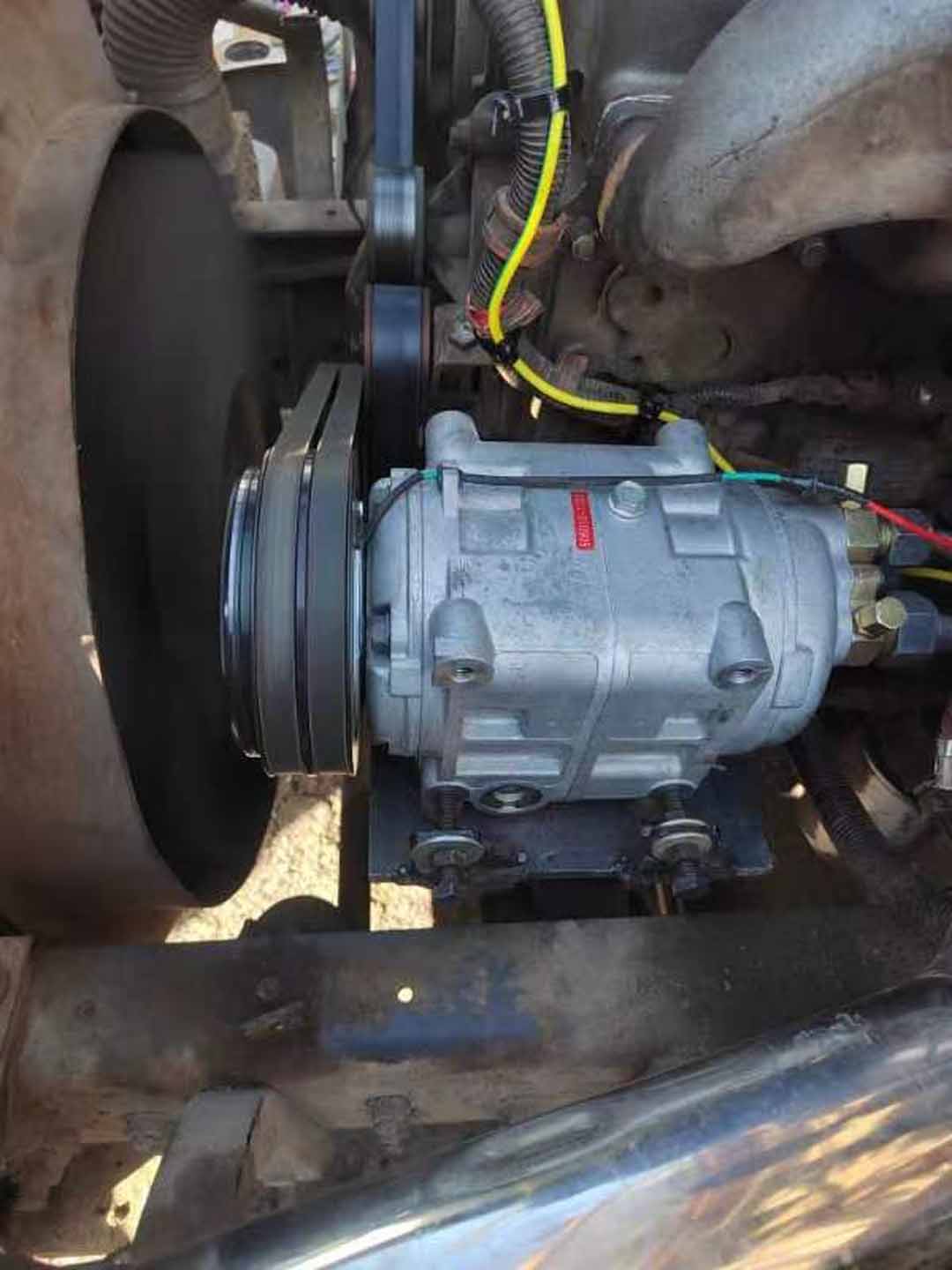
Content Block 4: Bus Air Conditioner Overheating – Engine Compartment Thermal Environment and Operating Load – The Unignorable External “Oven” Effect
Problem Status: Vehicles operate with the air conditioning on for extended periods, in extreme high-temperature environments or at high altitudes. The overall temperature of the engine compartment is extremely high. The air conditioning pipes and condenser are encased in this high-temperature environment, resulting in severely degraded heat dissipation conditions, leading to system performance degradation and overheat protection.
Problem Analysis: This problem represents a systemic thermal management challenge. At idle, the engine cooling fan speed is low, resulting in zero airflow impact. The air conditioning condenser and engine radiator compete for limited air in the engine compartment, easily leading to heat accumulation. In high-temperature, high-altitude areas, the air density is low, further reducing heat dissipation efficiency. This necessitates a higher design redundancy in the vehicle’s thermal management system. The National Bus Engineering Technology Research Center stated in a related test report: “At ambient temperatures above 40℃ and with the vehicle idling, this is the extreme operating condition for the bus air conditioning thermal management system. Over 70% of models will experience varying degrees of high-pressure protection, highlighting the design advantages and disadvantages.”
Problem Conclusion: Overheating under specific harsh conditions may have reached the original vehicle system design limits. In addition to optimizing the aforementioned hardware and controls, solutions could include supplementary measures such as installing a condenser spray cooling system, improving cabin ventilation layout, and advising operators to avoid prolonged idling of the air conditioning under extreme temperatures.
Content Block Five: Bus Air Conditioner Overheating – Systemic Maintenance Deficiency – Long-Term Accumulation and Outbreak of Overheating Problems
Current Problem: The lack of regular preventative cleaning, inspection, and performance testing leads to the long-term accumulation of problems such as minor radiator blockage, minor fan bearing sticking, and slow refrigerant leakage, ultimately erupting into an overheating failure on a high-temperature day.
Problem Analysis: Air conditioning overheating is rarely a sudden, single failure; it is more often the result of long-term poor maintenance. The condenser needs professional cleaning at least twice a year, the fan bearings need lubrication, and system pressure should be checked at seasonal changes. Ignoring these “small problems” forces the system to operate under higher loads for extended periods, accelerating the aging of components. The China Academy of Transportation Sciences (CATS) recommends: “A data-driven preventative maintenance system should be established. Routine spring maintenance must include air conditioning system pressure testing and condenser cleanliness checks to cope with peak summer loads.”
Conclusion: To fundamentally solve overheating problems, a shift from emergency repairs to preventative maintenance is necessary. Establishing and implementing a regular maintenance system centered on cleaning and inspection is the most economical and effective long-term strategy for maintaining system thermal balance and preventing overheating failures.
Summary of Bus Air Conditioner Overheating: Bus air conditioning overheating is a typical multi-dimensional, systemic failure. Scientific diagnosis should follow the principle of working from the outside in and from hardware to software: First, ensure the effectiveness of external heat dissipation (cleaning and fans); second, confirm the health of the internal cooling cycle (pressure and refrigerant); third, check the electrical control logic (sensors and ECU); and finally, consider the specific operating environment and long-term maintenance level. Only through this structured, multi-dimensional analysis can the root cause of overheating be accurately located, avoiding piecemeal solutions, achieving fundamental system thermal balance restoration and long-term stable operation, ensuring that buses provide a continuous and reliable cool environment even in the hot summer.
Related posts:
 Bus Air Conditioner is used for buses and medium-sized commercial vehicles
 Acc Bus Air Conditioning
 Introduction to Ac For Bus
 Bus AC not blowing air
 Bus air conditioner not turning on: In-depth diagnostic logic
 Bus AC fan not working
 Bus Air Conditioner Troubleshooting: A Systematic Diagnosis from Climate Adaptability to Passenger Experience
 Bus air conditioner diagnostic
 Bus Air Conditioner Repair Manual
 Bus Con Supplier reminds all bus owners to clean BUS AC