
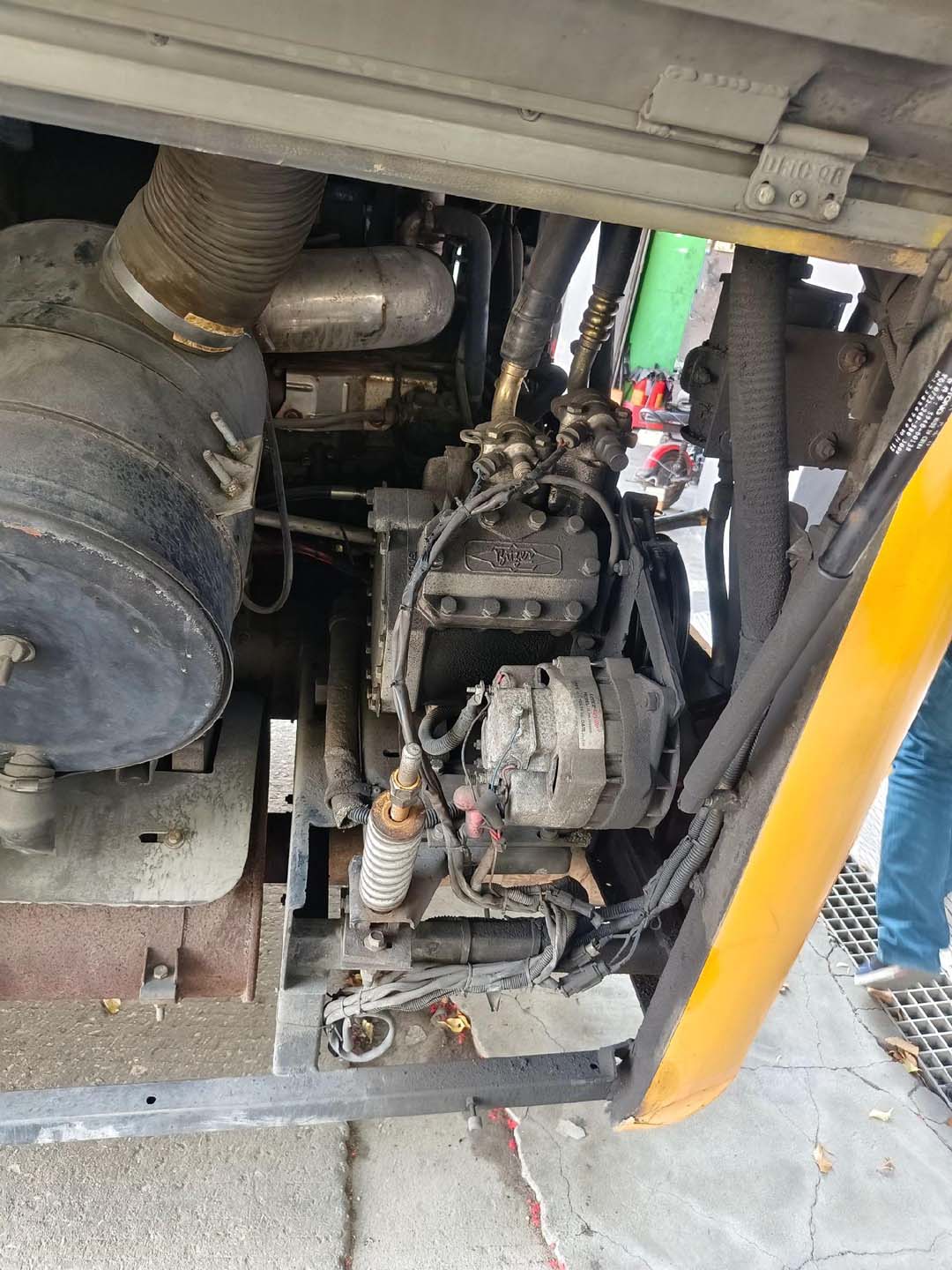
Bus Air Conditioner Repair Solution Development Guidelines
Developing scientific bus air conditioning repair solutions requires moving beyond the passive “repair after failure” approach and establishing a predictive maintenance system based on multi-dimensional external factors and internal management data. This article integrates industry trends and authoritative viewpoints, constructing a “problem-evidence-conclusion” logical framework for repair solution development from four dimensions: climate adaptability, operational load, passenger ecology, and technical management.
Dimension 1: Bus Air Conditioner Repair – Maintenance Cycle and Key Adjustments Based on Local Climate Characteristics
Problem: How do extreme weather conditions (sustained high temperatures, high humidity, dust storms, coastal salt spray) in different climate zones differentially affect the wear rate and failure modes of various components in the air conditioning system?
Evidence: According to the “2025 China Transportation Industry Climate Adaptability Development Report,” the incidence of condenser corrosion and mold growth in bus air conditioning systems in the hot and humid southern regions of my country is 3.2 times higher than in the dry northern regions; while in the dusty northwest regions, the rate of condenser and evaporator clogging is 40% faster than in the eastern coastal areas. At the “2025 Urban Public Transportation Equipment Support Summit,” Chen Ming, a specially appointed expert and senior engineer of the China Society of Automotive Engineers, emphasized: “A ‘one-size-fits-all’ approach to maintenance intervals is the main cause of both resource waste and potential malfunctions. Maintenance plans must incorporate a ‘climate correction factor.’ For example, in high-temperature and high-humidity areas, monthly mandatory inspections should include anti-oxidation checks on electrical connectors and unclogging of drainage pipes; in dusty areas, the cleaning frequency of filters and radiators needs to be doubled.”
Conclusion: Climate is the primary variable in maintenance plans. The inspection and replacement cycles of key components must be dynamically adjusted according to the climate zone of the operating route, and special inspections targeting specific climate hazards (such as anti-corrosion treatment and anti-mold cleaning) should be included as standard operating procedures.
Dimension 2: Bus Air Conditioner Repair – Matching the Intensity and Pace of Public Transportation Operation Plans
Question: How do operational parameters such as route mileage, operating mode (high-speed intercity vs. urban congestion), and frequency determine the workload and mechanical fatigue accumulation of the air conditioning system?
Evidence: According to discussions at a meeting related to the Ministry of Transport’s 2025 “Guidelines for Evaluating the Operational Efficiency of Public Buses and Trolleybuses,” vehicles operating on long-distance inter-regional routes have air conditioning compressors that run for approximately 2.5 times longer annually than those on urban micro-circulation routes, resulting in a significantly shorter wear cycle for the former’s compressors. Simultaneously, vehicles operating on chronically congested routes experience a substantial increase in the failure rate of their electronic fans and clutches due to prolonged high load and low heat dissipation. Zhang Tao, the maintenance manager of a large public transport group, summarized from practical experience: “We have categorized vehicles according to their ‘operational intensity index,’ and bus air conditioning systems on high-intensity routes have fully implemented a strategy of ‘shortening cycles and deepening maintenance,’ which has reduced the rate of sudden failures by 35%.”
Conclusion: Maintenance plans must be linked to operational plans. A maintenance trigger mechanism based on “actual operating time and conditions” should be established based on vehicle GPS data and schedules, implementing more intensive compressor status monitoring, lubricant changes, and cooling system efficiency tests for vehicles on high-load routes.
Dimension 3: Bus Air Conditioner Repair – Key Maintenance Points Responding to Passenger Travel Habits and the Dynamics of the Carriage Microenvironment
Question: What ongoing impact do passenger behaviors such as tidal flow, high occupancy rates, and frequent door opening and closing have on air conditioning filters, airflow organization, and temperature sensor accuracy?
Evidence: Data from the “2025 White Paper on Urban Public Transportation Passenger Behavior” shows that during morning rush hour, the average occupancy rate of carriages reaches 120% of the rated capacity, leading to a surge in the load on the air conditioning return air filter, requiring a 50% reduction in its replacement cycle compared to the manufacturer’s recommendations. Furthermore, temperature fluctuations caused by frequent door opening and closing accelerate the operation frequency of temperature control system components. Professor Li from Tsinghua University, an expert in human thermal comfort research, points out: “Passengers are the largest dynamic heat and pollution source. Maintenance plans cannot only focus on the core cold source; they must equally emphasize the ‘air quality management end’ (filters, duct cleaning) and the ‘sensing feedback end’ (sensor calibration, airflow balance at the vents), otherwise it will lead to low system efficiency and passenger complaints.”
Conclusion: Maintenance plans must cover the “side effects” caused by passenger behavior. The replacement of high-definition and high-efficiency filters, regular disinfection and cleaning of the entire vehicle’s air duct system, calibration of temperature sensors in each area, and adjustment of airflow at the vents should be listed as mandatory maintenance items with fixed cycles to maintain stable air quality and passenger comfort.
Dimension 4: Bus Air Conditioner Repair – Comfort Standards and Refined Maintenance for Diverse Customer Groups
Question: How can maintenance and adjustments be made to ensure that the air conditioning system meets the differentiated sensitivity needs of different passenger groups, such as the elderly, children, and those with weakened immune systems, regarding temperature, wind speed, and airflow direction?
Evidence: In 2025, many transportation departments, in promoting the construction of “age-friendly buses,” listed zoned temperature control, low-speed wind mode, and anti-direct-blow functions as standard features in new vehicles or key aspects of retrofitting existing vehicles. Authoritative surveys show that approximately 38% of elderly passengers are sensitive to strong cold air. In an interview, Wang Hao, Technical Director of a well-known domestic bus manufacturer, stated, “The maintenance of modern bus air conditioning systems has evolved from restoring basic ‘cooling and heating’ functions to calibrating advanced ‘comfort’ functions. Technicians must master the diagnostic and debugging skills of zone control systems, stepper motor dampers, and sensorless airflow modes; this is a hallmark of a modern maintenance system.”
Conclusion: The ultimate goal of maintenance solutions is to ensure differentiated comfort. Solutions should include testing and debugging processes for multi-temperature zone control functions, the accuracy of damper actuator actions, and the uniformity of airflow at each outlet, ensuring that hardware performance accurately reflects the original intention of human-centered design.
Comprehensive Maintenance Solution Integration and Execution Path: A scientific maintenance solution is a dynamic management document, and its formulation and execution should follow this path:
Data Fusion Input: Integrate local historical and forecast meteorological data, vehicle operation big data (mileage, speed, idling time), passenger flow statistics, and complaint work order analysis to form the data foundation for maintenance decisions.
Tiered and Categorized Management: Based on climate zone, operational intensity index, vehicle model, and vehicle age, the fleet is divided into different maintenance levels, with differentiated maintenance packages, intervals, and inspection standards.
Technical Capability Upgrades: Regularly train maintenance personnel in new skills, particularly in electronic control system diagnostics, comfort function calibration, and data analysis, enabling them to transition from “mechanics” to “system health managers.”
Closed-Loop Feedback Optimization: Establish a maintenance effectiveness tracking mechanism, incorporating post-repair fault recurrence rates, energy consumption changes, and passenger satisfaction feedback into the evaluation, continuously iterating and optimizing maintenance strategies and standards.
In summary, developing a bus air conditioning maintenance plan is a systematic project, the core of which is shifting from “responding to faults” to “managing system health.” Only by deeply integrating the external environment, operational pressures, human factors, and technical management can an economical, efficient, and passenger-centric high-quality maintenance system be built.
Related posts:
 Acc Bus Air Conditioning
 Bus Cond System Comprehensive Analysis Report
 Bus Air Conditioner is used for buses and medium-sized commercial vehicles
 Bus Air Conditioner Troubleshooting: A Systematic Diagnosis from Climate Adaptability to Passenger Experience
 Rv Ac Unit Repair
 IC Bus Air Conditioning: A Comprehensive Evolution of Integration, Intelligence, and Sustainability
 Bus Air Conditioning Unit
 Air Conditioner for Bus Conversion