
Bus Air Conditioner Solenoid Valve Fault Diagnosis and Analysis
The bus air conditioner solenoid valve, as a core component for refrigerant circulation control, is of paramount importance in terms of reliability.
The stable operation of Bus Air Conditioner directly affects passenger comfort and driving safety. This article, combining the latest industry research and practice, dissects bus air conditioning solenoid valve faults from multiple dimensions, aiming to provide a systematic diagnostic approach and solutions.
According to the article “Special Research on Commercial Vehicle Thermal Management System” in the 5th issue of *China Transportation Equipment Technology* in 2025, approximately 30% of current bus air conditioning faults are directly or indirectly related to abnormal solenoid valve operation, highlighting its critical role as a systemic node.
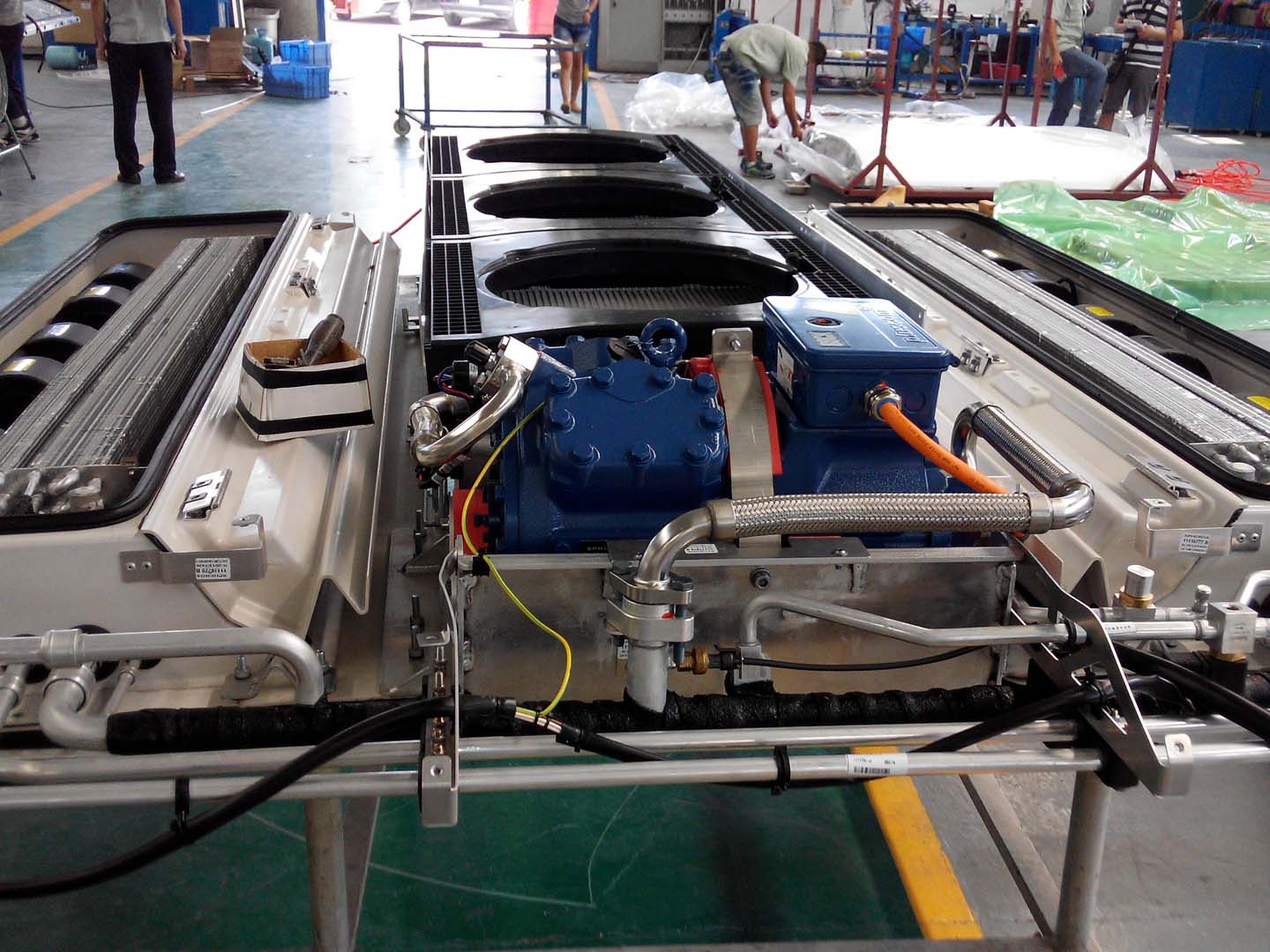
Sub-problem 1: Bus Air Conditioner Solenoid Valve – As a Core Component for Refrigerant Circulation Control
Current Situation:
The solenoid valve is subjected to long-term vibration, alternating hot and cold environments, and refrigerant scouring. Mechanical wear between the valve core and body, jamming due to impurity accumulation, and internal leakage due to aging of seals (such as O-rings) are common mechanical faults. This directly manifests as abnormal refrigerant flow, resulting in a significant decrease in air conditioning cooling efficiency or complete failure.
Problem Analysis:
Professor Wang Jianguo of the School of Vehicle Engineering at Tsinghua University pointed out at the 2025 Annual Meeting of the Chinese Society of Refrigeration: “The mechanical lifespan of the solenoid valve is the foundation of system reliability. Currently, some operating vehicles have irregular maintenance cycles, leading to decreased filter efficiency and excessive impurities in the system, accelerating the wear of the valve core and seat. Furthermore, the compatibility and durability of sealing materials in environments containing new environmentally friendly refrigerants (such as R513A) face new challenges.”
Conclusion:
Prevention of mechanical failures is more important than maintenance. The conclusion is that a system of regular inspections and preventative replacements based on mileage and operating time must be established, focusing on checking valve body cleanliness, valve core movement flexibility, and seal integrity, and using certified original equipment manufacturer (OEM) seals compatible with refrigerants and lubricants.
Sub-problem Two: As a core component for refrigerant circulation control, the reliability of the Bus air conditioner solenoid valve is crucial. – Hydraulic Shock and Flow Imbalance
Problem Status:
The drastic changes in refrigerant flow and pressure during the opening and closing of the solenoid valve generate hydraulic shock, which can lead to fatigue damage to internal valve components over time. Furthermore, carbon buildup or partial blockage at the valve port reduces flow capacity, causing abnormal high and low pressures and insufficient cooling capacity.
Problem Analysis:
This problem is closely related to the overall operating conditions of the system. Li Fang, a senior engineer in the thermal management department of a leading domestic bus manufacturer, analyzed in an internal technical memo in 2025: “The frequent start-stop conditions of buses place higher demands on the response speed and differential pressure resistance of solenoid valves. Our data shows that under high temperature and high load conditions, if the solenoid valve at the expansion valve front end responds late, it is highly likely to trigger compressor liquid slugging. Flow imbalance is often a chain reaction caused by system contamination or improper refrigerant charge.”
Problem Conclusion:
Hydraulic failures in solenoid valves are not isolated incidents. The conclusion is that it needs to be examined within the entire air conditioning circuit. Correlation diagnosis should be performed by monitoring parameters such as system operating pressure and compressor operating current to ensure refrigerant cleanliness and accurate charge levels. Solenoid valves with shock-resistant designs should be selected.
Sub-problem 3: Bus air conditioner solenoid valve – Electrical control dimension – Coil failure and signal inaccuracy
Current situation:
The solenoid valve coil may experience short circuits, open circuits, or magnetic attenuation due to overvoltage, overheating (often due to installation location near heat sources or continuous energization), or insulation aging, causing the valve to fail to open and close properly. Abnormal control signals (usually PWM or switching signals) due to poor wiring contact or controller malfunction can also cause the solenoid valve to malfunction.
Problem analysis:
Electrical faults are characterized by their suddenness and insidious nature. The article “Strategies for Improving the Reliability of Electronic Control Components in Commercial Vehicles,” published in the 2025 Issue 3 of *Automotive Electrical*, emphasizes that: “The operating environment temperature of the solenoid valve coil is the primary electrical factor affecting its lifespan. In actual tests, the peak temperature at certain installation locations in the engine compartment far exceeds the component’s nominal value. Simultaneously, voltage transients in the vehicle’s power system (such as sudden load unloading) are a significant cause of coil burnout.”
Conclusion:
Electrical protection needs to be systematic. The conclusion is to optimize the solenoid valve’s layout in the vehicle to improve heat dissipation, add overvoltage protection and freewheeling current dissipation modules to its drive circuit, and utilize an on-board diagnostic (OBD) system to routinely monitor the resistance and signal duty cycle of the control circuit.
Sub-problem 4: Bus air conditioner solenoid valve – Usage scenarios and environmental dimensions – Comprehensive stress and matching adaptation
Current situation:
Bus models are diverse, and operating scenarios are complex, including frequent starts and stops in urban public transport, continuous vibrations in long-distance passenger transport, extreme cold in northern regions, and humid, hot, and salty corrosion in southern regions. Solenoid valves may fail due to insufficient environmental adaptability (such as grease solidification at low temperatures or terminal corrosion under high humidity) or incompatibility with specific systems (such as variable frequency compressors or multi-evaporator circuits).
Problem Analysis: At the 2025 Asian Bus Week Forum, authoritative industry consultant Zhang Wei stated, “Fault analysis must return to the scenario. We are promoting the establishment of a ‘scenario-stress-fault’ mapping model based on big data. For example, the salt spray corrosion requirements for the protection level (IP rating) of valve body shells and connectors on coastal routes are far higher than those on inland trunk logistics buses.”
Conclusion:
The selection and maintenance of solenoid valves must be “tailored to local conditions.” The conclusion is that the specific operating environment of the vehicle must be fully considered during the selection phase, choosing products with corresponding protection levels, temperature ratings, and compatible control logic. On the maintenance side, differentiated maintenance standards should be established for different regions, such as strengthening corrosion inspections in coastal areas and focusing on low-temperature start-up characteristics in cold regions.
Summary of Bus Air Conditioner Solenoid Valve
The failure of bus air conditioning solenoid valves is a multi-dimensional and intertwined systemic problem. Mechanical engineering forms the foundation, hydraulics the performance, electrical engineering the control, and the application scenario the ultimate external test. Reliability throughout the entire lifecycle requires coordinated assurance across all stages, from design selection and vehicle integration to preventative maintenance and data-driven precision diagnostics. As Professor Wang Jianguo summarized, “Future maintenance will not only be about replacing parts, but also about system health management and predictive intervention based on multi-dimensional data fusion.” This demands a comprehensive technological upgrade and conceptual innovation from components and systems to the maintenance ecosystem.
Related posts:
 Bus Air Conditioner is used for buses and medium-sized commercial vehicles
 Bus AC Expansion Valve Repair Technology Analysis
 Acc Bus Air Conditioning
 Introduction to Ac For Bus
 Diagnosis and Systematic Solutions for Bus AC Leaking Water
 Air Conditioner for Bus Conversion
 Bus air conditioner not turning on: In-depth diagnostic logic
 Bus Air Conditioner Troubleshooting: A Systematic Diagnosis from Climate Adaptability to Passenger Experience
 Bus Air Conditioning Unit
 Bus AC Low Pressure Fault Diagnosis and Repair
 Bus air conditioner diagnostic
 Bus Air Conditioning Sensor Classification and Repair
 IC Bus Air Conditioning: A Comprehensive Evolution of Integration, Intelligence, and Sustainability
 Diagnosis and Repair of Bus AC Electrical Issues
 Bus Air Conditioner Repair Manual
 Bus AC not blowing air
 Bus AC evaporator coil Fault Diagnosis
 Bus Con Supplier reminds all bus owners to clean BUS AC