
Comprehensive Guide to Bus Air Conditioning Systems
In the domain of passenger comfort and operational efficacy in public transport, climate control systems are indispensable. Bus Heating, Ventilation, and Air Conditioning (HVAC) systems are fundamental in maintaining a agreeable and secure cabin environment, irrespective of external climatic conditions. This guide provides a thorough exploration of bus HVAC systems, detailing their core operations, their critical importance across diverse bus applications, and the principal categories of systems available in the marketplace.
Understanding Bus HVAC Systems
A bus HVAC system is a sophisticated integrated assembly engineered to regulate temperature, control humidity, and manage air quality within the passenger compartment. Its primary functions encompass cooling and dehumidifying the interior air during warm weather, as well as providing heating and windscreen demisting in colder conditions. The cooling process operates on a refrigeration cycle, reliant upon several key components working in precise concert.
Core Components:
-
Compressor: Often described as the heart of the system, the compressor’s role is to pressurise and circulate the refrigerant. It is typically driven by the vehicle’s engine via a belt or, in the case of electric or hybrid buses, by a dedicated electric motor. By compressing the gaseous refrigerant, it significantly increases both its temperature and pressure, thereby initiating the heat transfer cycle.
-
Condenser: This component acts as a heat exchanger, usually mounted on the vehicle’s roof or rear section. Here, the hot, highly pressurised refrigerant gas releases its accumulated thermal energy to the outside atmosphere, a process frequently assisted by one or more electric cooling fans. As it dissipates heat, the refrigerant condenses into a high-pressure liquid state.
-
Expansion Device: This critical element, which may be a thermal expansion valve (TXV) or a fixed orifice tube, creates a deliberate pressure drop. It meticulously regulates the flow of the high-pressure liquid refrigerant into the evaporator, controlling the rate at which it can expand and vaporise.
-
Evaporator: Positioned within the cabin’s air distribution unit, the evaporator is where the actual cooling occurs. The low-pressure liquid refrigerant expands, vaporises, and absorbs substantial heat from the cabin air passed over its fins and tubes by a blower fan. This process simultaneously cools and dehumidifies the air before it is circulated back into the passenger space.
-
Controls and Regulation: This category encompasses the system’s electronic control unit (ECU), various sensors (for ambient and cabin temperature, pressure, etc.), switches, and actuators. These elements work together to automatically regulate system operation, maintain desired set-points, optimise efficiency, and provide safety monitoring—such as preventing evaporator freeze-up.
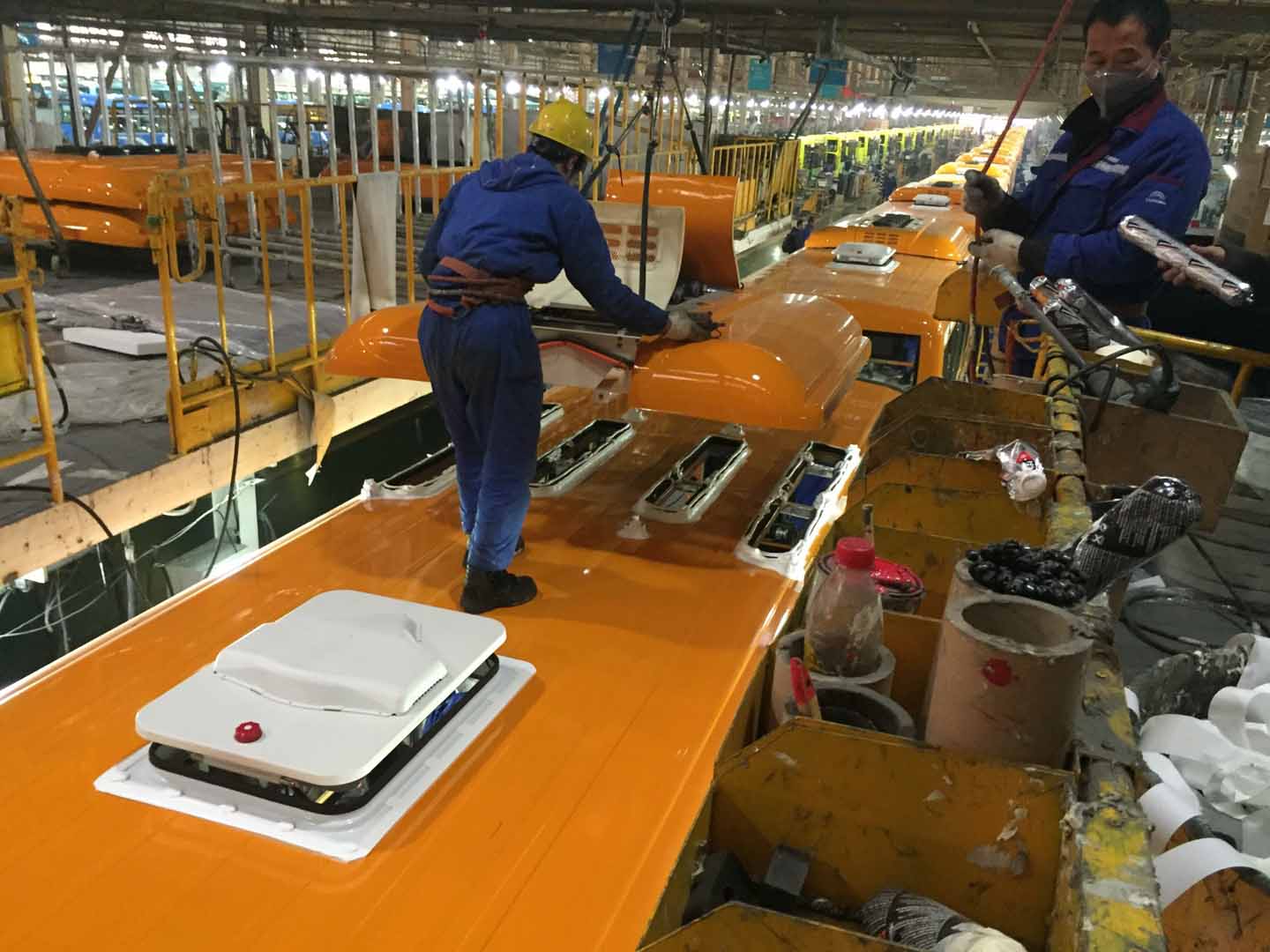
Significance Across Different Bus Types
The specific requirements for an HVAC system can vary considerably depending on the bus’s application:
-
Public Service Vehicles & Coaches: These demand robust, reliable systems capable of rapid pull-down from high temperatures and maintaining comfort during frequent door openings, with a strong emphasis on passenger comfort and low operational noise.
-
School Buses: Safety and reliability are paramount. Systems must meet specific performance standards for cooling rates and often feature simplified, robust controls for driver ease.
-
Electric Buses: HVAC systems are major consumers of the vehicle’s traction battery. Therefore, extreme efficiency and, increasingly, heat pump technology (providing both cooling and efficient heating) are critical to preserving operational range.
Types of Bus HVAC Systems
Broadly, systems can be categorised by their integration method:
-
OEM (Original Equipment) Systems: Designed and installed during the bus’s manufacture, these are fully integrated with the vehicle’s chassis, electrical system, and body design, typically offering optimal performance, reliability, and aesthetic cohesion.
-
Aftermarket / Retrofit Systems: These are installed post-manufacture, either as replacements for existing units or as new installations in vehicles not originally equipped with air conditioning. They offer flexibility but require careful selection to ensure compatibility with the vehicle’s power supply and structural capacity.
In conclusion, a modern bus HVAC system is a complex yet vital technological assembly. Understanding its key components, their interplay, and the specific demands of different transport applications forms the essential foundation for selecting, maintaining, and appreciating these systems that are central to the quality of modern public transport.