
Bus Air Conditioning Compressor Replacement Technical Guide
Bus air conditioning compressor replacement is a typical, systematic, and in-depth repair operation, far more complex than simply “replacing the old with the new.”
The article “Research on Secondary Damage and Systemic Replacement Process of Commercial Vehicle Air Conditioning Compressor Failure,” published in the 10th issue of the *China Transportation Equipment Technology Journal* in 2025, clearly points out that “more than 60% of early secondary compressor failures are attributed to neglecting the systemic contamination and damage to related components caused by the original fault during the initial replacement.” This article will focus on compressor replacement as the core process, combining authoritative technical specifications to break down the operation into five key modules: replacement decision-making, standardized operation, cleaning of related systems, electrical and break-in debugging, and systemic verification, ensuring the thoroughness and long-term effectiveness of the repair.
Content Section 1: Bus Air Conditioning Compressor Replacement—Accurate Judgment and Root Cause Tracing of Compressor Failure
Current Problem: A common misjudgment in repair is that “the compressor is the heart; if it’s not cooling, replace it first.” This leads to many faults that could be resolved by repairing related components being misdiagnosed, resulting in costly and ineffective replacements. Statistics show that about 30% of the replaced compressors were still mechanically functional, with the root cause of the failure lying in electrical control or system blockage.
Problem Analysis: Compressor replacement must be based on solid evidence. Clear indicators of mechanical failure include: severe internal compressor noise (damaged bearings or scroll plates), significant oil leakage at the shaft seal, and the compressor shaft failing to rotate after the clutch engages (internal jamming). Simultaneously, pressure testing and disassembly inspection are essential to trace the root cause of the failure—is it due to insufficient lubrication leading to wear? Or system contamination (such as metal shavings or acidic substances) or high-pressure overheating caused by poor condensation? Zhang Hua, a specially appointed expert of the China Society of Automotive Engineers, emphasizes: “Before replacing a compressor, two questions must be answered like a forensic examination: First, is it truly ‘dead’? Second, what is the ’cause of death’? Ignoring the second question is tantamount to putting a new compressor into a ‘toxic’ environment.”
Conclusion: Compressor replacement is a significant decision based on diagnostic findings. The replacement procedure should only be initiated after confirming an irreparable mechanical failure and identifying the systemic root cause of the failure.
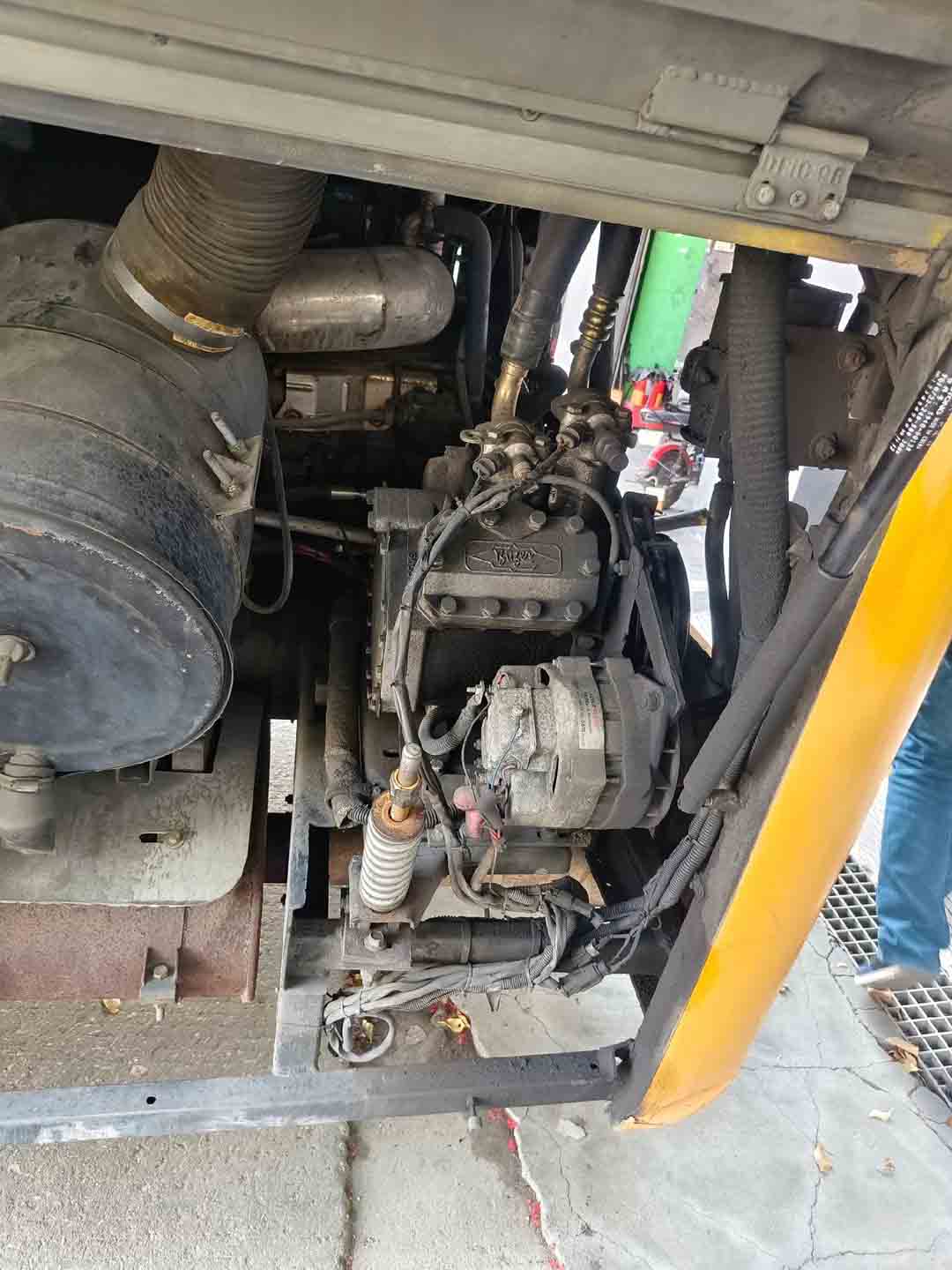
Content Section 2: Bus Air Conditioning Compressor Replacement – Compressor Disassembly, Matching, and Installation Process
Current Problem: Improper disassembly and installation processes, such as rough handling damaging piping, mismatch between old and new compressor models/displacements, improper bolt torque, and incorrect type and quantity of refrigerant oil, directly lead to early compressor failure or poor system performance.
Problem Analysis: Standardized operation is fundamental to ensuring replacement quality.
First, the new compressor must be identical to the original in model and displacement, or follow the manufacturer’s approved upgrade parts list.
Second, a torque wrench must be used during installation to tighten bolts and pipe joints to the standard torque and sequence to prevent leaks or stress damage. Most importantly, the refrigerant oil (POE or PAG oil) must be completely drained of the old oil and added strictly according to the new compressor’s requirements (type and volume), with strict control over the exposure time to air.
The Highway Research Institute of the Ministry of Transport clearly stipulates in its “2025 Bus Maintenance Technical Specifications” that: “The allowable error range for compressor installation torque is ±10% of the calibrated value, and the error for refrigerant oil filling volume shall not exceed ±5ml.”
Conclusion: Physical replacement of a compressor is a precision assembly task. It is essential to follow the manufacturer’s technical data, achieving zero errors in four dimensions: model matching, cleaning and protection, standardized torque, and accurate oil quantity.
Content Section 3: Bus Air Conditioning Compressor Replacement—A “Contamination Cleaning Battle” to Address Original Faults
Current Situation: Most compressors that fail due to wear or burnout release metal shavings, acidic substances, and carbides into the system. These contaminants circulate with the refrigerant, clogging the capillary tube/expansion valve and damaging the new compressor. However, this “cleaning” step is often omitted in hasty repairs.
Analysis: This is the most crucial yet most easily overlooked step in ensuring a successful replacement. When replacing a compressor, the following components must be replaced or thoroughly cleaned simultaneously:
1) Liquid receiver drier: Its internal desiccant and filter screen are saturated with contaminants and must be replaced.
2) Expansion valve or throttling tube: The tiny orifices are easily clogged; replacement is recommended.
3) Pipeline flushing: Use a specialized cleaning agent and nitrogen to flush both high-pressure and low-pressure pipelines in both directions until no impurities are discharged.
Industry-leading technical director Li Ming points out: “Replacing a compressor without replacing the dryer and cleaning the pipelines is like injecting ‘contaminated blood’ into a new ‘heart,’ resulting in a lifespan reduction rate exceeding 70%.”
Conclusion: Cleaning the associated systems is an integral and mandatory part of compressor replacement. The purpose is to provide a clean and safe internal circulation environment for the new core components, preventing cascading failures.
Content Section 4: Bus Air Conditioning Compressor Replacement – Soft Start and System Activation
Problem Status: Immediately running a new compressor at full load after installation, neglecting electrical checks (such as clutch clearance and coil resistance) and necessary break-in procedures, may lead to significant starting shock, clutch slippage, or coil burnout.
Problem Analysis: Before adding refrigerant, the air gap and coil resistance of the new compressor’s clutch should be checked to ensure they are within the standard range. After evacuating the system and adding a measured amount of refrigerant, the initial start should employ a “soft start” procedure: with the engine idling, intermittently engage the compressor (e.g., run for 30 seconds, then stop for 60 seconds), repeating this cycle several times. This helps the lubricating oil distribute evenly within the system, forming an initial oil film and preventing dry friction. Simultaneously, monitor the system’s high and low pressure data using a diagnostic tool to observe whether it quickly enters the normal range.
Problem Conclusion: Electrical matching checks and a standardized initial break-in procedure are crucial for the transition of a new compressor from static installation to dynamic stable operation, effectively reducing early failure rates and extending its service life.
Content Section 5: Bus Air Conditioning Compressor Replacement – Performance Testing and Long-Term Monitoring
Current Problem: After replacement, the acceptance criterion is solely “cool air outlets,” lacking quantitative performance testing. This fails to ensure the overall system performance returns to design levels and establishes long-term monitoring points.
Problem Analysis: Maintenance acceptance must be data-driven. Under standard test conditions (ambient temperature >30°C, engine speed 1500rpm, maximum internal circulation airflow), measure and record: 1) Central air outlet temperature (typically within the 8-12°C range); 2) High and low pressure values after system stabilization; 3) Compressor operating current. These data should be compared with standard values in the maintenance manual and entered into the vehicle maintenance file. The “2025 Road Passenger Vehicle Maintenance White Paper” recommends: “After compressor replacement, customers should be advised to conduct 1-2 operational status checks within the following month, focusing on pressure stability and any abnormal noises, to achieve dynamic tracking.”
Conclusion: Systematic performance verification is the final closed loop of the replacement project. This is not only a “health check report” of the repair quality, but also establishes a traceable “performance baseline” for the long-term healthy operation of the system, achieving a transformation from “fault repair” to “health management.”
In summary
replacing a bus air conditioning compressor is essentially an “organ transplant” of a core component of Bus Air Conditioning. Its success depends not only on the quality of the “new organ” (compressor) and the precision of the “surgery” (disassembly and assembly), but also on the thorough cleaning of the “host body” (air conditioning piping system), post-operative “immune matching” (electrical and break-in processes), and comprehensive “recovery checks” (performance verification). Only by adhering to a systems engineering mindset and strictly implementing comprehensive process specifications can the goal of a single replacement for long-term stability be achieved, ensuring the efficient, stable, and durable operation of the bus air conditioning system.
Related posts:
 Bus AC compressor problems- Analysis and Countermeasures
 Bus air conditioner filter replacement
 Bus Air Conditioner is used for buses and medium-sized commercial vehicles
 Introduction to Ac For Bus
 Acc Bus Air Conditioning
 Bus air conditioning system repair
 Bus air conditioner not turning on: In-depth diagnostic logic
 Bus AC not cooling – A Comprehensive Troubleshooting Guide
 Analysis and Solutions to Bus AC Pressure Problems
 Bus Con Supplier reminds all bus owners to clean BUS AC
 IC Bus Air Conditioning: A Comprehensive Evolution of Integration, Intelligence, and Sustainability
 Bus air conditioning system maintenance