
Bus Air Conditioning Sensor Classification and Repair
Bus air conditioning sensors are the “sensory nerves” of modern bus air conditioning systems. Their accuracy and reliability directly determine the decision-making quality of the air conditioning control unit (ECU) and the overall system efficiency.
The 2025 issue of the journal *Intelligent Thermal Management System for Commercial Vehicles*, Volume 3, titled “Research on the Failure Impact and Fault-Tolerant Control of Multi-Sensor Fusion Technology in Bus Air Conditioning,” points out that “sensor failure or signal drift is a hidden root cause of abnormal Bus air conditioning function, reduced energy efficiency, and premature component damage, and the cascading failures it causes account for more than 55% of all electronic control system failures.” This article breaks down sensor repair into five dimensions: type and function analysis, accurate diagnosis, standardized replacement and installation, system calibration and verification, and preventive maintenance, constructing a complete technical closed loop from identification and diagnosis to repair and verification.
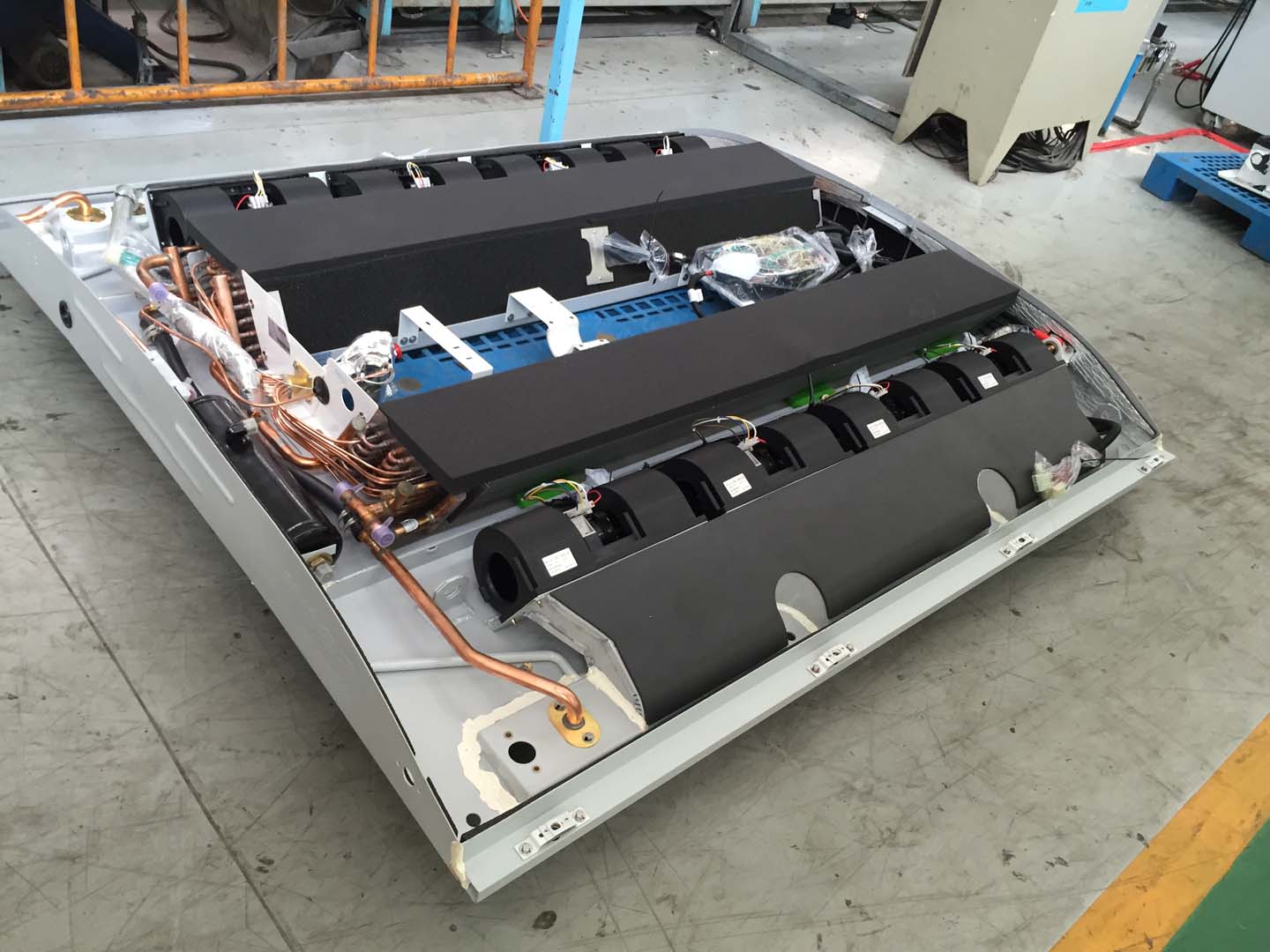
Content Block 1: Bus Air Conditioning Sensor – Types and Core Functions Analysis
Current Problem:
Maintenance personnel often lack a clear understanding of the diverse sensor types and functions within the air conditioning system. This leads to an inability to accurately correlate specific fault symptoms (such as no cooling, uncontrolled airflow, frequent protective shutdowns) with potentially malfunctioning sensors, resulting in incorrect diagnostic approaches.
Problem Analysis: Bus air conditioning systems primarily rely on the following types of sensors:
1) Temperature Sensors: These include ambient temperature sensors, evaporator temperature sensors, interior temperature sensors (if automatic), and vent temperature sensors. The evaporator temperature sensor is crucial, used for anti-icing control and temperature regulation.
2) Pressure Sensors/Switches: High and low pressure switches provide protection signals, while pressure sensors (mostly three-wire systems) provide continuous and precise pressure values to the ECU for intelligent control.
3) Sunlight and Humidity Sensors: Used in fully automatic air conditioning systems to implement sunlight compensation and anti-fogging logic.
Li Ming, a senior engineer at the Busclima Bus Engineering Technology Research Center, pointed out: “A ‘sensor-function-symptom’ correspondence diagram must be established. For example, evaporator temperature sensor signal drift can cause frequent compressor start-stops or continuous shutdowns; while pressure sensor failure may cause the system to lose its ability to predict extreme pressures, directly triggering protection.”
Conclusion: Before repair, it is essential to clearly understand the installation location, measurement object, and role in the control logic of various sensors. This is the first step in transforming complex system symptoms into specific detection targets and is the foundation for accurate repair.
Content Block Two: Accurate Diagnosis of Bus Air Conditioning Sensors—Distinguishing Between “True Faults” and “False Signals”
Current Problem:
When the ECU reports sensor-related fault codes or the system exhibits abnormal behavior, repair personnel often directly replace the sensor, ignoring problems with the wiring, connectors, or the ECU itself, resulting in incorrect replacements and recurring faults.
Analysis: Scientific diagnosis requires following the signal chain path:
1) Reading Fault Codes and Data Streams: Use a diagnostic tool to read fault codes and access the relevant data stream interface to observe the real-time readings of suspected sensors. Compare the sensor readings with known normal values or actual values measured by other means (such as infrared thermometers or mechanical pressure gauges). Significantly unreasonable data (e.g., evaporator temperature displaying -20℃ or 80℃) is a primary clue.
2) Circuit Testing (Power Supply, Signal, Ground): Disconnect the sensor plug and measure its power supply voltage (usually a 5V reference voltage) and ground circuit to ensure they are normal. Then measure the signal line voltage or resistance (e.g., a thermistor) to see if it matches the sensor’s characteristic curve (refer to the repair manual).
3) Circuit and Interference Check: Check for wear, short circuits, and open circuits in the wiring harness, and whether the signal line is subject to electromagnetic interference from nearby high-current lines.
The aforementioned research article from 2025 emphasizes: “Over 40% of so-called ‘sensor failures’ are actually caused by poor wiring connections or abnormal reference voltages. The core of diagnosis is the ‘triangular verification method’: data stream value, multimeter measured value, and actual physical value—at least two of these three must corroborate each other.”
Conclusion: Sensor diagnosis must strictly distinguish between “component failure,” “wiring connection failure,” and “external interference.” Data flow analysis combined with multimeter circuit testing is the only reliable method to pinpoint the fault layer, avoiding blind replacement.
Content Block 3: Bus Air Conditioning Sensor Standard Replacement and Installation – Ensuring Accurate Sensing of the “New Nerve”
Current Problem:
When replacing sensors, neglecting the installation location, orientation, contact medium, and sealing requirements leads to the new sensor failing to accurately sense physical quantities, or introducing leaks, with performance even inferior to the old part.
Problem Analysis: Different sensors have specific installation requirements:
1) Temperature Sensor: Ensure its sensing head is in tight, sufficient contact with the measuring surface (such as evaporator fins or piping), and use the original manufacturer’s specified thermal grease (if required) to ensure efficient heat transfer. The insertion depth and position of the evaporator temperature sensor are strictly regulated.
2) Pressure Sensor/Switch: Tighten with the specified torque during installation to avoid damaging the threads or causing refrigerant leaks. Apply special refrigeration oil to the sealing ring before installation.
3) Ambient/Sunlight Sensor: Must be installed in a designated unobstructed area inside the windshield and the angle calibrated.
The “2025 Bus Air Conditioning System Maintenance Technical Specifications” mandates that “after replacing any temperature sensor, the contact thermal resistance between the sensor and its mounting point must be measured, or the data stream must be compared with an independent temperature measuring device to ensure the temperature difference is within ±1℃ for the installation to be considered合格 (qualified).”
Conclusion: Sensor replacement is not a simple “plug-and-play” operation. It must be carried out strictly according to the torque, position, contact method, and sealing requirements in the maintenance manual to ensure that the physical installation conditions support accurate signal acquisition.
Content Block Four: System Calibration, Matching, and Functional Verification of Bus Air Conditioning Sensors – Completing the Control Closed Loop
Current Problem:
After replacing the sensor, the necessary system learning, adaptation, or functional verification was not performed, resulting in the control logic not being updated, the system still operating inconsistently, or latent, undetected cascading faults.
Analysis: After the new sensor is connected, system integration is required:
1) ECU Learning and Adaptation: After replacing key sensors (such as the in-vehicle temperature sensor) in some intelligent air conditioning systems, matching must be performed using a specific diagnostic tool program or the system must run a complete adaptive learning cycle to calibrate the control baseline.
2) Functional Verification: Clear historical fault codes and run the air conditioning system under various operating conditions (e.g., idle, medium speed, maximum cooling/heating mode). Monitor the data stream in real time using a diagnostic tool to confirm that sensor reading changes are reasonable, responses are sensitive, and related fault codes no longer appear. Simultaneously verify whether the actual air conditioning performance (outlet air temperature, fan speed adjustment, etc.) has returned to normal.
Busclima’s invited electronic control system expert, Zhang Hua, emphasized: “Replacing the sensor with a new one is only a ‘hardware reset.’ The real repair is complete with a ‘software reset’ and ‘control loop verification.’ It is essential to observe whether the actuators (compressor, dampers, fan) move accurately and coordinated under the new sensor input, achieving the expected performance indicators.”
Conclusion: The final step in sensor repair is to reintegrate it into the control loop. Through necessary matching procedures and comprehensive functional and data flow testing, verify that the entire system has restored its optimal decision-making and control capabilities under the new sensor input.
Content Block 5: Bus Air Conditioning Sensor – Preventative Maintenance and Systemic Considerations
Current Problem:
Sensors are often considered maintenance-free, leading to neglect of issues such as deteriorating operating environments (e.g., dust accumulation on evaporator sensors) and aging wiring harnesses, resulting in premature failure or decreased accuracy.
Problem Analysis: Extending sensor lifespan and reliability requires systematic maintenance:
1) Cleaning and Protection: When regularly inspecting and cleaning the evaporator and condenser surfaces, take care not to damage or contaminate nearby temperature sensors. Ensure the ambient temperature and sunlight sensor probe surfaces are clean and unobstructed.
2) Wiring Harness and Connector Inspection: During regular maintenance, check the securing and insulation of the sensor wiring harness, ensuring connectors are securely plugged in and waterproof sleeves are intact to prevent signal problems caused by vibration, oxidation, or water ingress.
3) System Health Correlation: Severe refrigerant leaks or metal shavings and acidic substances from severe compressor wear can contaminate or corrode pressure sensor diaphragms or temperature sensors. Therefore, sensor failure may also be a “harbinger” of deeper system problems.
Conclusion: Incorporate sensors into the regular maintenance system. Maintaining a clean working environment and reliable electrical connections is crucial, recognizing that the sensor’s condition reflects the overall health of the system. Preventative maintenance and system correlation analysis can significantly reduce sudden sensor failures and proactively identify potential systemic risks.
Bus Air Conditioning Sensor Summary
Bus air conditioning sensor repair is a complex system engineering project integrating electronics, data diagnostics, and precision assembly. It must follow a complete technical path: “Functional Understanding → Precise Diagnosis → Standardized Replacement → Calibration and Verification → Preventative Maintenance.” Successful repair means not only replacing an electronic component but also restoring the system’s “perception-decision” link, ensuring the control logic can respond optimally based on accurate information input. Only by adhering to this data-driven, system-centric repair philosophy can we effectively solve the complex and hidden soft-skill faults of modern bus air conditioning systems, ensuring the stable, efficient, and long-term operation of their intelligent functions.
Related posts:
 Diagnosis and Repair of Bus AC Electrical Issues
 Bus Air Conditioner is used for buses and medium-sized commercial vehicles
 Bus air conditioner diagnostic
 Bus AC clutch not engaging
 Bus AC Expansion Valve Repair Technology Analysis
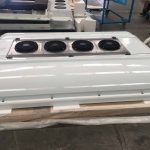 Acc Bus Air Conditioning
 Bus air conditioner not turning on: In-depth diagnostic logic
 Bus AC not blowing air
 Bus air conditioning system repair
 Bus AC fan not working
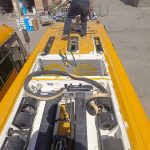 Bus Air Conditioner Repair Manual
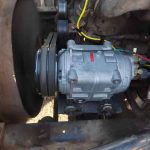 Bus air conditioner overheating
 Diagnostic Logic for Bus AC Pressure Problems
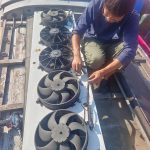 Bus air conditioning system maintenance
 Introduction to Ac For Bus
 How to fix bus AC
 Bus Air Conditioner Troubleshooting: A Systematic Diagnosis from Climate Adaptability to Passenger Experience
 Bus Air Conditioner Repair Solution Development Guidelines