Bus Aircon System focuses on energy efficiency optimization, passenger comfort, and overall vehicle performance improvement, with specific designs tailored to the unique characteristics of electric buses. The core design concepts are summarized below:
1. Airflow Organization Design: Downward Supply, Upward Return Mode
Bus Aircon System employs a “downward supply, upward return” airflow organization method. Cool air is delivered from under the seats, while hot air is exhausted from the roof.
This design is based on the natural law of cold air sinking, achieving rapid cooling with a lower airflow volume, while avoiding the discomfort of “hot head, cold feet” caused by traditional upward airflow, thus improving passenger comfort.
In addition, this design also helps cool the chassis battery pack, assisting in thermal management.
2. Energy Efficiency and Environmental Protection Prioritized
Electric Compressor Technology: A scroll-type electric compressor is used, directly driven by the power battery, eliminating the traditional belt drive, resulting in higher efficiency and better sealing, reducing the risk of refrigerant leakage.
For example, the Bus Aircon System of the pure electric buses used in the Olympics achieved energy savings through frequency conversion control and employed heat pump technology to achieve integrated heating and cooling.
Heat Pump System Application: A four-way reversing valve switches between cooling and heating modes, utilizing ambient heat to improve heating efficiency and reduce the energy consumption of the PTC (Power Transmitter Central) heater. Some models employ independent control of dual compressors, starting and stopping as needed to balance performance and energy consumption.
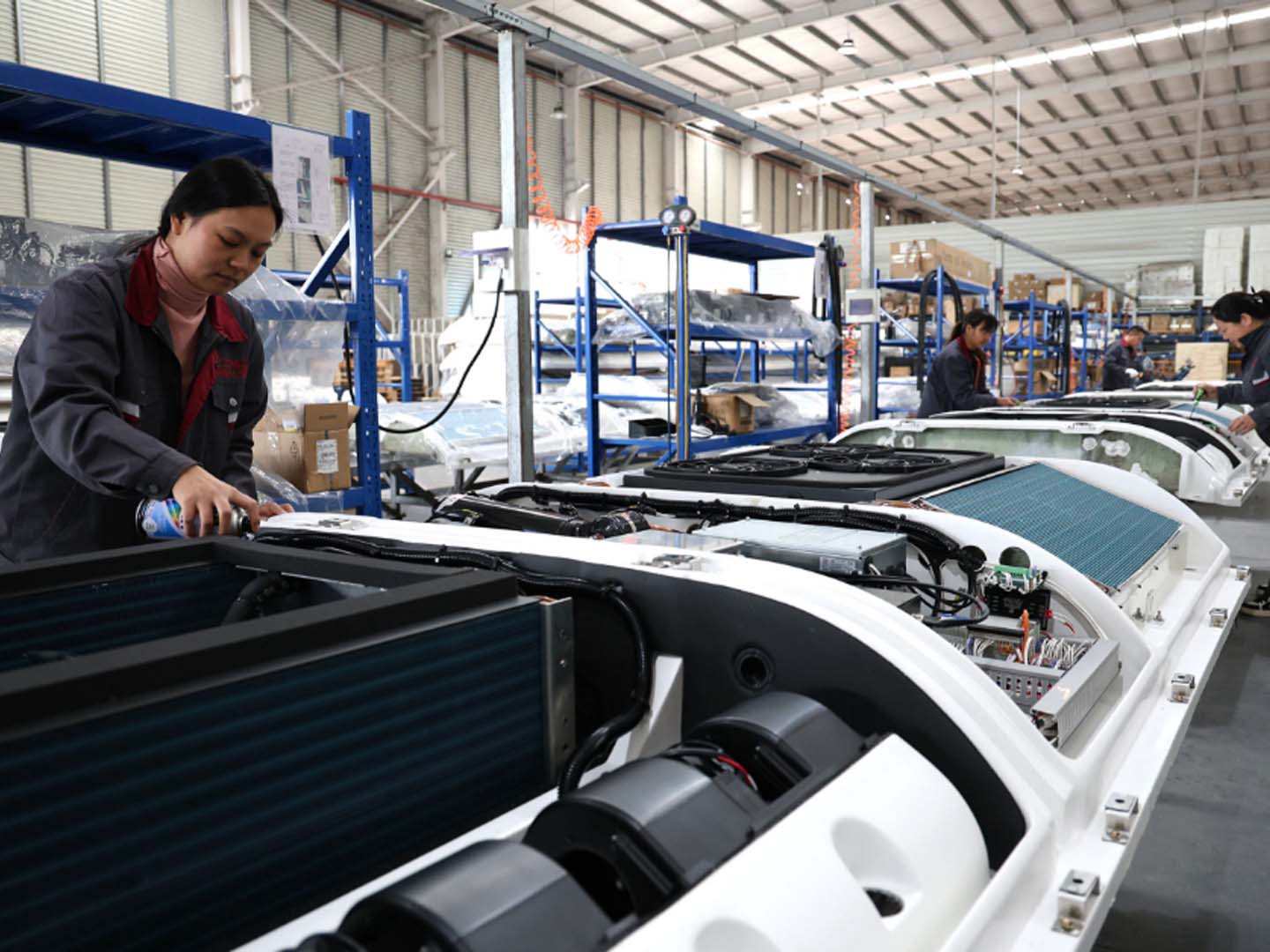
3. Integration and Lightweight Design: The air conditioning unit is integrated into the roof, saving interior space and simplifying installation. For example, a pure electric bus integrates the evaporator, condenser, and fan into a roof-mounted module, distributing airflow through ducts.
Materials and Structure Optimization:Utilizing a fully enclosed scroll compressor and welding technology reduces leakage points and lightens weight.
4. Intelligent Control:
Virtualization Technology: Sensors (temperature, sunlight intensity, etc.) monitor the interior environment in real time, and the ECU automatically adjusts airflow, temperature, and compressor operating status.
Pre-adjustment Function: Supports remote start of the air conditioning to pre-adjust the cabin temperature, enhancing passenger experience.