
Camper air conditioning repair can seriously impact travel comfort. For converted minibuses, a malfunctioning parking air conditioner can be a major issue. Unlike mass-produced RVs, converted vehicles have aftermarket parking air conditioners, which are often added systems. While the problem may be more complex, the troubleshooting approach is clear.
Camper Air Conditioning Repair – Quick Three-Step Self-Check (Please follow the order)
These are the lowest-cost and most likely solutions, especially applicable to converted vehicles.
Step 1: Check the “blood” – Power Supply System (Crucial)
Check the Battery: Open your power control panel and check the battery voltage. For a 12V system, the voltage must be higher than 12.5V to start the air conditioner properly. Low voltage is the most common cause of air conditioner “fake failures.”
Check the Switch: Confirm that the main power switch supplying power to the parking air conditioner (usually located near the battery compartment or on the control panel) is in the “ON” position.
Check the Fuse: Locate the fuse or DC circuit breaker supplying power to the Ac For Rv Camper (usually in the battery compartment, near the driver’s seat, or in the electrical cabinet added during the conversion). This is a high-risk area for malfunctions in converted vehicles! Test with a multimeter or replace the fuse with one of the same specifications. Try resetting the air switch.
Step 2: Clear the Air – Clean the Cooling System
Indoor Air Filter: Remove and clean the return air filter. Clogged filters can lead to reduced airflow, poor performance, and even icing.
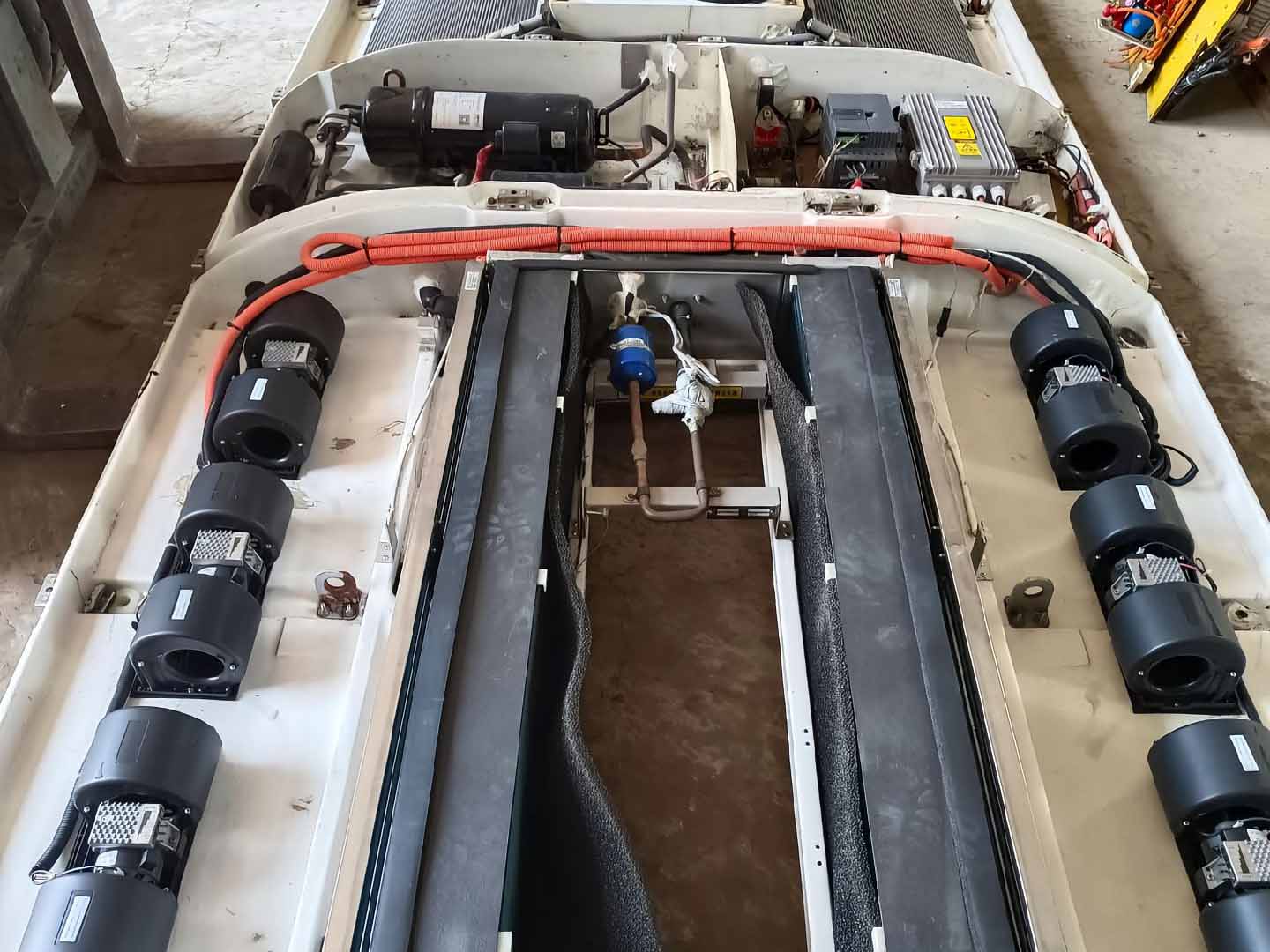
Outdoor Radiator (Critical Point): Always go to the roof and check if the radiator fins of the outdoor unit are completely blocked by dust, catkins, or fallen leaves. Modified minibuses often travel on national highways, making radiators more prone to clogging. Carefully clean with a soft brush and vacuum cleaner. Poor heat dissipation can trigger high-pressure protection, causing frequent shutdowns or no cooling. For Camper Air Conditioning Repair, visit www.busclima.com or contact busclima@kingclima.com for more technical support.
Step 3: Listen – Determine the Stage of the Fault
After turning on the unit with the remote, put your ear close to the indoor unit and listen carefully to the outdoor unit on the roof. If the outdoor unit fan and compressor are completely silent, the problem is likely with the power supply, mainboard, or compressor itself. If the outdoor unit fan is running but the compressor is not, the problem may be with the compressor, module, or sensor. If the outdoor unit is working but cooling is poor, it may be due to refrigerant leakage or compressor degradation.
Camper Air Conditioning Repair – Professional Repair Core Advice (Specifically for Minibus Conversions)
If self-checking is ineffective, you need professional help. For converted vehicles, choosing the right repairman is more important than the repair itself.
Preferred Channel: Original conversion shop or large professional RV conversion shop
Advantages: They have the best understanding of their wiring, installation specifications, and the brands of parts used. They can handle all issues from electrical circuits to installation structure, providing “system-level” repair.
Communication: Contact them directly and explain the situation. They are responsible for providing after-sales support.
Secondary Channel: Official after-sales service of the parking air conditioner brand
Operation: Check the nameplate on the roof-mounted air conditioner outdoor unit to find the brand and model. Call the official customer service number, stating that you are an RV owner, to seek the nearest authorized service point.
Advantages: Genuine parts, qualified technicians, and ability to handle repairs of core components (such as the mainboard and compressor). For more technical support, visit www.busclima.com or contact busclima@kingclima.com. Alternative Channels: Professional Commercial Vehicle/Bus Air Conditioning Repair Shops
Note: When choosing a repair shop, always ask: “Have you repaired DC inverter rooftop air conditioners for RVs?” This is completely different from traditional bus air conditioners.
Camper Air Conditioning Repair – Special Considerations for Minibus Conversions
Wiring Potential: The electrical wiring in converted vehicles is installed later. Check all terminals and connectors for looseness, oxidation, or poor connections. Pay special attention to the main power line from the battery to the air conditioner.
Installation Foundation: Check if the outdoor unit is securely fixed to the roof and if the screws are loose. Long-distance travel can cause the mounting bracket to deform, leading to abnormal noises or leaks.
High Risk of Refrigerant Leaks: Copper pipe joints connected during conversion and bends in pipes passing through the vehicle body are potential leak points. Professional technicians must use a pressure gauge to check for leaks, not just add refrigerant directly.
Record Information: During repairs, be sure to have the technician record the fault code (if any), measured voltage, system pressure, refrigerant type, and refrigerant charge amount for future maintenance.
Final Advice: Never request “refrigerant refills” without knowing the cause. You must identify and address any issues before taking action; otherwise, the problem will recur.
Hopefully, this targeted guide will help you resolve the issue efficiently! Have a smooth and cool journey ahead.
Related posts:
 Bus Air Conditioner is used for buses and medium-sized commercial vehicles
 Rv Ac Unit Repair
 Motorhome Air Conditioning Repair
 Introduction to Ac For Bus
 Air Conditioner In Camper
 Motorhome Air Conditioning and Minibus Manufacturer Matching
 Air Conditioning Repair For Rv
 Ac For Camper and Mini Bus Ac Installation Steps
 Ac Repair Rv
 Camper Air Conditioner
 Ac Unit For RV Camper: Air Conditioning System for Minibuses and Motorhomes
 Bus Con Supplier reminds all bus owners to clean BUS AC
 Fixing Rv Air Conditioner
 Ac Motorhomes
 Bus Air Conditioning Maintenance