
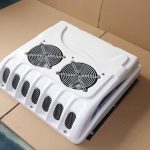
Camper Air Conditioning Unit is dedicated climate control systems designed for mobile living spaces.
Their core function is to maintain a comfortable temperature and humidity inside the vehicle cabin under varying outdoor weather conditions.
Under the constraints of household air conditioning, they must cope with continuous vibrations, limited space, and complex energy supply challenges.
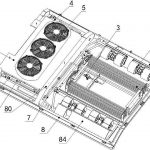
A complete unit typically integrates a compressor, condenser, evaporator, fan, and control system.
It is not only a comfort device but also crucial for protecting the vehicle cabin structure from humid heat and extending the vehicle’s lifespan.
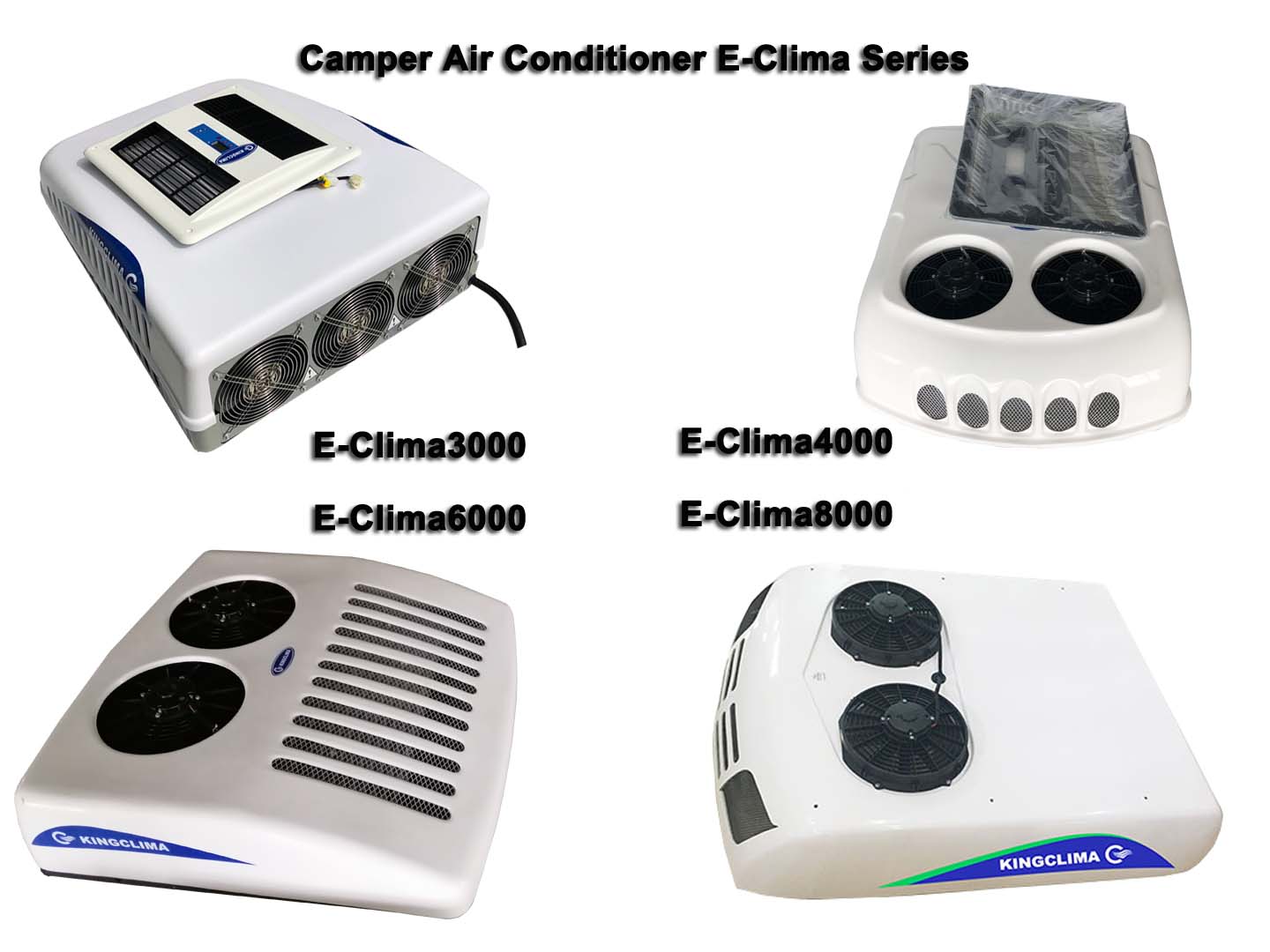
| Model | E-Clima2200 | E-Clima3000 | E-Clima4000 | E-Clima6000 | E-Clima8000 | E-Clima2600S |
| Voltage (V) |
DC12V/24V | DC12V/24V | DC12V/24V | DC12V/24V | DC12V/24V | DC12V/24V |
| Cooling Capacity (W/BTU) |
2200W//7500 | 3000W/10000BTU | 4000W/15000BTU | 6000W/20472BTU | 8000W/27300BTU | 2600W/78870BTU |
| Installation | Rooftop Mounted | Rooftop Mounted | Rooftop Mounted | Rooftop Mounted | Rooftop Mounted | Split Mounted |
| Evaporator Air Volume (m³/h) |
650 | 700 | 650 | 650 | 1500 | 450 |
| Condenser Air Volume (m³/h) |
1050 | 1400 | 1050 | 1700 | 3600 | 1400 |
| Refrigerant | R134a | R134a | R134a | R134a | R134a | R134a |
| Dimension (mm*mm*mm) |
700*580*263 | 885*710*290 | 700*580*263 | 1580*385*180/ 920*928*250 |
1260*1030*180 | 682*465*192 540*362*165 |
| Weight (KG) |
32 | 35 | 18/47 | 18/47 | 31 |
Main Types and System Composition – Camper Air Conditioning Unit
Mainstream products on the market are mainly divided into three types based on installation method.
Roof-mounted integrated units are the most common, with all components integrated into a single housing on the roof, resulting in short, straight air ducts and high efficiency.
Bottom-mounted split units conceal the compressor and outdoor unit in the undercarriage compartment, with only a lightweight evaporator and air ducts installed inside the cabin.
Camper Air Conditioner designed for flexible retrofitting, expelling hot air through windows or hatches, but their energy efficiency is relatively low.
High-end systems commonly employ inverter technology, allowing for stepless speed adjustment of the compressor and fan motor for precise temperature control.
The intelligent control system automatically manages operating modes through a sensor network to optimize energy efficiency and comfort.
Installation Considerations and Maintenance Points – Camper Air Conditioning Unit
Professional installation is the cornerstone of ensuring air conditioning performance and reliability.
The installation location must strictly adhere to the vehicle manufacturer’s specified area to ensure the roof structure is strong enough to support it.
Sealing is crucial; using genuine factory gaskets and applying sealant correctly is the only way to prevent roof leaks.
Condensate drain pipes must maintain a continuous slope and be properly directed to the outside of the vehicle to prevent moisture buildup inside the cabin.
Regular maintenance includes cleaning or replacing the return air filter quarterly and inspecting and thoroughly cleaning the condenser fins annually.
After a long period of inactivity, the system should be started gradually upon first use; check for unusual noises and confirm that cooling performance has returned to normal.
Performance Parameters and Energy Efficiency – Camper Air Conditioning Unit
The key parameters for measuring performance are cooling capacity (in BTU/H) and energy efficiency ratio (CEER).
Users need to select the appropriate cooling capacity based on vehicle size, insulation level, and the climate of the primary region of use.
Inverter technology can improve overall energy efficiency by up to 40% or more by avoiding frequent compressor start-stop cycles.
The 2025 industry energy efficiency report indicates that models equipped with DC inverter compressors and ECM motors have become the standard in the high-end market.
Off-grid power consumption is a core concern, requiring precise calculation of the matching relationship between air conditioning power consumption and battery and solar systems.
Some advanced models can be integrated into RV energy management systems to achieve intelligent power adjustment based on battery level.
Future Development Trends – Camper Air Conditioning Unit: RV air conditioning is developing towards higher energy efficiency, lower noise, and deeper system integration.
The widespread adoption of heat pump technology allows single units to provide efficient heating even in winter, expanding seasonal usage value.
The application of environmentally friendly refrigerants such as R32 or R290 is accelerating to meet increasingly stringent global environmental regulations.
Integration with vehicle-wide smart home platforms allows for activation via voice control or geofence-based preset scenarios.
Direct solar drive technology is gaining traction, aiming to allow photovoltaic panels to directly assist air conditioning operation during the day through dedicated circuitry.
Its ultimate evolution goal is to become a highly adaptive, energy-self-sufficient core unit for mobile environment control.
Related posts:
 Camper Air Conditioner
 Camper Ac
 Air Conditioning Units for RV and Minibus Air Conditioner
 Similarities between RV Camper Air Conditioner and Minibus AC
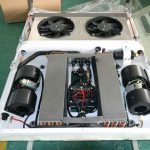 Air Conditioning Units for Campers Installation Process
 Air Conditioning for Motorhomes Manufacturing Process
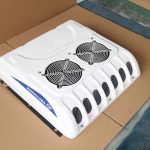 Ac For RV Camper Market Analysis Report
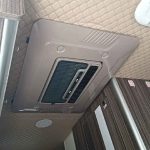 Small Air Conditioner for Camper
 12 Volt Air Conditioner For Rv
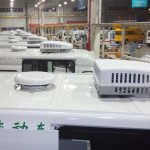 Low Profile Rv Ac
 Ac For Camper and Mini Bus Ac Installation Steps
 Air Conditioner for RV Installation Steps
 Motorhome Air Conditioning and Minibus Manufacturer Matching
 Ac Unit For RV Camper: Air Conditioning System for Minibuses and Motorhomes
 RV Air Conditioning Units to bus manufacturers in North Africa
 Installing an RV Air Conditioner on a Minibus
 Bus Air Conditioner is used for buses and medium-sized commercial vehicles
 Ac In Camper for Minibus to Motorhome Conversion