
Camper Aircon Unit
Modular Design Leads to a New Standard for Comfortable Travel
Facing the cooling challenges of large spaces, multiple zones, and complex operating conditions, traditional single air conditioning units are proving inadequate. A well-designed environmental management system composed of multiple Camper Aircon Units is not only a testament to technological progress but also a fundamental commitment to modern passenger transport services.
In the scorching summer heat, a smoothly operating, evenly cooling bus air conditioning system has gone beyond the realm of “comfort features” and become core infrastructure for ensuring passenger health and travel satisfaction.
01 Technological Evolution: The Inevitable Path from Single Camper Aircon Unit to Modular Systems
Reason: The Bottlenecks of Traditional Solutions and the Contradiction of Large-Space Temperature Control
Traditional buses, especially medium and large buses over 6 meters in length, often rely on a single roof-mounted air conditioning unit. This centralized design, when dealing with full passenger loads and intense sunlight, often leads to problems such as large temperature differences between the front and rear compartments, slow cooling speed, high energy consumption, and a high risk of single-point failure.
With the popularization of new energy buses, roof space is increasingly needed for larger battery packs, leaving less and less space for air conditioning installation. Passenger transport companies are also becoming more stringent in controlling operating costs, placing higher demands on the energy efficiency and ease of maintenance of air conditioning systems.
Process: The Concept and Technological Breakthrough of Modular Design
Modular design emerged as the key to solving these problems. According to a patent document published in 2020, advanced bus roof-mounted air conditioning units can deconstruct the entire system into multiple independent functional modules.
These modules mainly include a heat pump module responsible for compressing the refrigerant, an outdoor heat exchange module for outdoor heat exchange, and an indoor heat exchange module responsible for indoor air supply and heat exchange.
These modules can be flexibly combined and arranged like building blocks according to the vehicle length, passenger capacity, and heat load requirements. For example, for a 12-meter-long tourist bus, a combination of “two indoor heat exchange modules + one outdoor heat exchange module + one heat pump module” can be used to achieve independent temperature control in the front and rear zones.
Result: Achieving Flexible Matching, Easy Maintenance, and High Reliability
The results of modular design are revolutionary. For bus manufacturers, they don’t need to redesign the air conditioning system for every new model; they can simply use standard modules in combination, significantly shortening the R&D cycle and reducing production costs.
For operators, maintenance becomes extremely convenient. When a single module fails, it can be independently removed, repaired, or replaced, preventing the entire vehicle’s air conditioning system from “paralyzing” and maximizing vehicle uptime. This concept is becoming an industry consensus and was one of the core technologies showcased by major manufacturers at the 2026 Shanghai International Automotive Air Conditioning and Thermal Management Technology Exhibition.
02 Core Parameters and System Configuration – Camper Aircon Unit
Reason: Precisely matching the vehicle model and operating scenario is the key to success.
The selection of multiple air conditioning units is not simply a matter of quantity, but a systematic engineering process based on precise thermodynamic calculations. Core parameters determine the system’s cooling capacity, energy consumption level, and impact on the entire vehicle.
Process: In-depth Analysis of Key Performance Parameters
A typical multi-unit roof-mounted air conditioning system for a bus is defined by the following core parameters:
1. Single Module Cooling/Heating Capacity: This is the foundation of the system. Taking a roof-mounted Camper AC Unit suitable for a 9-meter pure electric bus as an example, its rated cooling capacity can reach 20-22 kilowatts (approximately 68,000-75,000 BTU/h), sufficient to meet the requirements of extremely hot regions. The cooling energy efficiency ratio (EER) reaches 2.45, demonstrating high energy conversion efficiency.
2. System Assembly and Physical Specifications: The overall size and weight of the multi-module combination are crucial. The above air conditioning unit has a single unit size of 3000*1860*225 millimeters and weighs approximately 225 kilograms. The design must ensure that the roof structure has sufficient load-bearing capacity and optimize the aerodynamic shape.
3. Noise Control and Electrical Compatibility: Buses have high requirements for passenger comfort, and the indoor unit noise needs to be controlled within an acceptable range, usually not exceeding 62 decibels at full load. For new energy buses, the air conditioning system must be perfectly compatible with the vehicle’s high-voltage electrical platform (such as 550VDC) and communicate with the vehicle control system via the CAN bus to achieve coordinated energy consumption management.
Result: Formation of Customized Configuration Solutions
Through parameter analysis, a clear configuration logic can be formed. The table below shows typical modular air conditioning configurations for different vehicle types:
| Vehicle models and scenarios | Suggested module configuration plan | Core Considerations and Advantages |
|---|---|---|
| 8-9 meter pure electric bus/tourist bus | One complete rooftop air conditioning unit (integrating heat pump and heat exchange module) | It meets basic cooling requirements, has a compact structure, and has minimal impact on the battery layout on the vehicle roof. |
| 12-meter large intercity coach/double-decker bus | 2 indoor heat exchange modules + 1 enhanced outdoor heat exchange module + 1-2 heat pump modules | It enables independent temperature control for the front and rear cabins or upper and lower decks, ensuring even airflow and handling high passenger loads. |
| 18-meter articulated bus | Three or more indoor heat exchange modules are distributed across the top of each carriage, working in conjunction with centralized or distributed heat pump modules. | This solves the problem of air distribution in extra-long train carriages, ensuring consistent temperatures in all compartments and improving comfort for all passengers. |
03 Product Advantages and Value Creation – Camper Aircon Unit
Reason: Transformation from functional components to value creation center
The value of a multi-unit air conditioning system far exceeds the simple sum of multiple independent air conditioners. Through systematic design, it addresses the pain points of traditional solutions and creates new operational value.
Process: Building multi-dimensional comprehensive advantages
Advantage 1: Extreme optimization of space utilization and energy efficiency. The modular system frees up valuable chassis space, which is crucial for electric buses requiring large-capacity batteries. The use of high-efficiency variable-frequency compressors and fans, combined with intelligent cooling capacity adaptive algorithms, results in significant energy savings.
Industry-leading solutions can even extend the vehicle’s range by more than 10%. Huawei Digital Energy experts emphasized at the TMC2025 conference that pursuing the energy efficiency goal of “ten kilometers per kilowatt-hour for all” is a crucial mission for all in-vehicle systems, including air conditioning.
Advantage 2: Improved comfort and reliability. Distributed airflow ensures no temperature dead zones in the passenger compartment, with front-to-rear temperature differences controlled within ±1.5℃. The multi-module design provides inherent redundancy and backup capabilities; a single module failure does not affect basic cooling in other areas, greatly improving system reliability and vehicle uptime.
Advantage 3: Intelligent operation and maintenance and healthy air management. Modern multi-unit air conditioning systems are generally equipped with intelligent control systems. For example, Invertek’s D-series products use a five-in-one integrated electric air conditioning control system, combined with AI algorithms and a cloud platform, to achieve remote monitoring, fault prediction, and strategy optimization.
The system can also integrate plasma air disinfection and sterilization devices, providing passengers with a healthier in-vehicle air environment in the post-pandemic era.
Result: Lower total cost of ownership and enhanced service brand
For operators, this means lower electricity or fuel costs, fewer downtime losses due to malfunctions, simpler maintenance, and more satisfied passengers. These advantages collectively translate into a lower total cost of ownership over the vehicle’s lifecycle and stronger market competitiveness.
04 Target Customers and Decision Drivers – Camper Aircon Unit
Reason: Core needs of different customer groups vary significantly
The promotion of multi-unit air conditioning systems must accurately match the core concerns of different customer groups, transforming its technical advantages into tangible value that customers can perceive. Process: Analysis of Main Customer Group Profiles and Value Propositions
Bus Companies: They are the largest purchasing group and are most concerned with total cost of ownership. When making decisions, they highly value system reliability and uptime, optimal energy consumption data, and convenient maintenance. They carefully calculate whether electricity cost savings can quickly offset initial investment and are very interested in remote intelligent management functions.
Tourism and Group Commuting Companies: They prioritize passenger experience. They require air conditioning systems that operate extremely quietly and maintain uniform and stable temperatures. For high-end charter services, the ability to achieve independent zone temperature control (such as providing warmer temperatures for passengers in the rest area) is an important value-added service selling point. Brand image is also directly linked to the advanced features of the vehicle configuration.
Bus Manufacturers (OEMs): As system integrators, they value platform commonality, integration with overall vehicle design, and supply chain stability. Modular, standardized multi-unit air conditioning systems can significantly shorten the development cycle of different vehicle platforms, reduce procurement and inventory management complexity, and are becoming the mainstream choice for mid-to-high-end models.
Overseas High-End Markets and Special Customers: For example, intercity buses in Europe or airport shuttle buses in the Middle East have mandatory or strong preferences for environmentally friendly refrigerants, reliable operation in extreme climates, and intelligent connectivity functions. Flexible modular systems are easier to meet these customized, high-standard requirements.
Result: From “Selling Equipment” to “Providing Solutions”
Therefore, communication strategies for different customers should shift from listing technical parameters to explaining specific solutions. For example, showing bus companies detailed energy-saving calculation models and maintenance cost comparisons; providing tourism companies with survey data and service cases that demonstrate improved customer satisfaction.
05 Future Outlook: Intelligence and Integrated Integration – Camper Aircon Unit
The future of multi-unit air conditioning systems for buses will be deeply integrated into the wave of vehicle intelligence. As Hou Fushen, Secretary-General of the China Society of Automotive Engineers, pointed out at the TMC 2025 conference, system integration is developing to a deeper level and moving towards multi-domain integration, and the application of artificial intelligence in power systems (including thermal management) is accelerating.
Future air conditioning systems will no longer be passive tools that respond to driver settings, but intelligent terminals that can actively sense the environment and predict needs. By integrating cloud-based weather forecasts, real-time GPS traffic data, battery management system status, and a heat map of passenger distribution within the cabin, the system performs globally optimal pre-conditioning and energy allocation.
For example, it can pre-cool the vehicle before entering a high-temperature area, or temporarily adjust the air conditioning power to prioritize charging speed when the battery requires high-power charging, thus optimizing the overall vehicle energy management.
From single units to flexible modular units, from mechanical control to AI intelligent management, the air conditioning system of buses is undergoing a profound transformation. It is not only a tool for providing coolness, but also a core system for building a safe, comfortable, efficient, and intelligent mobile space. This transformation is redefining the quality standards of modern public transportation.
Related posts:
 Technical White Paper on Multi-Unit Roof AC for Campers and Buses
 12V Camper Air Conditioner used in medicalmobile
 15000 BTU Camper AC Multiple units
 Air Conditioning Units for RV and Minibus Air Conditioner
 12 Volt Camper Ac
 Air Conditioning Units for Campers Installation Process
 Air Conditioning for Motorhomes Manufacturing Process
 Similarities between RV Camper Air Conditioner and Minibus AC
 Ac For RV Camper Market Analysis Report
 15000 Btu Air Conditioner Rv
 Camper Air Conditioner
 Camper Ac
 15000 Btu Camper Air Conditioner
 Motorhome Rooftop Air Conditioners
 12V Air Conditioner For Motorhome
 12V Camper Ac
 12 Volt Rv Ac Unit
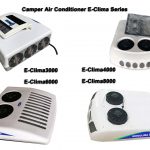 Camper Air Conditioning Unit